




From Debris to a Scientific Hub
In the world of space launches, efficiency is everything. For decades, the final stage of a rocket, known as the upper stage, would complete its task of pushing a satellite into its final orbit and then be left to drift aimlessly, adding to the growing
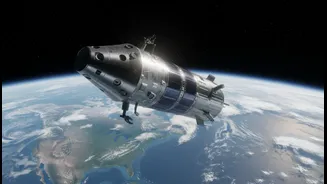
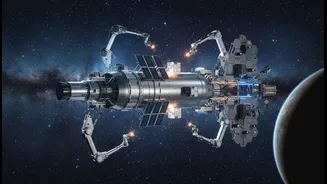
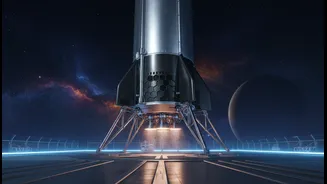
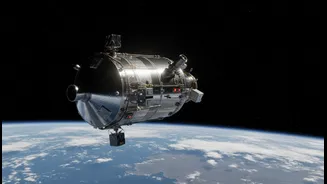
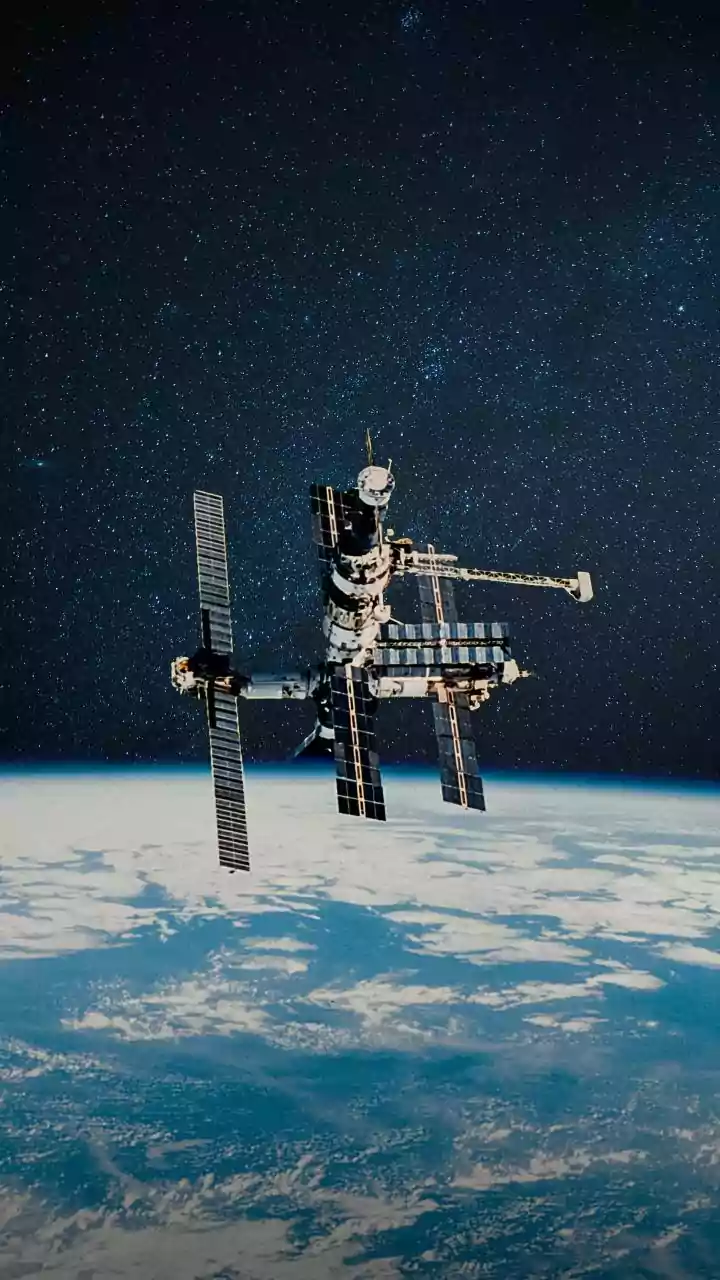
problem of space debris. However, ISRO has ingeniously repurposed this component with its PSLV Orbital Experimental Module, or POEM. The concept is simple yet revolutionary: after the main payload is deployed, the spent PS4 (fourth stage) of the Polar Satellite Launch Vehicle (PSLV) is given a second life. Instead of becoming another piece of orbiting junk, it transforms into a stable platform, essentially a temporary, miniature space station, ready to conduct scientific experiments for weeks or even months.
How an Old Rocket Stage Stays Alive
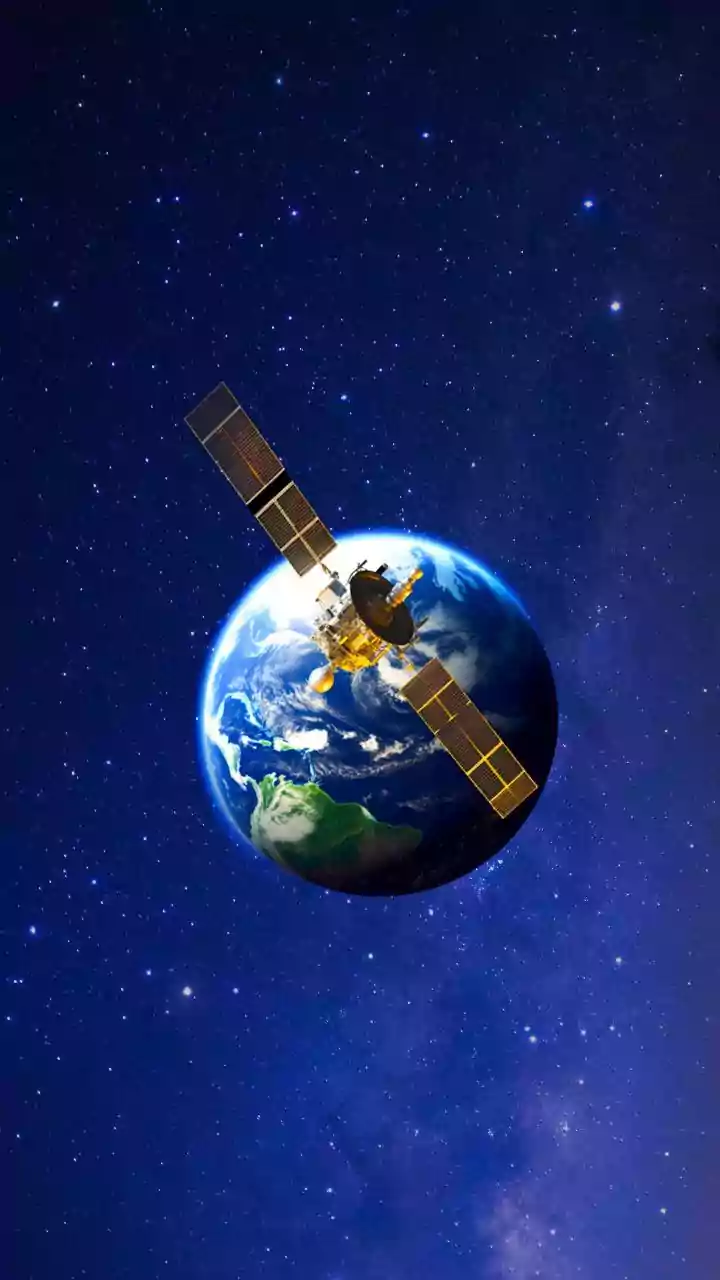
Keeping a spent rocket stage functional in the harsh environment of space is no small feat. The POEM platform is equipped with its own dedicated Navigation, Guidance, and Control (NGC) system, which acts as its brain to maintain a stable orientation. To power itself and the experiments it carries, POEM uses solar panels mounted on its body, which charge a lithium-ion battery. It can orient itself, communicate with ground stations, and provide the necessary power and stability for a variety of payloads. This clever engineering turns what was once waste into a valuable asset, allowing ISRO to maximise the utility of every single launch.
A Low-Cost Lab for Indian Innovation
The primary goal of POEM is to provide a low-cost and regular opportunity for Indian academic institutions and space startups to test their technologies in orbit. Getting a payload into space is traditionally an expensive and time-consuming process. POEM dramatically lowers this barrier. For instance, the POEM-3 mission, launched aboard the PSLV-C58, carried nine different payloads. These included experiments from private companies like Bellatrix Aerospace and Dhruva Space, as well as new technologies from ISRO's own centres, such as an advanced fuel cell power system and high-energy batteries. This flying laboratory allows for the testing of everything from new propulsion systems to satellite components, giving innovators crucial 'space-flight heritage'—proof that their technology works in a real-world environment.
The Strategic Advantage for India
The POEM platform is more than just a clever piece of recycling; it's a strategic game-changer. Firstly, it champions space sustainability. By de-orbiting the platform to burn up in the atmosphere after its mission, ISRO ensures it leaves virtually no debris behind, a responsible practice in an increasingly crowded orbital environment. Secondly, it nurtures a domestic ecosystem of space entrepreneurs and researchers, giving them frequent and affordable access to space. This helps build a robust pipeline of talent and technology that will fuel India's future space ambitions. This approach provides a significant competitive advantage, positioning India as a resourceful and forward-thinking space power that prioritises both innovation and environmental stewardship. The success of POEM has even inspired private Indian companies like Agnikul Cosmos to plan similar platforms for their own launch vehicles.
What the Future Holds for Orbital Platforms
ISRO has successfully demonstrated the POEM concept across multiple missions, with POEM-3 being the latest in a series of successful flights. The platform has proven its worth, and the demand for payload slots is growing. The future will likely see this capability become a standard feature on most PSLV launches, offering a regular cadence of flight opportunities. The lessons learned from POEM are also invaluable for India's larger space goals. The experience gained in managing in-orbit platforms and testing new power systems, like the fuel cell demonstrated on POEM-3, directly contributes to the development of more complex future missions, including the planned Bharatiya Antariksha Station (Indian Space Station). It represents a foundational step towards longer-duration human and robotic missions, built on a philosophy of cost-effectiveness and ingenuity.