

The Deepest Places on Earth
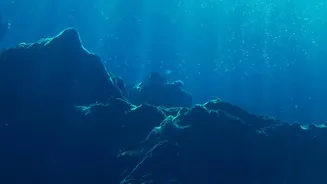
When we think of the deep ocean, features like the Mariana Trench often come to mind. Located in the western Pacific, it's a crescent-shaped chasm that plunges to nearly 11,000 metres at its deepest point, Challenger Deep. These trenches are long, narrow
depressions that are the deepest parts of the ocean floor. While found in all oceans, they are most common in the Pacific, forming a nearly continuous series of troughs around the basin's edge. Far from being simple valleys, these trenches are the surface expression of a dynamic process where one tectonic plate is forced to slide beneath another.
A Planetary Recycling System
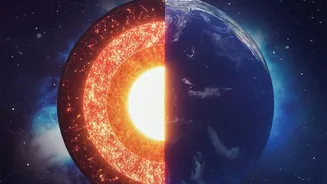
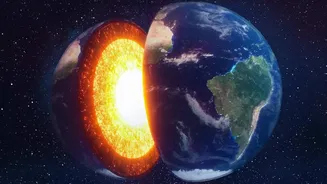
The dramatic term "consumed" refers to the geological process of subduction. The Earth's crust is not one solid piece but is broken into massive slabs called tectonic plates that float on the molten mantle beneath. Where these plates converge, one often dives beneath the other in a subduction zone. Typically, the denser, colder oceanic crust sinks beneath either a lighter continental plate or a younger, more buoyant oceanic plate. This process effectively recycles the old oceanic crust, pulling it back down into the mantle where it melts. This planetary recycling is the primary force that drives plate motion and has been instrumental in creating the Earth's continental crust.
Forging the Ring of Fire
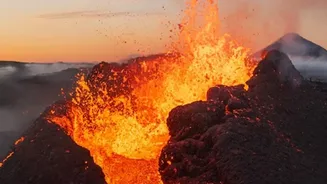
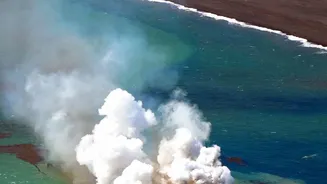
The consequences of subduction are not confined to the deep sea. The Pacific Ocean is almost entirely encircled by subduction zones, creating what is known as the Ring of Fire. This 40,000-kilometre, horseshoe-shaped belt is the most seismically and volcanically active zone on the planet, responsible for about 90% of the world's earthquakes and home to 75% of its volcanoes. As the subducting plate sinks deeper into the mantle, it heats up and releases trapped water. This water lowers the melting point of the surrounding mantle rock, creating magma that rises to the surface to form the volcanic arcs and island chains that parallel the trenches, like the Mariana Islands and Japan.
A Slow and Unstoppable Process
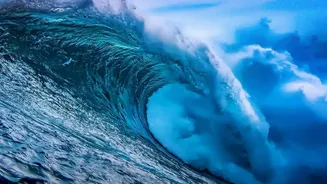
This process of consumption is incredibly slow, with plates moving only a few centimetres per year—about the same rate that fingernails grow. Over millions of years, however, this steady movement has profound effects. Because the Pacific is surrounded by so many active subduction zones, its basin is actually shrinking. More of its oceanic crust is being consumed at the trenches than is being created at mid-ocean ridges like the East Pacific Rise. In contrast, the Atlantic Ocean, which has far fewer subduction zones, is widening. The slow, grinding collision at these trenches builds up immense stress, which is then released suddenly and violently in the form of powerful earthquakes, some of which are strong enough to generate destructive tsunamis.