







What is the Mecca Defence Pact?
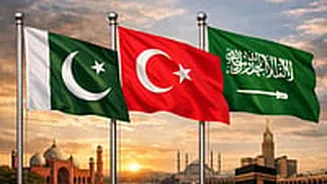
On August 7, 2026, the leaders of Saudi Arabia, Pakistan, and Turkiye signed the Mecca Joint Defence Agreement. The pact establishes a principle of collective defence, stating that an armed attack on any of the three nations will be considered an attack on all.
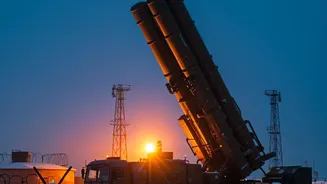
This agreement formalises and expands upon pre-existing ties. Saudi Arabia and Pakistan had already signed a bilateral Strategic Mutual Defence Agreement in September 2025. The new trilateral pact now incorporates Turkiye, a NATO member with a powerful indigenous defence industry, into this security framework. While some have compared its core principle to NATO's Article 5, analysts note it is not yet a fully-fledged military alliance with a single command structure. Instead, it’s seen as a framework for deeper cooperation in defence, intelligence sharing, and military-industrial ventures.
The Motivations of the Trio
Each signatory has distinct reasons for entering the pact. For Saudi Arabia, it is a step towards greater strategic autonomy, reducing its historic dependence on the United States for security. The agreement provides an additional layer of deterrence, particularly after regional conflicts exposed vulnerabilities in its critical infrastructure. For Pakistan, the pact elevates its diplomatic standing and solidifies its role as a key security provider in the Islamic world, potentially unlocking further economic and military benefits. It builds on decades of military cooperation with Riyadh and deepening defence ties with Ankara. Turkiye, meanwhile, gains a stronger foothold in Gulf security affairs and new markets for its burgeoning defence industry, which produces advanced drones and naval platforms. The pact expands Ankara's diplomatic influence from the Mediterranean to South Asia.
Why India is Concerned
For India, the emergence of this trilateral axis is a significant strategic development. The most immediate concern is the strengthening of Pakistan, its primary regional adversary. The pact integrates Pakistan more deeply into a powerful West Asian security architecture, backed by Saudi financial muscle and Turkish technology. This could alter the military balance and complicate India's strategic calculations in any future conflict with Pakistan. Furthermore, Turkiye's close defence relationship with Pakistan, including the supply of military hardware, has already been a point of friction for New Delhi. The pact also raises concerns about the potential for a unified diplomatic front on sensitive issues, and the risk of this alliance impacting India's vital energy supplies and maritime trade routes from the Middle East.
Navigating a New Geopolitical Reality
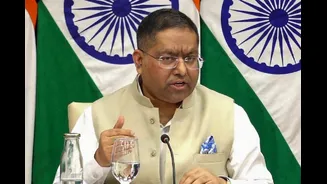
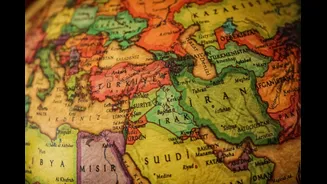
India's response has been one of careful observation rather than public confrontation. New Delhi has cultivated strong, independent relationships with key Gulf partners, particularly Saudi Arabia and the UAE. These ties, which span energy, investment, and security, serve as a crucial diplomatic counterbalance. The pact does not exist in a vacuum; it is part of a broader regional realignment where multiple, sometimes overlapping, alliances are forming. India itself is a member of groupings like the I2U2 (India, Israel, UAE, USA), which aim to foster economic and strategic cooperation. While the Mecca Pact is seen as a new bloc, analysts note that Saudi Arabia has strong incentives to avoid importing the India-Pakistan rivalry into Gulf security. India's strategy will likely involve reinforcing its bilateral partnerships in the region to ensure its interests are respected.