


Our Microbial Shadow
You might not think of yourself as a walking ecosystem, but you are. Humans are covered in and filled with trillions of microorganisms. We shed them constantly, leaving a microbial trail wherever we go. An average person has about a million bacteria on a patch
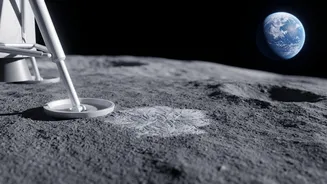
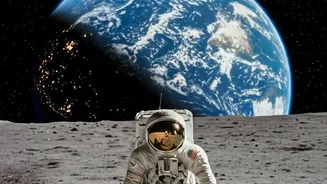
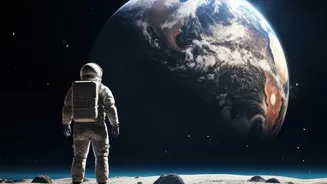
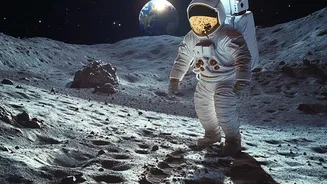
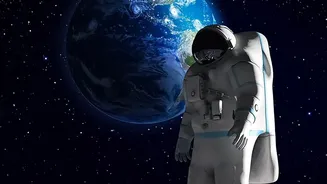
of skin the size of a pencil eraser. This isn't a problem on Earth, but in the sterile, pristine environment of the Moon, it's a different story. Every footprint, every tool, and every breath an astronaut takes outside a habitat could release a cloud of terrestrial microbes onto the lunar surface. This is what scientists refer to as 'forward contamination'—the transfer of life from Earth to another celestial body. While space agencies have strict sterilization procedures for robotic probes, keeping a human and their habitat completely sterile is impossible.
Why Contamination Is a Problem
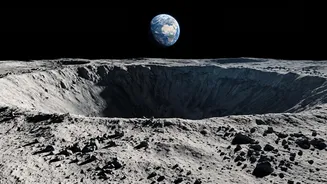
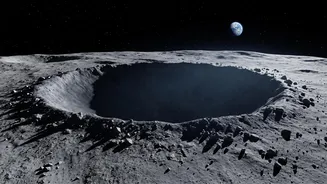
The primary concern is the integrity of science. Scientists are eager to study the Moon, especially the permanently shadowed craters at the poles, which are believed to hold water ice. These regions are like cosmic time capsules, preserving the history of the solar system, and could even hold clues about the origins of life on Earth. If we introduce Earth microbes, it's like smudging the pages of a priceless ancient book before we've had a chance to read it. Future missions searching for signs of life or unique prebiotic chemistry won't be able to distinguish between what was originally there and what we brought with us. This complicates one of the main reasons for going to the Moon in the first place. The international Committee on Space Research (COSPAR) sets planetary protection guidelines to avoid this very scenario, ensuring scientific investments aren't compromised.
A Different Challenge from Mars
While planetary protection has long been a focus for Mars missions, the Moon presents a unique situation. For decades, the Moon was considered a dead world where Earth microbes couldn't possibly survive the harsh radiation and extreme temperatures. However, recent research, particularly focused on the lunar south pole, challenges this assumption. The topography of the polar regions, with its craters and ridges, creates permanently shadowed areas. These spots are shielded from the sun's lethal ultraviolet radiation, allowing them to remain incredibly cold and preserve not just water ice, but potentially any Earth microbes that happen to land there. A recent NASA study found that some hardy microbes could survive for days or even weeks in these shaded locations, a prospect that was previously considered highly unlikely.
A Clean-Up Act in Space
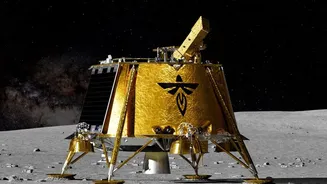
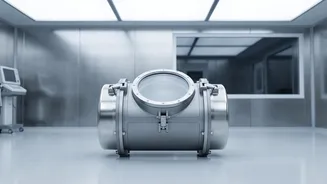
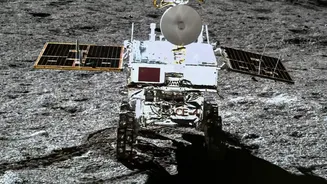
So, what can be done? The conversation is shifting from just preventing contamination to managing it. Scientists are advocating for a more robust planetary protection strategy for the Moon, especially with the Artemis missions planning a sustained human presence. One major focus is on documentation. Before astronauts arrive, missions can map the existing lunar environment to get a baseline reading. Another idea is to treat the Moon itself as a natural laboratory to study microbial survival in extreme conditions, but in a controlled way. More advanced proposals include establishing special 'pristine zones' that are off-limits to human activity to preserve them for future scientific study. Other researchers have even suggested building a robotic quarantine facility on the Moon itself to screen samples from other worlds, like Mars or asteroids, before they are brought back to Earth, using the Moon as a natural buffer to protect our own biosphere.