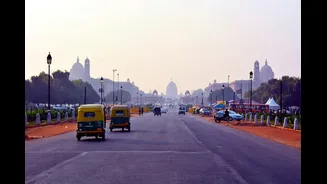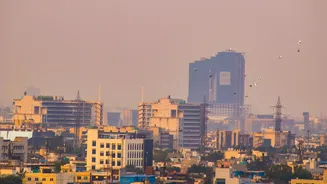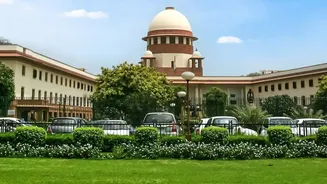

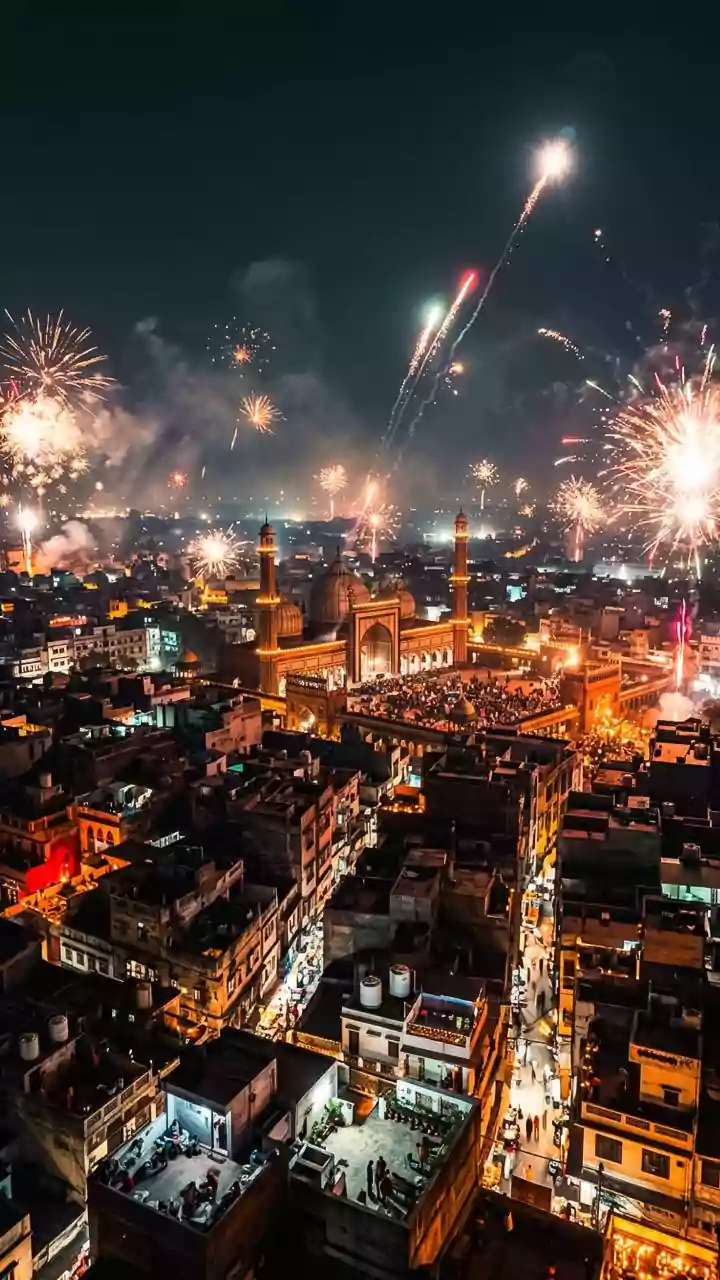



The Supreme Court has once again stepped into the contentious debate over firecrackers, issuing a temporary order for Delhi-NCR. After a brief window for 'green crackers', a complete ban is set to return from November 9.
The Court's Two-Day Window
In an order that aims to strike
a balance between festive traditions and public health, the Supreme Court has permitted the use of certified 'green firecrackers' in the Delhi-National Capital Region, but only for a very limited period. Residents are allowed to burst these approved crackers on November 7 and 8, within two specific time slots each day: from 6 AM to 7 AM and again from 8 PM to 10 PM. The court specified that this is a temporary relaxation. Starting from November 9, the comprehensive ban on the manufacture, sale, and use of all kinds of firecrackers will be fully reinstated across the region.
What Exactly Are 'Green Crackers'?
The court's order is clear that only certified green crackers are permitted during the two-day window. These are not pollution-free but are designed to have a reduced environmental impact compared to conventional fireworks. To be considered 'green', a cracker must be approved by both the Council of Scientific and Industrial Research-National Environmental Engineering Research Institute (CSIR-NEERI) and the Petroleum and Explosives Safety Organisation (PESO). To help consumers identify legitimate products, each box must carry a product-specific QR code that verifies its certification details. The court has explicitly forbidden firecrackers containing barium salts and joined firecrackers, commonly known as 'laris' or garlands.
Why the Court Shifted Its Stance
This order marks a shift from the complete, year-round bans imposed in recent years. A bench of Justices M.M. Sundresh and Prasanna B. Varale noted that previous blanket bans had proven ineffective. They observed that the state had 'utterly failed' to implement past restrictions, leading to a rise in the illegal sale of conventional crackers disguised as green ones. The court reasoned that a complete ban was not only failing to curb pollution but was also preventing citizens from accessing legitimate, less-polluting alternatives. This new, regulated approach is an attempt to see if a strictly controlled, temporary allowance can yield better results than a prohibition that was difficult to enforce.
Health and Rights at the Core of the Debate
The Supreme Court's decision is rooted in a longstanding legal battle balancing constitutional rights. The court acknowledged that bursting firecrackers is a 'religious practice' for many during Diwali. However, it firmly stated that the right to practice religion under Article 25 is subject to public health. The bench emphasised that Article 21, which guarantees the right to life, includes the right to a healthy and pollutionfree environment. The judges detailed how microscopic particulate matter from fireworks causes substantial damage to human health, particularly affecting children, the elderly, and those with existing ailments.
Strict Rules for 'No - Cracker Zones'
The court's order also establishes strict 'No - Cracker Zones' to protect vulnerable populations. Bursting any firecrackers is prohibited within a 300 metre radius of hospitals, nursing homes, health centres, old age homes, and educational institutions. These zones must be clearly marked and publicised by local authorities to ensure compliance. The directive underscores the court's focus on mitigating the direct health impacts of the celebrations. To ensure compliance, the court has also ordered the formation of patrolling teams to monitor the sale and use of crackers and for pollution control boards to monitor air quality before, during, and after the festive period.