


The Case Against Early Specialization
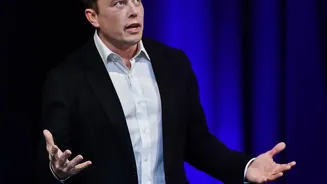
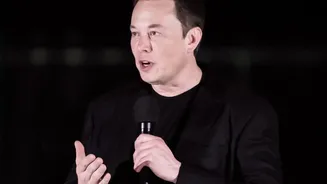
For decades, the path to a successful career seemed clear: pick a lane, become an expert, and climb the ladder. Elon Musk, however, suggests this model is becoming outdated. His advice to young people is to resist the pressure to narrow their education
too early. In recent remarks, he recommended that students pursue a "broad-based education as possible," one that includes the arts, sciences, and engineering. This isn't about avoiding expertise altogether. Instead, it's a recognition that as AI and automation handle more routine, specialized tasks, the most valuable human contributions will shift. Musk's famous "semantic tree" analogy for knowledge fits here: he advises understanding the fundamental principles—the trunk and big branches—before getting lost in the leaves of niche details. This foundational, cross-disciplinary knowledge creates a more resilient and adaptable intellect.
Directing the Future Robots
The second part of Musk's advice is directly linked to his vision of the future. He predicts a world with billions of humanoid robots, creating an "age of abundance" where goods and services are plentiful. In this scenario, the most critical human skill won't be performing a task that a robot can do, but knowing what to ask the robot to do in the first place. This is where a broad education becomes a strategic advantage. To effectively "direct the robots," a person needs context. Someone who understands psychology, history, economics, and technology will be better equipped to identify human needs, frame complex problems, and formulate the right questions or prompts for an AI to solve. Musk believes that having the broadest possible general knowledge will be essential for what is now being called 'prompt engineering' and for guiding the powerful tools of the future.
A Generalist with a Foundation
Musk's advice shouldn't be misinterpreted as a critique of deep knowledge. He himself has degrees in physics and economics. His point is not that specialization is useless, but that hyper-specialization without a broad foundation is a risky strategy. The ideal professional of the future may be what is often called a "T-shaped" individual: someone with deep expertise in one field (the vertical bar of the T) but also a broad base of knowledge across many others (the horizontal bar). This allows them to collaborate across disciplines and connect ideas in novel ways. Musk has long advocated for learning from first principles, a method rooted in physics that involves breaking down complex problems into their most basic elements. A broad education provides a wider set of these fundamental elements to draw from, making it easier to tackle new and unforeseen challenges.
The Indian Context: A New Perspective
This advice is particularly resonant in India, where the education system and societal expectations often push students into specialized streams like engineering, medicine, or commerce from a very young age. While this system has produced generations of excellent specialists, Musk's perspective suggests a need for more flexibility. As India's economy continues to integrate with global technological shifts, the ability to innovate and solve problems creatively will become paramount. Encouraging students to take electives outside their core field, engage in interdisciplinary projects, and cultivate hobbies in the arts or humanities could be crucial. It's a shift from learning a set of skills for a specific job to building a mental toolkit that allows one to adapt to many jobs over a lifetime, some of which don't even exist yet.
How to Put This Into Practice
So, how can a student or young professional act on this advice? Musk encourages people to simply read a lot of books and try to ingest as much information as possible from a wide range of subjects. Don't just stick to textbooks in your chosen field. Explore history, psychology, philosophy, and art. Talk to people from different walks of life. The goal is to build a mental map of the world and understand how different systems connect. For those in formal education, this might mean choosing a university that allows for a more liberal arts-style curriculum or actively seeking out courses and projects outside one's major. The fundamental idea is to cultivate curiosity and see education not as a means to a credential, but as a lifelong process of building a rich, interconnected understanding of the world.