


A Celestial Battle: The Story of Rahu and Ketu
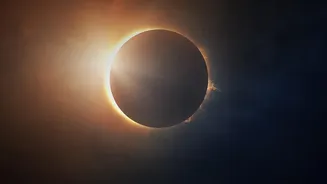
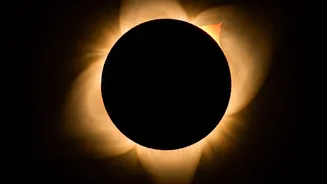
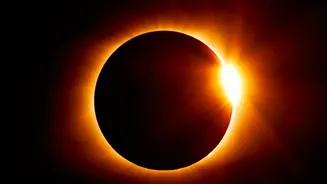
For many in India, a grahan, or eclipse, is far more than an astronomical event; it is a moment steeped in mythology. The most prominent story comes from the Samudra Manthan, or the churning of the cosmic ocean. According to the legend, a demon named
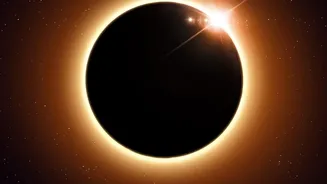
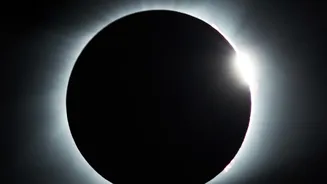
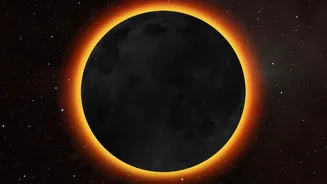
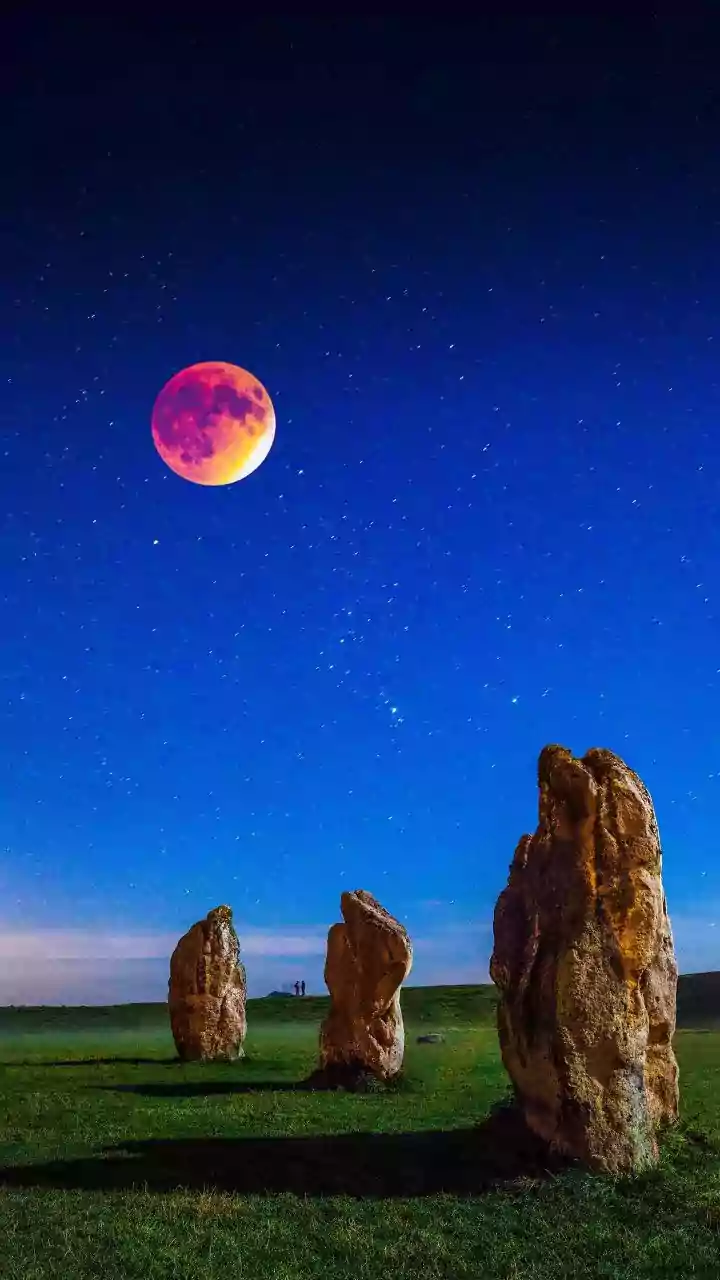
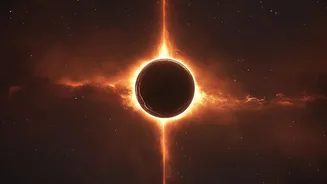
Svarbhanu disguised himself to steal a few drops of amrita, the nectar of immortality. The Sun (Surya) and Moon (Chandra) spotted the imposter and alerted Lord Vishnu, who swiftly decapitated the demon. But having tasted the nectar, the demon's head and body became immortal, forever traversing the cosmos as Rahu (the head) and Ketu (the body). It is believed that in an act of eternal vengeance, Rahu periodically swallows the sun or the moon, causing an eclipse. Because Rahu has no body, the celestial object eventually re-emerges, ending the grahan. This narrative frames the eclipse as a temporary triumph of darkness over light, a moment of cosmic imbalance.
The Sutak Period: Rituals of Caution
This mythological understanding gives rise to a range of customs observed during a grahan. Many traditions are centered around the 'Sutak' period, a time before, during, and after the eclipse considered to be inauspicious. During this time, many Hindu temples close their doors, believing that the divine energy of the idols could be disturbed by the negative energies thought to be prevalent. It is a common practice to fast, avoiding cooking and eating. Food prepared before the eclipse is often discarded or protected by placing blades of tulsi (holy basil) in it. Pregnant women are particularly advised to stay indoors and avoid using sharp objects, a precaution rooted in the belief that the unborn child is vulnerable to the disruptive energies. After the eclipse concludes, a period of purification begins. Many people take a ritual bath, clean their homes, sprinkle holy water (Ganga jal), and give charity to offset any negative effects.
The Scientific View: A Dance of Shadows
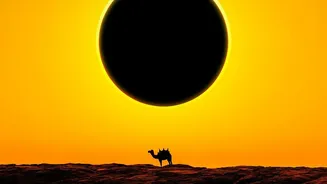
Modern astronomy, of course, offers a different explanation. A solar eclipse occurs when the Moon passes between the Sun and Earth, casting a shadow on our planet. A lunar eclipse happens when the Earth comes between the Sun and Moon, casting its shadow on the lunar surface. There are no harmful rays emitted during a lunar eclipse, and even the dangers of a solar eclipse are about the intensity of the light, not any malevolent energy. Interestingly, ancient Indian astronomers like Aryabhata had figured out the scientific basis for eclipses as early as the 5th century. The Puranic story of Rahu and Ketu itself has a fascinating parallel in astronomy: the points where the Moon's orbit intersects the Earth's path around the Sun are called the lunar nodes. Eclipses can only occur when the new or full moon is near one of these nodes. In a way, the ancient storytellers were translating orbital mechanics into a memorable narrative.
A Nation of Sky-Gazers and Believers
So, how do these two realities coexist? The answer lies in the personal and societal ability to hold multiple truths. In today's India, it is not uncommon for an individual to understand the science of orbital mechanics while still respecting the traditions passed down by their elders. Many people observe a fast or avoid cooking not necessarily out of fear, but as a mark of cultural identity or respect for family customs. The divide is often generational and geographical, with traditions holding stronger in rural areas, while urban populations show a more mixed approach. Simultaneously, scientific institutions, planetariums, and astronomy clubs actively use eclipses as major public outreach events. They organize viewing parties with safe solar glasses, dispelling myths while fostering a sense of scientific wonder. Instead of seeing it as a battle between science and superstition, many Indians have simply added a new layer of understanding to the event.