


Our Sun's Protective Bubble
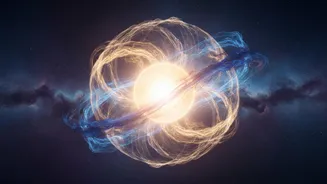
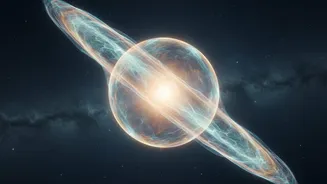
Imagine our entire solar system, from the Sun to beyond Pluto, enclosed in a giant magnetic bubble. This is the heliosphere. It's not a physical object but a massive region of space inflated by a constant stream of charged particles from the Sun called
the solar wind. This bubble acts as a crucial shield, protecting Earth and the other planets from a significant amount of harsh galactic cosmic radiation, which originates from deep space. Without this protective shield, life on Earth might have evolved very differently, if at all. The heliosphere is our home's first line of defense as it journeys through the Milky Way galaxy.
Meet NASA's New Cartographer: IMAP
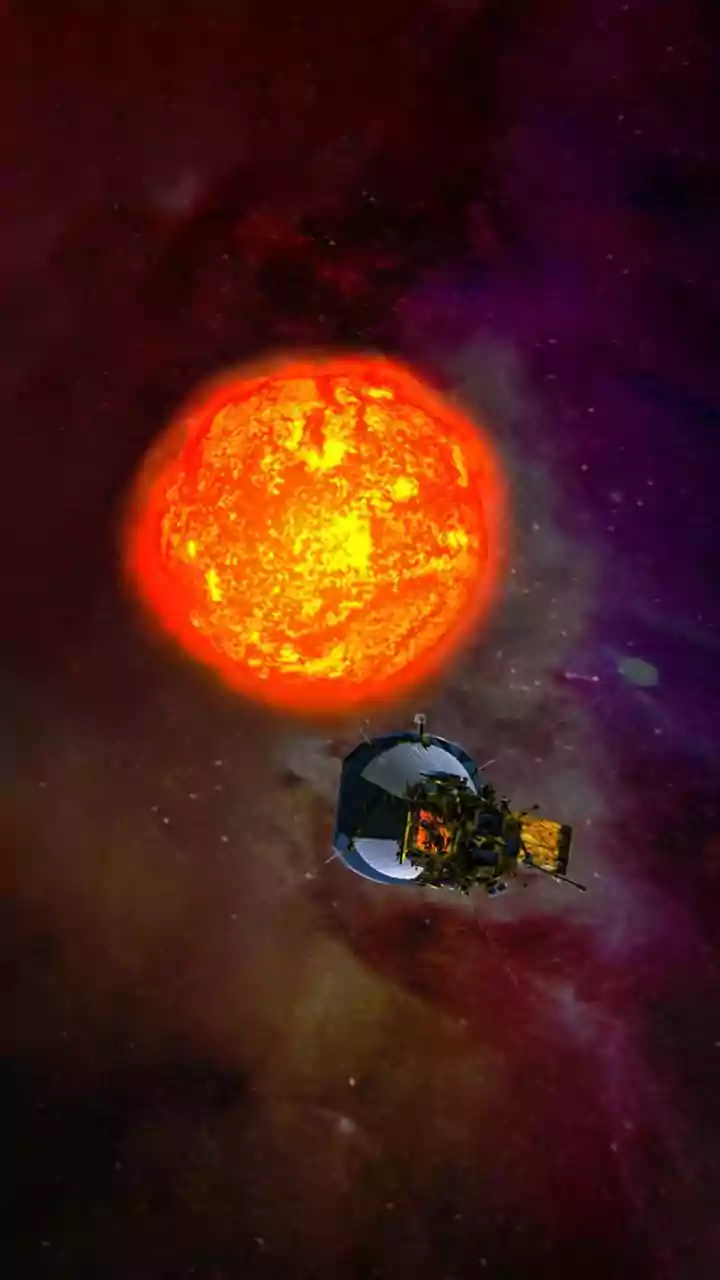
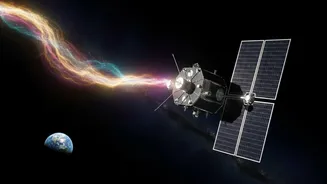
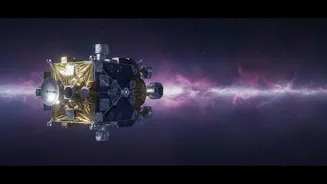
To map this invisible frontier, NASA launched the Interstellar Mapping and Acceleration Probe, or IMAP. After launching in September 2025, the spacecraft traveled about 1.6 million kilometers from Earth to a special observation post called Lagrange point 1 (L1). From this unique vantage point, IMAP has an uninterrupted view of the Sun and the particles streaming toward us. The mission carries a suite of ten advanced instruments designed to study these particles, from the low-energy solar wind to high-energy particles traveling near the speed of light. Think of IMAP as a celestial cartographer, tasked with drawing the first comprehensive map of our solar system's boundary.
The First Data Is In
On August 7, 2026, NASA made the first batch of scientific data from IMAP publicly available. This initial release includes observations gathered through April 30 by seven of the spacecraft's ten instruments. The data comes from instruments like the magnetometer, which measures the Sun's magnetic field carried by the solar wind, and various particle detectors that analyze the composition, energy, and origin of ions and electrons from both within and outside our solar system. While it represents just the beginning of IMAP's two-year primary mission, this information is the foundational layer for creating a complete 3D map of the heliosphere's structure and how it interacts with the interstellar medium.
How to Map an Invisible Boundary
So, how do you map something you can't see? IMAP does it by detecting special particles called Energetic Neutral Atoms (ENAs). These atoms are born at the edge of the heliosphere when fast-moving particles from the solar wind collide with slow-moving neutral atoms from interstellar space. In this exchange, the solar wind particle becomes electrically neutral. Unaffected by magnetic fields, these ENAs travel in straight lines for billions of kilometers, some of them heading directly toward IMAP's detectors. By collecting these messengers and tracing their origins, scientists can piece together a picture of the distant boundary region, revealing its shape, size, and dynamics.
Why This Cosmic Map Matters
Understanding the heliosphere is not just an academic exercise. This bubble breathes, expanding and contracting with the Sun's 11-year activity cycle, which alters the level of radiation protection we receive. For future human exploration to the Moon and Mars, knowing the strength of this shield is critical for astronaut safety. Furthermore, IMAP's continuous monitoring of the solar wind provides real-time data for space weather forecasting. This gives agencies like NOAA about a half-hour warning of incoming solar storms that could disrupt satellites, power grids, and communications on Earth. This mission deepens our understanding of our place in the galaxy and helps safeguard our technological society.