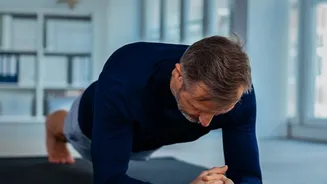






1. The Classic Forearm Plank
This is the foundation of all planking and mastering it is key. To begin, lie on your stomach and place your forearms on the floor with your elbows stacked directly under your shoulders. Extend your legs straight behind you, resting on your toes. Lift
your hips until your body forms a straight line from your head to your heels. It’s crucial to avoid common mistakes like letting your hips sag or raising them too high. Engage your core by pulling your belly button towards your spine, squeeze your glutes, and keep your neck in a neutral position by looking at the floor slightly ahead of you. This isometric hold engages multiple muscle groups at once, building core strength, endurance, and stability that supports a healthier posture.
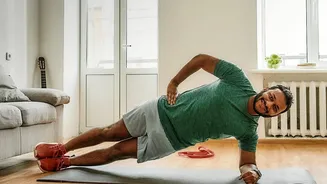
2. The Side Plank
To specifically target the muscles along the sides of your core, known as the obliques, the side plank is an unmatched exercise. Lie on your right side with your legs straight and stacked. Place your right forearm on the floor, ensuring your elbow is directly beneath your shoulder. Engage your core and lift your hips toward the ceiling, creating a straight line from your head to your feet. Avoid rotating your torso forward or backward. The side plank is not only a core strengthener but also improves your balance and stability, which is crucial for everyday movements and reducing the risk of back injury. Hold the position, then carefully lower and repeat on the other side.
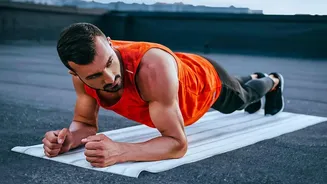
3. Plank with Leg Raise
Once you feel confident with the standard plank, adding a leg raise introduces a new challenge to your stability. Start in a forearm or high plank position. Keeping your core braced and your back flat, slowly lift one leg a few inches off the ground without letting your hips tilt or rotate. The goal isn't to lift the leg high, but to maintain a perfectly stable torso while the leg is elevated. Hold for a moment, then lower the leg with control and repeat on the other side. This variation intensifies the work for your abdominal muscles and also recruits your glutes and hamstrings, making it a more dynamic and effective core exercise.
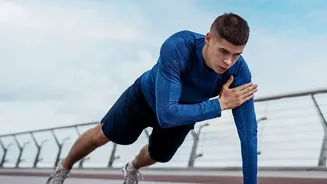
4. The Walking Plank (Up-Down Plank)
Also known as the Commando Plank, this variation adds movement to challenge your core, shoulders, and chest. Begin in a high plank position, with your hands directly under your shoulders. Keeping your core tight to prevent your hips from swaying, lower your right elbow to the floor, followed by your left, so you are in a forearm plank. From there, place your right hand back on the floor where your elbow was and push up, followed by your left hand, to return to the high plank position. This completes one repetition. Alternate which arm leads the movement to ensure balanced development. The key is to move slowly and with control, which forces your core to work harder to maintain stability.
5. The Reverse Plank
While most planks focus on the front of your body, the reverse plank is excellent for strengthening your posterior chain—the muscles on the backside of your body, including your glutes, hamstrings, and lower back. Sit on the floor with your legs extended in front of you. Place your hands on the floor behind you, slightly wider than your shoulders, with your fingers pointing towards your feet. Press into your hands and lift your hips and torso toward the ceiling until your body forms a straight line from your shoulders to your heels. Squeeze your glutes and keep your arms and legs straight. This exercise not only builds strength but also helps to improve posture by opening up the chest and shoulders, counteracting the slouching that comes from sitting at a desk.