



More Than Just a Walk on the Beach
Walking barefoot on sand is a universal pleasure. It connects us to the natural world and awakens sensations often dulled by shoes and pavement. But beyond the simple joy, this experience holds a key to better physical health. The act of walking on an unstable
surface forces our feet to work in ways they rarely do in modern life. The constant, subtle shifts in the sand engage dozens of small muscles in your feet, ankles, and calves, waking them up from dormancy. This is more than just a workout; it’s a conversation between the ground and your body, and combining this environment with the ancient art of Tai Chi can amplify the benefits exponentially.
The Body’s Sixth Sense: Proprioception
At the heart of this benefit is a concept called proprioception: your body's innate awareness of its position in space. Think of it as a sixth sense, orchestrated by sensory receptors in your muscles, tendons, and joints. These receptors constantly feed information to your brain about where your limbs are, allowing you to walk without looking at your feet or touch your nose with your eyes closed. Good proprioception is crucial for balance, coordination, and preventing injuries. With age or after an injury, this sense can dull, leading to instability and a higher risk of falls. The good news is that proprioception can be retrained, and challenging your body with new surfaces is one of the best ways to do it.
How Shifting Sands Train Your Feet
Flat, hard surfaces like sidewalks and office floors are predictable. Your feet don't have to work very hard to navigate them. Sand, however, is a dynamic and unpredictable teacher. With every step, your foot sinks and the sand shifts, forcing the tiny stabilizing muscles around your ankle and within your foot to fire constantly to keep you upright. This process acts as a form of natural resistance training, strengthening the entire structure from the toes up. Studies show that movement on sand requires significantly more energy and muscle engagement than on a firm surface. This constant stream of feedback from the unstable ground sharpens your proprioceptive system, making your brain and muscles work together more efficiently to maintain balance.
Why Tai Chi Amplifies the Effect
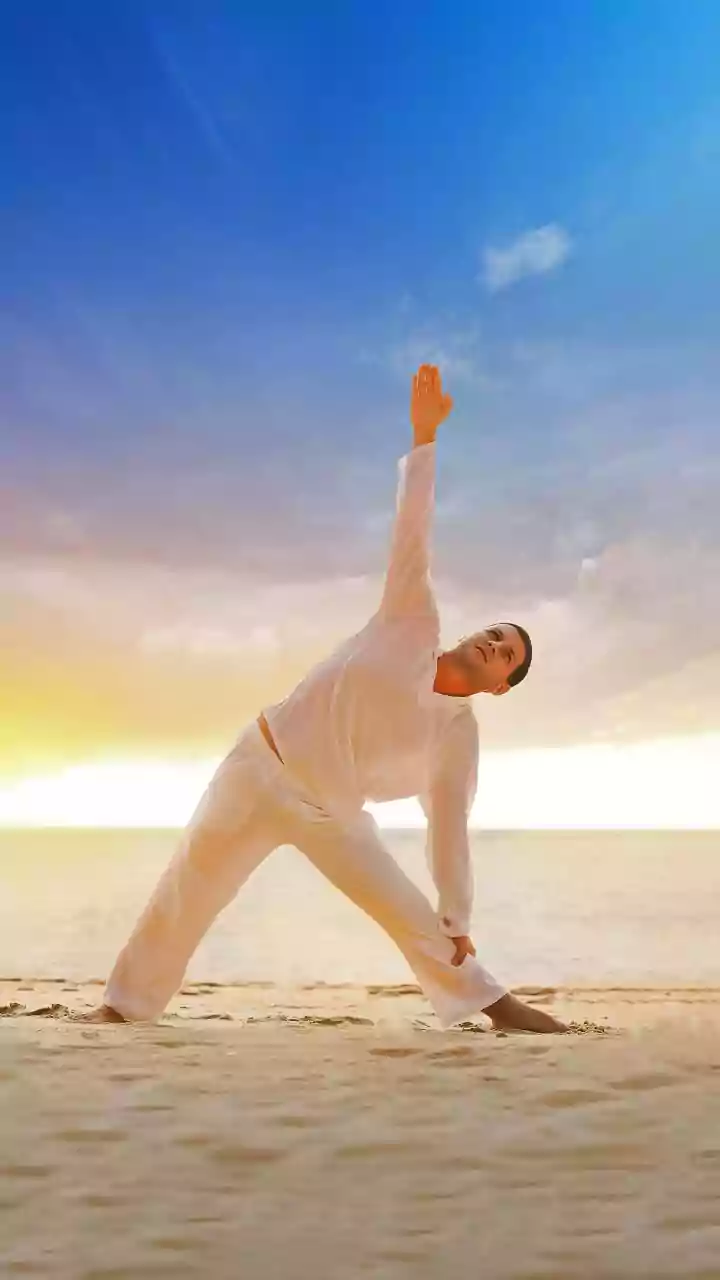
Tai Chi is an ideal partner for this environment. Often described as 'meditation in motion', its practice is built on slow, deliberate, and continuous movements. A core principle in Tai Chi is 'rooting'—the feeling of being firmly connected to the earth through your feet. When you practice the slow weight shifts and controlled steps of Tai Chi on sand, you are forced to pay even closer attention to this connection. You learn to place your foot, sense its stability on the shifting surface, and then mindfully transfer your weight. This combination of an unstable surface and a mindful movement practice creates a potent training environment for balance and body awareness that static exercise can't replicate.
A Cascade of Health Benefits
The rewards of this practice extend far beyond your feet. By improving your foundation, you can enhance your entire posture. Stronger, more aware feet and ankles provide a more stable base, which can reduce strain on your knees, hips, and lower back. Research has consistently shown that Tai Chi is highly effective at improving balance and reducing the risk of falls, particularly in older adults. Furthermore, the mental health benefits are undeniable. Practicing a mindful art like Tai Chi in a natural 'blue space' like a beach has been shown to reduce stress, calm the mind, and enhance overall well-being. The fresh sea air and rhythmic sound of the waves only add to the restorative experience.
Tips for Your First Beach Session
If you’re ready to try it, start slowly. Begin by walking on the firmer, wet sand near the water's edge, which is more stable than loose, dry sand. Take a few moments just to stand and feel the ground beneath you. When you begin your Tai Chi forms, focus on the quality of movement, not the quantity. Slow down even more than you would on a flat surface. Pay close attention to how your weight transfers from heel to toe and how your body adjusts to maintain its center of gravity. Listen to your body; the increased muscle work can be tiring. A short, 15-minute session can be highly effective. The goal is to leave feeling grounded and refreshed, not exhausted.