





A New Generation of Planet Hunter
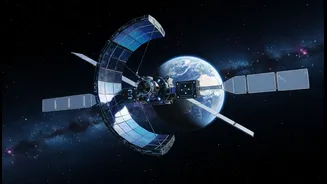
Set to launch in the 2040s, the Habitable Worlds Observatory (HWO) has a singular, profound goal: to find signs of life on planets orbiting other stars. Recommended by the National Academies' 2020 Decadal Survey, this powerful telescope will be the first
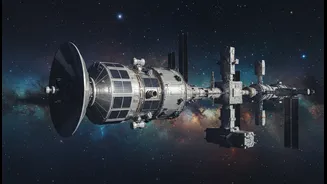
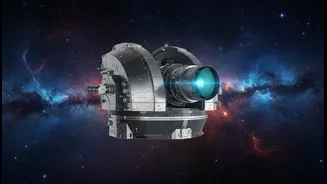
designed specifically to search for biosignatures—like oxygen and methane—in the atmospheres of at least 25 Earth-like exoplanets. To do this, it will operate 1.5 million kilometers from Earth at a stable point in space known as L2, the same neighbourhood as the James Webb Space Telescope (JWST). HWO will be equipped with a cutting-edge coronagraph, an instrument designed to block the overwhelming glare of a star, allowing the faint light reflected by its planets to be seen and analyzed. This mission represents one of humanity's most ambitious scientific quests: to answer the age-old question, "Are we alone?"
Learning from a Legacy of Great Observatories
The plan for HWO is a direct evolution from lessons learned from its predecessors. The Hubble Space Telescope, launched into low-Earth orbit, was famously serviced by Space Shuttle astronauts, receiving repairs and new instruments that have kept it scientifically productive for decades. In contrast, the more recent James Webb Space Telescope was designed as a single-shot mission; its distant orbit and complex design mean it cannot be serviced. NASA's new approach for HWO combines the best of both worlds: a long-term observatory in a stable deep-space location, but built from the ground up for serviceability. This strategic pivot transforms the estimated $11 billion observatory from a disposable instrument into a sustainable, long-term asset in the cosmos.
Upgrades in the Dark: How It Works
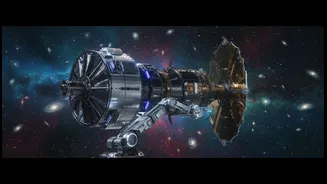
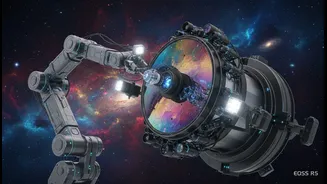
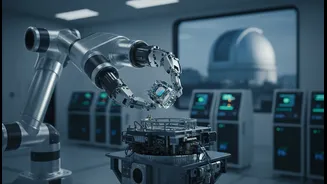
The concept of an upgradable telescope means that HWO's scientific capabilities can grow over time. The design calls for a modular architecture where critical components and scientific instruments are configured as line-replaceable units. Think of it like swapping out an old graphics card for a new one in a PC, but for a multi-billion-dollar space telescope. Rather than launching with every conceivable technology packed in from day one—a costly and risky approach—NASA can launch HWO with the best technology available and plan for future upgrades. As new, more sensitive cameras, detectors, and other instruments are developed on Earth, they can be sent into space and installed on the observatory, ensuring HWO remains at the forefront of science for decades.
The Rise of the Robotic Mechanics
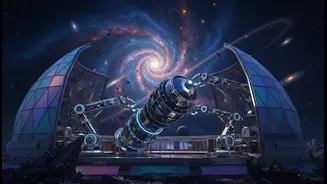
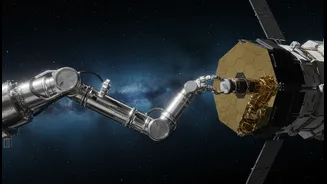
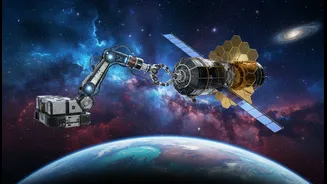
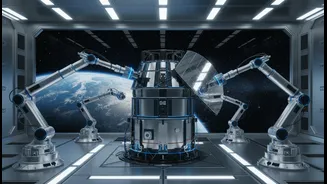
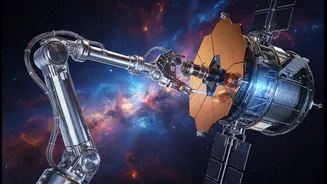
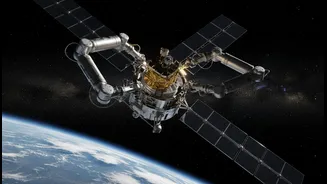
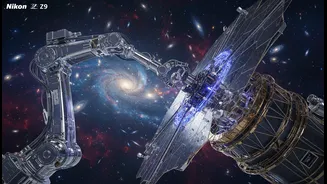
Since HWO will be located 1.5 million kilometers away, sending human astronauts for repairs, as was done with Hubble, is not feasible with current technology. Instead, NASA is mandating that the observatory be designed for robotic servicing. This emerging field, known as in-space servicing, assembly, and maintenance (ISAM), will be crucial. Autonomous or remotely operated spacecraft will be dispatched to rendezvous with HWO. These robotic mechanics will perform complex tasks, such as latching onto the observatory, swapping out instrument modules, and even carrying out repairs. In fact, if the final telescope is too large to fit into a single rocket, robots may even be used to perform some assembly in orbit.
A New Business Model for Space
This forward-thinking approach is not just a technical strategy; it's a new business model for major scientific endeavors. By planning for a long, serviceable life, NASA aims to maximize the scientific return on its immense investment. A serviceable telescope is more resilient to failure and has a longer operational lifespan. It also means that the initial development can be streamlined, as not every future capability needs to be perfected before launch. Furthermore, this mandate is expected to energize the commercial space servicing industry, creating new opportunities and capabilities for both government and private sector missions in the decades to come. It signals a shift from building disposable marvels to creating a sustainable scientific infrastructure in space.