







From Track Weapon to Street Machine
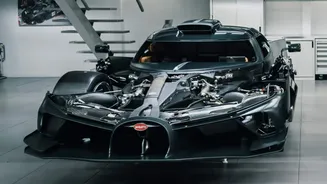
When Bugatti first unveiled the Bolide, it was a pure concept, a 'what if' scenario built around its legendary 8.0-litre W16 engine. Designed exclusively for the racetrack, it shed every gram of weight and non-essential component in the pursuit of ultimate
performance. This meant no conventional headlights, no street-compliant tyres, and a suspension setup far too aggressive for public roads. With only 40 production units planned, the Bolide was destined to remain a rare sight, confined to private track days. However, the allure of driving such an extreme machine on the open road was too great for some owners. This is where British engineering firm Lanzante stepped in, a company renowned for converting track-only hypercars into road-legal masterpieces. Their task was to tame the Bolide just enough to pass regulations without diluting its wild character.
The Uncompromising 'X' Motif
A defining feature of the Bolide is its striking 'X' design theme, visible from every angle. This was inspired by the experimental Bell X-1 jet, the first aircraft to break the sound barrier. The most prominent examples are the massive X-shaped taillights, but the motif is repeated at the front. Historically, the 'X' on the front of race cars was simply tape placed over glass headlights to prevent them from shattering across the track in an accident. On the Bolide, Bugatti's designers turned this historical nod into a core element of the car's aerodynamic and visual identity. The problem was that these front 'X' elements were just that—design elements on a car that had no need for headlights. This presented a significant engineering puzzle for Lanzante.
The Homologation Headache
Making a car road-legal, a process known as homologation, involves meeting a long list of safety and equipment standards. For the Bolide, this meant addressing everything from emissions and exhaust noise to fitting road-friendly tyres and softening the suspension. But the most visually sensitive challenge was the headlights. Regulations dictate specific requirements for brightness, height, and positioning, none of which were considered in the Bolide's original design. Adding conventional headlights would have meant cutting into the hypercar's meticulously crafted carbon fibre bodywork, potentially ruining its aerodynamic profile and aesthetic integrity. The solution couldn't be a clumsy add-on; it had to feel as integrated and intentional as the rest of the car.
A Brilliant, Hidden Solution
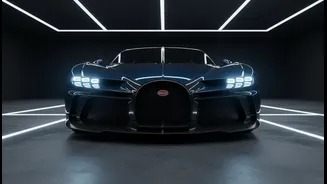
Lanzante's solution is a masterful blend of ingenuity and respect for the original design. Instead of creating new housings, their engineers developed custom LED headlights that are integrated directly into the existing X-shaped fascia on the car’s front. Precision cutouts were made within the carbon fibre 'X' to nestle the new, powerful LED units. This allows the lights to be almost invisible when turned off, preserving the car's aggressive, headlight-free appearance. When switched on, they shine through, meeting all legal requirements without disturbing the car's iconic look. It’s a solution that hides in plain sight, demonstrating how modern technology can solve complex design constraints in a way that is both functional and elegant.
More Than Just Lights
This clever headlight integration is more than just a neat trick; it encapsulates the entire philosophy of the road-legal Bolide project. It proves that extreme performance and regulatory compliance don't have to be mutually exclusive. While Lanzante also made crucial changes to the suspension, tyres, and cooling system, the headlights are the most visible symbol of the car's dual identity. They represent a bridge between the uncompromising world of track racing and the practical demands of the public road. For the few owners of these multi-million dollar machines, it means their track weapon is no longer confined to the circuit, all thanks to an engineering solution as radical as the car itself.