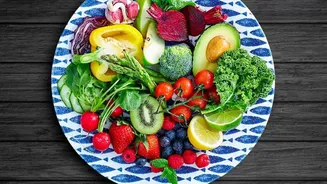




You Eat With Your Eyes First
It’s a cliché for a reason: our eyes are the first sense to engage with a meal, sending signals to our brain long before our taste buds get involved. This creates an expectation that primes our entire dining experience. When a dish is beautifully presented,
our brain anticipates a positive sensory experience, which in turn enhances how we perceive the flavour once we take a bite. This fascinating intersection of gastronomy and psychology is a field known as 'gastrophysics', pioneered by Oxford professor Charles Spence. It explores how everything 'off the plate'—from the lighting in the room to the weight of your fork—influences the food 'on the plate'. The core idea is that flavour isn't just created in the mouth; it's constructed in the mind based on a host of sensory inputs.
The Canvas: How Plate Colour Changes Taste
The plate itself acts as the canvas for the food, and its colour can have a surprising impact on flavour perception. Studies have shown that the colour of your dishware can subtly trick your brain. For instance, research has found that desserts served on a white, round plate are often perceived as tasting sweeter and more intense than the exact same dessert served on a black one. Warm colours like red and orange are known to stimulate the appetite, while cooler colours like blue can have a calming, sometimes appetite-suppressing, effect. In one study, picky eaters rated snacks as tasting saltier when served in red or blue bowls compared to white bowls, suggesting a link between colour and specific taste expectations. This is why fine dining establishments often rely on neutral white plates—they provide a clean backdrop that makes the colours of the food itself stand out.
The Art of Arrangement
Beyond colour, the actual arrangement of food is a powerful tool. A dish that is artfully composed signals care and expertise, leading diners to believe it will taste better. Think of spaghetti: a messy pile on a plate can look uninviting, but the same pasta carefully twirled into a nest and garnished becomes a visual masterpiece that heightens anticipation. Chefs use techniques like balancing colour and contrast, layering different textures, and using negative space to create a visual journey. An artfully arranged plate with a clear focal point and a sense of order is perceived as higher in quality and value. Studies have even shown that people are willing to pay more for the exact same food when it's presented neatly versus sloppily. This is because neatness is associated with hygiene, professionalism, and skill.
Beyond the Plate Itself
The visual cues that shape our perception extend far beyond the dish. The entire dining environment plays a role. Subdued lighting is often used to enhance subtle flavours, while brighter lights are better suited for strong ones. Even the weight and shape of your cutlery can make a difference; research suggests food tastes better when eaten with heavier, more expensive-feeling utensils. The name of a dish on a menu, the music playing in the background, and even the description a server gives can create a narrative that influences taste. This is because all these elements work together to create an immersive experience. When all the visual and environmental signals align to suggest quality and enjoyment, our brains are more likely to deliver that very experience.