




What is the Project's Status in 2026?
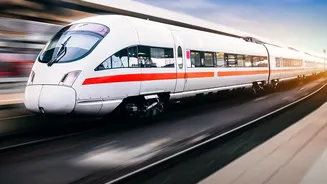
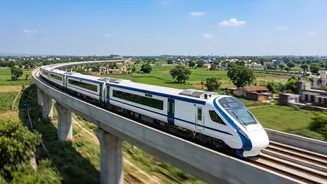
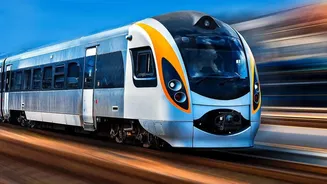
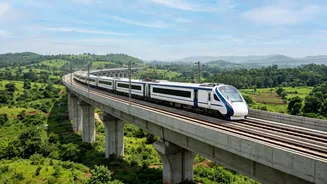
As of September 2026, the Mumbai-Ahmedabad High-Speed Rail (MAHSR) corridor is a beehive of activity. According to Union Railways Minister Ashwini Vaishnaw, significant progress has been made, with the first operational section between Surat and Bilimora
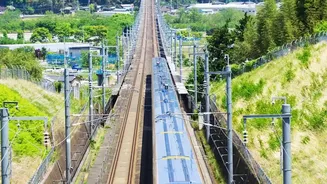
in Gujarat slated for inauguration in 2026. While the full 508-kilometre corridor connecting India's financial capital with the economic hub of Gujarat is now projected for completion closer to 2028, the initial launch marks a pivotal moment. Construction of viaducts, bridges over several rivers, and stations is advancing rapidly. The first testing coach is ready, and trials on the completed sections are imminent, signalling that the era of high-speed rail in India is about to begin.
More Than Speed: The Economic Proposition
The central proposition of the bullet train is its transformative economic potential. Proponents argue it's not just about cutting the travel time between Mumbai and Ahmedabad from around seven hours to just two; it's about creating an economic corridor that will boost productivity, trade, and tourism. The project is already a significant driver for the construction industry, using millions of tons of cement and steel. Beyond construction, it is expected to generate over one lakh jobs and spur urban development around its 12 stations, creating new commercial hubs. By improving connectivity, the project aims to integrate the economies of two major commercial centres, fostering easier business collaboration and attracting further investment.
A Technological Leap with Japanese Partnership
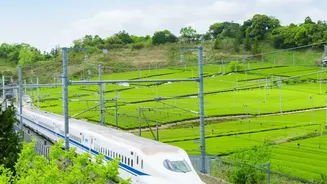
At its core, the project is a massive technological undertaking, implemented in collaboration with Japan and utilising its famed Shinkansen system. This technology is renowned for its impeccable safety record and punctuality. The partnership involves not just financial assistance but a deep transfer of sophisticated technology, from earthquake-resistant structures to advanced signalling systems. However, this has also been a challenge, requiring Indian teams to adapt complex systems and skills. A significant part of the proposition is the push for 'Atmanirbhar Bharat' or self-reliant India. An indigenous bullet train prototype is also under development, with trial runs expected by mid-2027, showcasing India's ambition to not just operate but also build high-speed rail technology.
The High Cost of Ambition
The proposition is not without its critics, primarily centred on the project's staggering cost and delays. Originally estimated at ₹1.08 lakh crore, the budget has reportedly swelled significantly due to hurdles like land acquisition and the pandemic's impact. Acquiring land across densely populated areas in Gujarat and Maharashtra proved to be a complex and time-consuming process, leading to legal challenges and increased compensation payouts that threatened to escalate costs further. These delays and cost overruns have fuelled a debate about whether such a massive expenditure is justified when other parts of the conventional railway network also need upgrading.
A Symbol for a New India
Ultimately, the bullet train proposition extends beyond balance sheets and timelines. In 2026, it stands as a powerful symbol of a 'New India'—an India with the ambition to execute world-class, technologically advanced infrastructure projects. For the government, its successful launch, even in a phased manner, is a testament to its vision for a 'Viksit Bharat' or developed India. It represents a commitment to modernising the country's transportation network and placing India among a select group of nations with high-speed rail capabilities. The project is seen as a catalyst that will set the standard for future high-speed corridors planned across the country, potentially redrawing India's economic map.