







The Grim Diagnosis in Clinics
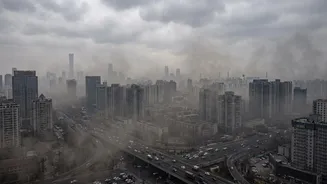
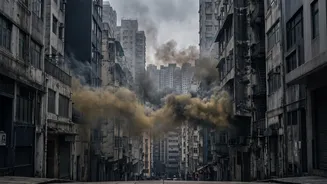
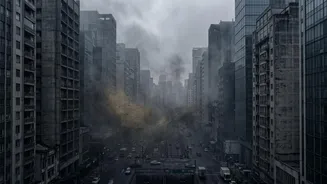
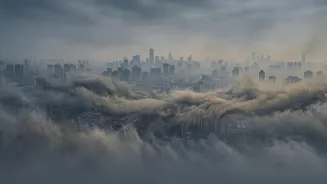
Across the National Capital Region, physicians are witnessing a predictable yet alarming surge in patients. As soon as October arrives and air quality plummets, clinics and hospitals see a rise in cases of persistent coughing, chest tightness, and breathlessness.
Doctors at leading hospitals have declared the situation a public health emergency, pointing out that the health assault begins before birth and continues to the end of life. The immediate symptoms are just the tip of the iceberg; they include irritated eyes, sore throats, and worsening of existing conditions like asthma and Chronic Obstructive Pulmonary Disease (COPD). Healthy individuals are not immune, often developing discomfort and reduced exercise tolerance after exposure to the toxic air. This seasonal pattern is no longer a mere inconvenience; it's a chronic health burden on millions.
A 'Cigarette A Day' Reality
The comparison that truly brings the danger into focus is the one between breathing Delhi's air and smoking. Several studies and health experts have quantified this risk. Some analyses have concluded that, on average, a person living in Delhi inhales air so toxic it is equivalent to smoking roughly nine or ten cigarettes per day. On particularly bad days, this figure can surge to the equivalent of smoking nearly 18 to 20 cigarettes. This isn't just a metaphor. The fine particulate matter, known as PM2.5, that chokes the city's air contains many of the same carcinogenic compounds found in cigarette smoke. These microscopic particles are so small—about 30 times smaller than the width of a human hair—that they bypass the body's natural defences, lodging deep within the lungs and even entering the bloodstream.
Beyond the Lungs: A Full-Body Assault
While the lungs are ground zero, the damage from air pollution is systemic. Once PM2.5 particles enter the bloodstream, they travel throughout the body, triggering inflammation and affecting nearly every organ. Medical experts warn that long-term exposure significantly increases the risk of cardiovascular problems like heart attacks, strokes, and hypertension. The pollutants can inflame blood vessels and reduce the body's oxygen supply, putting immense strain on the heart. But the damage doesn't stop there. Research now links air pollution to an increased risk of dementia, Alzheimer's disease, and even mental health issues like depression and anxiety. Doctors also warn of connections to liver and kidney disorders, fertility problems, and various types of cancer, including bladder and breast cancer.
Why It's a Crisis Beyond Choice
The smoking analogy, while powerful, has a crucial limitation: you can choose not to smoke. You cannot choose not to breathe. This is what makes Delhi's pollution a fundamentally different and more insidious public health crisis. Every resident, from a newborn infant to the elderly, is involuntarily exposed. As one pulmonologist noted, there are effectively no non-smokers in Delhi-NCR during the winter months. This blanket exposure means that even those who lead healthy lifestyles are subjected to daily damage they cannot escape. While smokers accept a personal risk, the city's residents have that risk forced upon them, turning the very act of survival into a long-term health hazard.
An Irreversible Toll on Children
Perhaps the most tragic consequence is the impact on children. Because their bodies and lungs are still developing, they are uniquely vulnerable. Children breathe more air relative to their body weight than adults, and their developing immune systems are less equipped to handle the toxic load. Studies have shown that a staggering number of children in Delhi—some reports estimate up to 2.2 million—suffer from irreversible lung damage due to air pollution. This early-life exposure is linked to a rise in childhood asthma, bronchitis, and pneumonia. Furthermore, the damage isn't just physical. Surveys have found that poor air quality causes significant mental distress in children, with a majority reporting feelings of anxiety, irritation, and fear due to the pollution.