


An Unplanned Lunar Collision
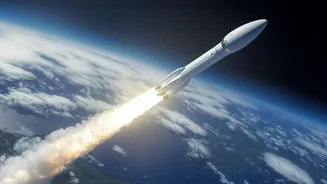
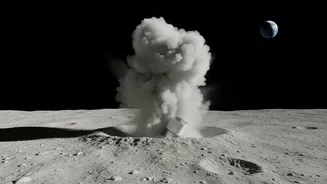
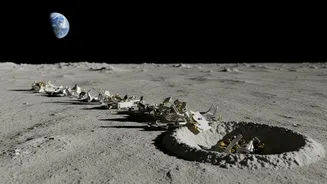
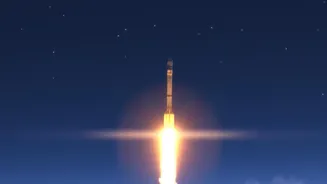
Early on August 5, 2026, a discarded upper stage of a Falcon 9 rocket, launched in January 2025, ended its journey by crashing into the Moon. Weighing four tonnes and the size of a small bus, the object struck the lunar surface at a blistering 8,700 km/h.
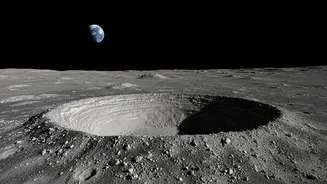
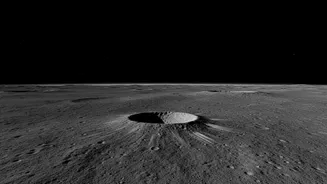
The impact, which occurred on the Moon's far side near a feature known as Einstein Crater, was unintentional. After deploying its payload, the rocket stage was left in a chaotic orbit where solar activity and gravity eventually sealed its fate, sending it on a collision course that astronomers had been tracking for months. While scientists hoped to study the resulting plume of lunar dust, which they observed using telescopes in Chile, the event itself was not visible in real-time from any orbiting spacecraft. The crash gouged a new crater estimated to be up to 100 feet wide, adding another human-made scar to the celestial body.
The Growing Junkyard Above
This lunar impact is a dramatic example of a much larger issue: space debris. Often called space junk, this category includes everything from defunct satellites and spent rocket stages to tiny flecks of paint and frozen propellant. The European Space Agency estimates there are around 34,000 objects larger than 10 cm orbiting our planet, along with millions of smaller, untrackable pieces. These objects travel at incredible speeds, where even a small fragment can cause catastrophic damage to an operational satellite or a crewed spacecraft like the International Space Station. The concern is so great that it has a name: the Kessler Syndrome. This theory posits that a single collision could create a cascade of further impacts, generating so much debris that it could render certain orbits unusable for generations.
Risks for a New Era of Exploration
As nations and private companies, including India with its ambitious Chandrayaan and Gaganyaan missions, ramp up their space activities, the problem of debris becomes more acute. The Moon, once a pristine environment, now bears the marks of several human-made impacts, both intentional and accidental. With plans for lunar bases and sustained human presence, stray hardware poses a direct threat. Beyond the collision risk, there are concerns about contaminating scientifically valuable sites, like permanently shadowed craters that may hold water ice. This recent crash serves as a warning that our habits on Earth are following us into space. Leaving hardware to drift uncontrollably is an unsustainable practice that jeopardises the future of exploration for everyone.
A Call for Cosmic Responsibility
The incident has intensified calls for more robust international guidelines on 'responsible mission planning'. Currently, international space law, primarily based on the 1967 Outer Space Treaty, holds nations responsible for their space objects but lacks specific, enforceable rules about debris disposal. Experts are pushing for a new global standard where missions are designed with a clear end-of-life plan. This could mean designing rockets and satellites with enough reserve fuel to be directed into a safe re-entry over the ocean or moved to a designated 'graveyard orbit'. The United Nations has issued guidelines asking operators to de-orbit satellites within 25 years, but these are difficult to enforce. Ultimately, preventing the creation of new junk is far cheaper and easier than cleaning up what is already there.