





The World's Oldest Shipwreck?
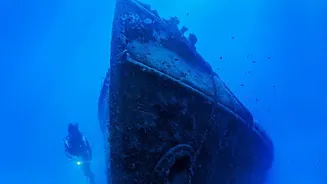
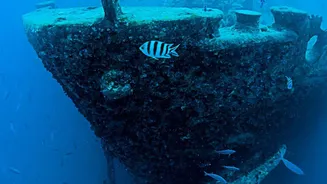
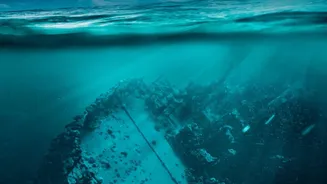
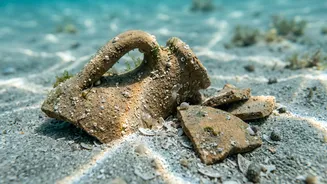
In the waters near Kekova Island in Antalya, southern Turkey, a team of underwater archaeologists has uncovered what may be the oldest shipwreck ever found. While the ship's wooden hull has long since disintegrated, its cargo of more than 30 ceramic storage
jars, known as amphorae, remains scattered on the seabed. Led by Professor Hakan Öniz of Akdeniz University, the team dated the artefacts to the Early Bronze Age, making them between 4,400 and 4,700 years old. This incredible age places the vessel's final voyage around the same time the Great Pyramid of Giza was being constructed in Egypt, potentially rewriting the history of maritime trade. Before this, the oldest known wreck was dated to about 4,200 years ago, found off the coast of Greece.
A Window into Ancient Globalisation
This discovery is more than just old pottery; it's a vital clue to understanding a period of burgeoning international commerce. During the Early Bronze Age, the demand for metals like copper and tin, essential for making bronze, spurred complex and long-distance trade routes across the Mediterranean. The Kekova ship, though small at an estimated 10 metres long, was a part of this vast network. Clay analysis of the amphorae suggests they were produced in workshops in the Jordan Valley, part of the ancient Levant. Similar jars have been found in Egypt, Troy, and Crete, indicating that goods from the Levant were being shipped far and wide. This ship was likely travelling west from the Levantine coast, possibly heading towards Crete or Troy, when it met its end.
What the Cargo Reveals
The amphorae were the shipping containers of their day, and their contents provide direct evidence of the goods being traded. Archaeologists were astonished to find that some of the jars still contained a glossy, viscous residue of their original contents, likely olive oil or wine. This provides a rare, tangible link to the agricultural products that fuelled ancient economies. Even more intriguing is one unusual pot with nine distinct markings and two holes in its body. Researchers have proposed this might have been a churn used to make cheese or butter, which suggests the sailors may have even carried live goats on their voyages for fresh dairy. Alongside the pottery, three large stone anchors were found, giving us a clearer picture of the technology used to navigate these ancient seaways.
The Rich Waters of Kekova
The area around Kekova Island is a hotbed of underwater cultural heritage. The region is famous for its partially submerged ruins of the ancient Lycian settlement of Simena, often called the 'Sunken City'. This latest discovery adds another, much older, layer to the area's rich maritime history. The Turkish Ministry of Culture and Tourism has documented over 430 archaeological shipwrecks in its waters, a testament to millennia of trade and travel along the Anatolian coast. The excavation of the Kekova wreck was challenging, with the artefacts embedded on a rocky underwater slope, but the effort is paying off by illuminating a previously missing chapter of history.
What Happens Next?
The recovered artefacts are now undergoing careful conservation and analysis. The residues found inside the amphorae will be subjected to laboratory tests to confirm exactly what the ship was carrying. The pottery itself, with its unique shapes and markings, continues to be studied to refine its age and origin. The finds are expected to become a centrepiece exhibit at the new Mediterranean Underwater Archaeology Museum in Antalya, allowing the public to come face-to-face with this incredible piece of human history. This discovery proves that there are still monumental secrets waiting beneath the waves, holding the potential to reshape our understanding of the ancient world.