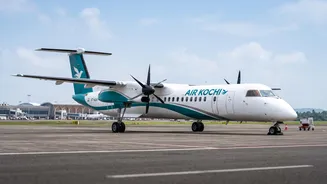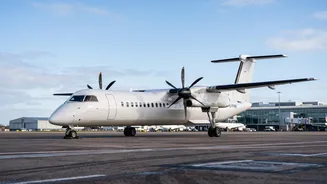








Kerala is embarking on an ambitious journey to launch India's first co-operative airline, tentatively named Co-Keralam. Central to its initial strategy is a seemingly specific choice: the decision to lease just two 72-seat aircraft to begin.
A New Model for Indian Aviation
Kerala's government
has given its approval for the Keralam Civil Aviation Development Cooperative Society to launch a new airline. This venture is unique as it aims to be India's first airline operating under a cooperative model. The plan involves raising capital from around 200 cooperative societies, each contributing towards a goal of approximately Rs 400 crore, a model inspired by the successful financing of Cochin International Airport. The airline, spearheaded by a team associated with the MVR Cancer Centre, aims to make regional air travel more affordable and accessible, with the state's Chief Minister and Cooperation Minister expected to hold key leadership positions in the company.
The Strategic Choice of the 72-Seater
The decision to launch with two 72-seat aircraft is a calculated move that speaks volumes about the airline's business plan. This aircraft size, typically a turboprop like the ATR 72, is widely considered the workhorse of regional aviation in India and globally. These planes are designed for short-haul routes, connecting destinations that are relatively close to each other. Their primary advantage lies in economics: turboprop engines consume significantly less fuel—up to 40% less—than regional jets on shorter flights, making them highly cost-effective. This efficiency is crucial for a startup airline trying to manage high operating costs in India's price-sensitive market.
Connecting the Dots: Routes and Connectivity
The 72-seater is perfectly suited for the initial network Co-Keralam plans to serve. With Kochi as its proposed base, the airline aims to connect to cities within Kerala like Kozhikode and Kannur, as well as nearby regional hubs such as Bengaluru, Chennai, Coimbatore, Madurai, and Mangaluru. These are quintessential turboprop markets—routes where passenger demand may not be enough to consistently fill a larger jet, but is sufficient for a 72-seat aircraft. This approach allows the airline to offer frequent flights, building a reliable network for travellers moving between South India's key Tier-2 and Tier-3 cities. The aircraft's ability to operate from shorter runways, often found in smaller airports, is another key advantage.
Aligning with the UDAN Scheme
The choice of aircraft also aligns perfectly with the Indian government's Regional Connectivity Scheme, UDAN (Ude Desh ka Aam Naagrik). This scheme provides subsidies to airlines for connecting unserved and underserved airports, with fare caps on a portion of the seats to make flying affordable for the masses. Airlines like IndiGo and Alliance Air have successfully used 72-seat ATR aircraft to build their regional networks under UDAN. By using these planes, Co-Keralam positions itself to potentially bid for and operate on subsidised UDAN routes, which could provide a stable revenue stream and de_risk its entry into a highly competitive market.
Navigating a Challenging Market
While the strategy appears sound, the path for any new airline in India is fraught with challenges. The market is dominated by giants like IndiGo and the Air India group, which control over 90% of domestic travel. New regional carriers often struggle with high fuel costs, aircraft leasing expenses, thin profit margins, and intense competition. Many regional airlines have ceased operations in the past, highlighting the fragility of this segment. Co–Keralam's success will depend on disciplined cost management, careful route planning, and strong financial backing from its cooperative partners. Starting small with two fuel–efficient aircraft is a pragmatic first step in navigating this tough environment, allowing the airline to test the market before committing to a larger fleet, which it hopes to eventually grow to six planes.