


1. The Horizontal Push
This is any movement where you push a weight away from your torso horizontally. Think of pushing a door open or pushing yourself off the floor. This pattern is fundamental for developing the chest (pectorals), shoulders (anterior deltoids), and triceps.
The classic push-up is a perfect example. To perform it, start in a plank position with your hands slightly wider than your shoulders. Lower your body until your chest is close to the floor, keeping your elbows at about a 45-degree angle to your body, then press back up. This engages your core and stabilizer muscles far more than a machine press. For a modification, you can perform push-ups on your knees or against an elevated surface like a bench.
2. The Horizontal Pull
The direct opposite of the push, this involves pulling a weight towards your torso from in front of you. These movements are crucial for building a strong upper back—including the lats, rhomboids, and traps—and for promoting good posture. In a world where many of us are hunched over desks, horizontal pulls help counteract that forward slouch by strengthening the muscles that pull your shoulders back. A great example is the bent-over dumbbell row. Hinge at your hips, keeping your back straight, until your torso is nearly parallel to the floor. Let the dumbbells hang, then pull them towards your ribcage, squeezing your shoulder blades together at the top. This builds thickness in the back and improves shoulder stability.
3. The Vertical Push
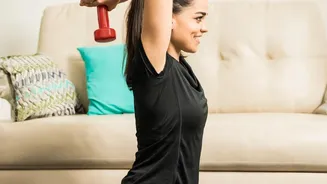
This pattern involves pressing a weight overhead, moving it vertically away from your shoulders. It is one of the best ways to build strong, stable shoulders and triceps. Developing overhead strength is essential for many daily activities, from placing a heavy item on a high shelf to lifting a child. The dumbbell overhead press is an excellent choice. Sit or stand with a dumbbell in each hand at shoulder height, palms facing forward. Brace your core to keep your back straight and press the weights directly overhead until your arms are fully extended. This movement not only builds powerful shoulders but also demands significant core strength to stabilize the spine.
4. The Vertical Pull
As the name suggests, this is the motion of pulling a weight down from an overhead position. It's a foundational movement for building a wide, strong back, primarily targeting the latissimus dorsi (lats). Strong lats are key for good posture, spinal health, and overall pulling power in sports and life. The pull-up is the undisputed king of this category. Grasp a bar with your hands shoulder-width apart and palms facing away, and pull your chin over the bar. If a full pull-up is too challenging, you can start with assisted variations, such as using a resistance band or a lat pulldown machine, which mimics the same movement pattern.
5. The Loaded Carry
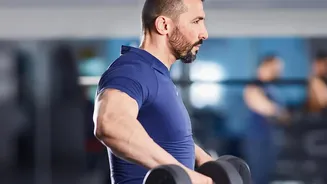
Perhaps the most functional movement of all, the loaded carry involves simply picking up a heavy weight and walking with it. This exercise, often done as a Farmer's Walk with a dumbbell or kettlebell in each hand, builds tremendous full-body strength. It challenges your grip, upper back, traps, and core stability all at once. The act of walking while carrying a load forces your core to work overtime to prevent your torso from bending or twisting. It also improves posture by forcing you to keep your chest up and shoulders back. The beauty is its simplicity: pick up heavy weights, stand tall, and walk for a set distance or time. It directly translates to real-world tasks like carrying groceries or luggage.