






The Promise of a Greener Planet
Over the past decade, a powerful idea has taken root: that humanity can actively repair the planet’s damaged ecosystems. This vision has been championed through major global efforts like the Bonn Challenge, which aims to restore 350 million hectares of
degraded land by 2030, and the UN Decade on Ecosystem Restoration (2021-2030). These initiatives represent a worldwide commitment to not just halt deforestation, but to reverse it by replanting native trees, revitalizing soils, and restoring ecological balance. More than 90 countries have pledged to restore vast tracts of land, an area collectively larger than India. The potential benefits are immense, from capturing billions of tonnes of carbon and protecting biodiversity to ensuring food security and resilient livelihoods for billions of people who depend directly on forests.
A Widening Gap Between Pledges and Progress
Despite the bold commitments, the reality on the ground is falling dangerously short of these targets. According to the Food and Agriculture Organization of the United Nations (FAO), while countries have pledged to restore over 190 million hectares, actual restoration progress is insufficient. The world continues to lose forests at an alarming rate, particularly in the tropics where 96% of deforestation occurs. A 2026 report from the UN noted that while many countries have strengthened forest governance, loss and degradation continue in several regions, undermining the ambitious goals set for 2030. This gap isn't just a matter of missing a target; it represents a significant setback in the global fight against climate change and a failure to protect the ecosystems that sustain all life on Earth.
The Pressures Mounting Against Forests
Several powerful forces are preventing restoration pledges from becoming healthy forests. The single biggest driver of deforestation remains agricultural expansion. An estimated 80% of forest loss is linked to clearing land for commodities like palm oil, soy, and cattle grazing, a pressure that is only intensifying with a growing global population. Compounding this is a significant funding gap. Experts estimate that achieving the 2030 restoration goals will require hundreds of billions of dollars, but investment remains slow, particularly in low-income regions where it is needed most. Furthermore, many projects are hampered by unclear land rights and a lack of local community involvement. When local people who live in and around forests are not consulted or given ownership, restoration projects often fail.
Not All Trees Are Created Equal
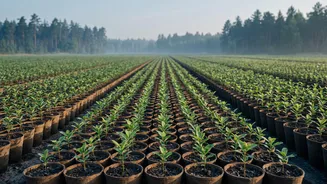
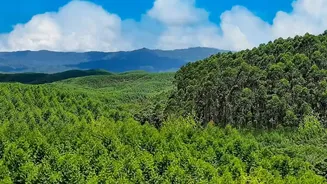
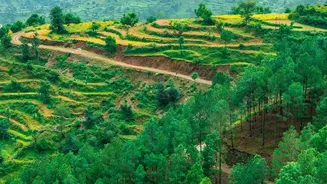
Even when trees are planted, the approach often leads to failure. A common criticism of many large-scale projects is the focus on planting trees rather than growing forests. This frequently results in vast monoculture plantations—single, non-native species planted in neat rows. While these may look green from a distance, they do not function as true forests. They lack biodiversity, are more vulnerable to disease and climate shocks, and provide few of the ecological benefits of a natural, diverse ecosystem. True forest landscape restoration aims to restore functionality, creating a mosaic of land uses that includes regenerating forests, agroforestry, and protected areas. Experts argue that the metric for success should not simply be the number of seedlings planted, but the number that survive and thrive to become a resilient, self-sustaining forest.
Where Restoration is Working
The picture is not entirely bleak. Success stories around the world offer a blueprint for how to get restoration right. The key is often a bottom-up approach that empowers local communities and Indigenous peoples, who are the stewards of a majority of the world's remaining intact forests. Projects that prioritize native species, involve local stakeholders in decision-making, and provide direct economic benefits—such as through agroforestry, which combines trees with crops—tend to have much higher survival rates. For example, case studies from the Trinational Atlantic Forest Pact across South America show that collaborative, landscape-scale efforts can yield significant results. These successes demonstrate that when restoration is designed with both people and nature in mind, it can be a powerful and cost-effective solution to some of our most pressing environmental challenges.