

The Myth of a Single Martian Climate
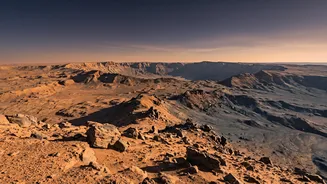
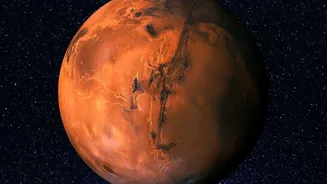
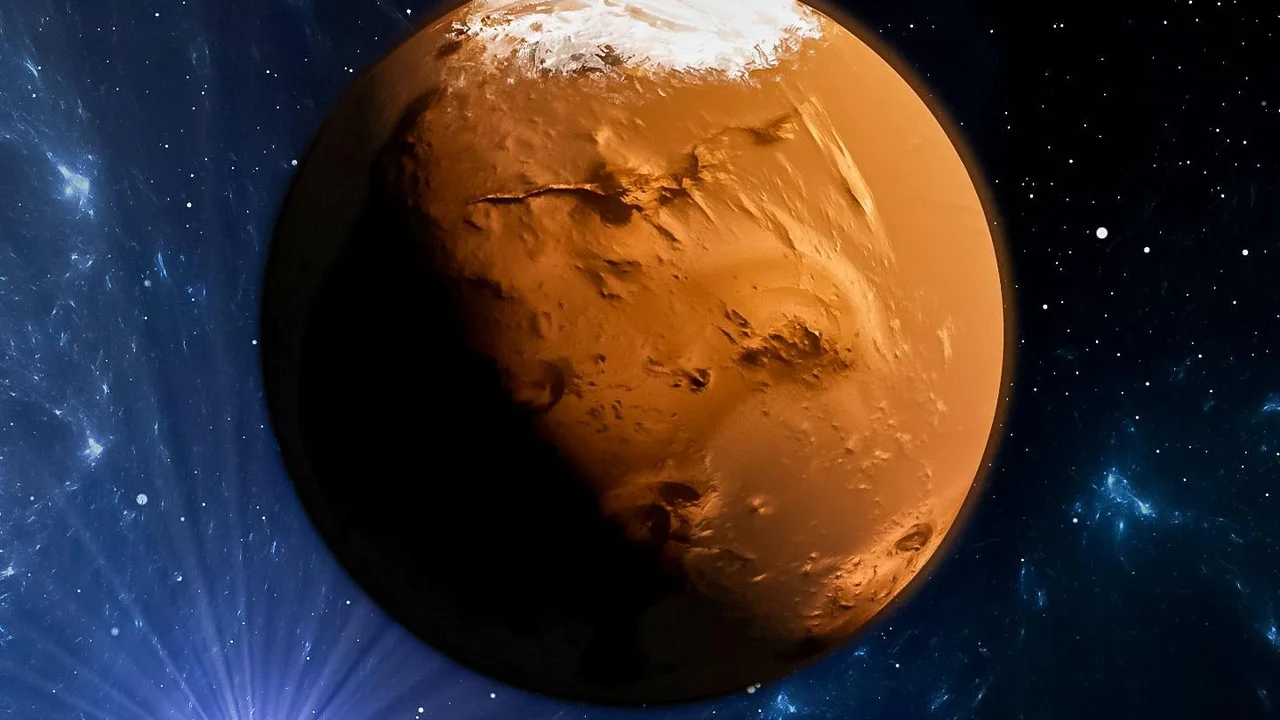
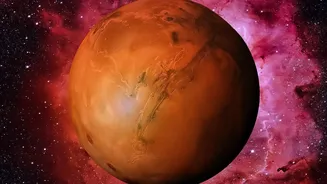
Thinking of Mars as having one average temperature is like describing Earth’s climate by only using the temperature in Antarctica. The reality is a world of dramatic extremes. The Red Planet has an average temperature of about minus 63 degrees Celsius,
but that single number hides a staggering range of conditions. Near the equator on a summer day, surface temperatures can reach a relatively balmy 20°C. But at night, the same location can plummet to minus 73°C or lower. At the poles in winter, it can drop to a breathtaking minus 153°C. This wild fluctuation is largely due to Mars's thin atmosphere, which is about 100 times less dense than Earth's and composed mostly of carbon dioxide. With no thick atmospheric blanket or oceans to retain heat, the planet quickly loses whatever warmth it absorbs from the sun, leading to massive day-night temperature swings that can crack equipment and stress any future habitat.
The Planet-Engulfing Dust Storms
The most famous and dangerous feature of Martian weather is its dust storms. While small, tornado-like dust devils are common, the planet also experiences regional storms that can cover areas the size of continents and last for weeks. Roughly every three Martian years (about five and a half Earth years), these can merge into a global event, shrouding the entire planet in a dusty haze. While the winds, reaching up to 96 kilometres per hour, wouldn't have the same force as on Earth due to the thin air, the dust itself is the primary threat. This fine, electrostatic dust clings to everything, getting into gears and mechanical parts. More critically, it blocks sunlight, which is fatal for solar-powered missions. The Opportunity rover, which operated for over 14 years, finally went silent in 2018 after a global dust storm blocked the sun, preventing it from recharging its batteries. The InSight lander met a similar fate in 2022.
More Than Just Dust and Cold
Beyond dust, Mars has a surprisingly complex weather system. The thin air still supports clouds made of both water ice and frozen carbon dioxide (dry ice), which can form high in the atmosphere or create polar hoods over the winter poles. Frost can form on the ground overnight, with humidity reaching 100% before the morning sun vaporizes it. Furthermore, the planet's atmospheric pressure changes significantly with the seasons—by as much as a third—as carbon dioxide freezes out of the atmosphere onto the polar caps in winter and sublimates back into a gas in summer. These dynamic pressure systems, combined with extreme temperature gradients, create winds and other atmospheric phenomena that are still not fully understood. Scientists are now using machine learning models to try and improve forecasting, but predicting the sudden onset of major storms remains a significant challenge.
Forecasting for Rovers and Helicopters
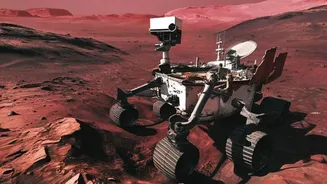
Accurate, localised weather reports are not an academic exercise; they are a daily operational necessity. NASA’s rovers, like Curiosity and Perseverance, act as mobile weather stations. Perseverance is equipped with the Mars Environmental Dynamics Analyzer (MEDA), a suite of sensors that measure wind speed and direction, temperature, humidity, and the amount of dust in the atmosphere. This data is crucial for planning the rover's daily activities. It was also essential for the pioneering flights of the Ingenuity Mars Helicopter. The helicopter's ability to generate lift is directly affected by air density, which changes with temperature. Warmer summer temperatures made the already thin atmosphere even thinner, forcing engineers to increase the helicopter's rotor speed to keep it flying. These hyper-local forecasts are the first step toward building a true meteorological network on another planet.
The Stakes for Human Exploration
For robotic missions, bad weather can mean the end of a mission. For human explorers, it could be a life-or-death situation. Astronauts on Mars will face numerous hazards, from intense radiation to the abrasive, potentially toxic dust. A sudden, poorly forecasted dust storm could reduce visibility during extra-vehicular activities (EVAs), damage life support systems, and compromise habitats. The dust itself, if inhaled, could pose significant health risks. Furthermore, the extreme temperature cycles would put constant stress on habitats, spacesuits, and equipment. Planning for a crewed mission requires not just knowing the average conditions but being able to reliably predict local weather days in advance. Any long-term human presence will depend on our ability to build robust systems that can withstand the worst of Mars's weather and create accurate forecasting models to keep astronauts safe.