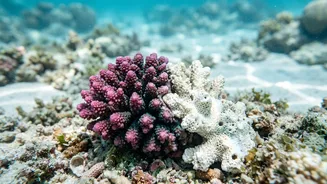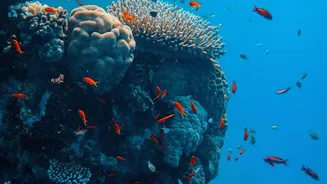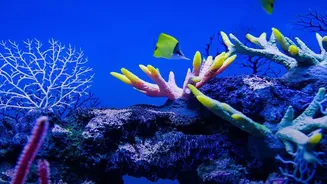

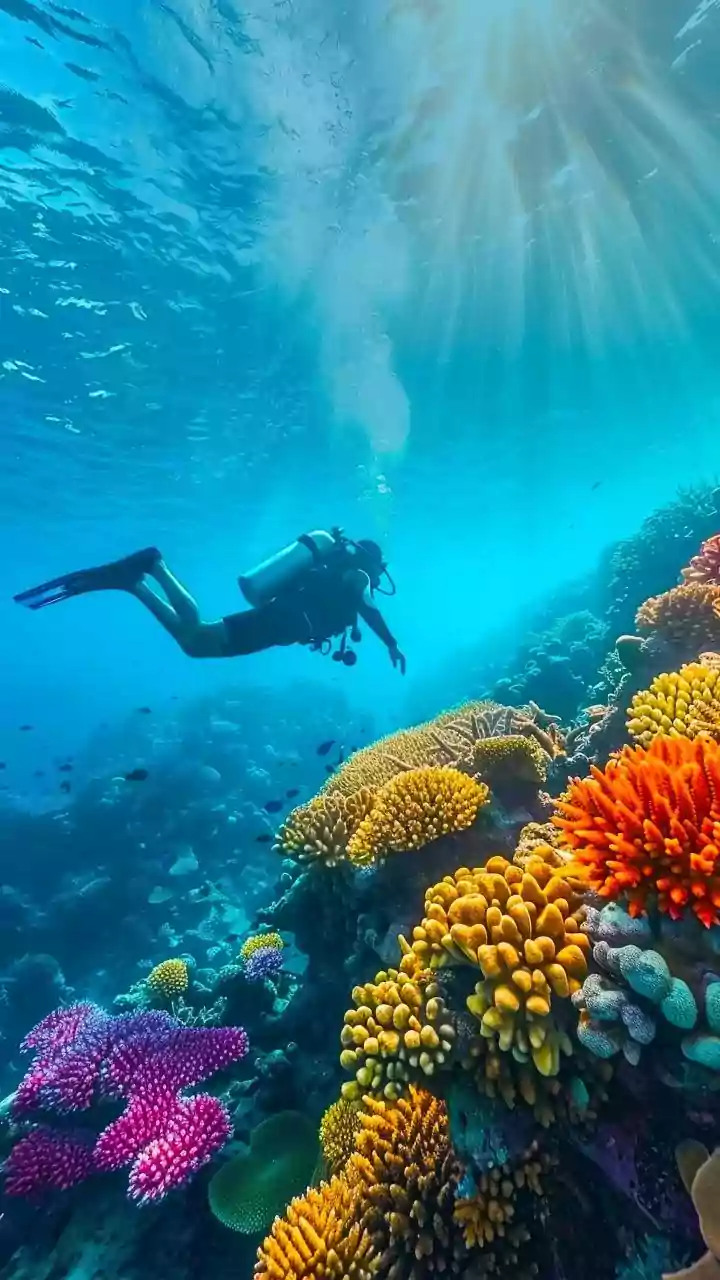

The ghostly white expanse of a bleached coral reef is a haunting symbol of climate change. But a stunning new discovery offers a glimmer of hope, revealing a natural rescue mission that happens when a healthy coral simply touches a dying one.
A Healing Touch for Dying Reefs
Scientists
have discovered a remarkable survival mechanism: a healthy coral can transfer its life-giving algae to a bleached, starving neighbour, effectively jump-starting its recovery. This breakthrough occurred after an accidental observation in a lab tank at Stanford University, where a researcher noticed a bleached coral fragment regaining its colour where it had fallen against a healthy one. This led to controlled experiments that confirmed the phenomenon. When fragments from the same original coral colony were placed in direct contact, the bleached ones made a full recovery within weeks. In contrast, bleached fragments kept just millimetres away died.
The Science of Symbiosis
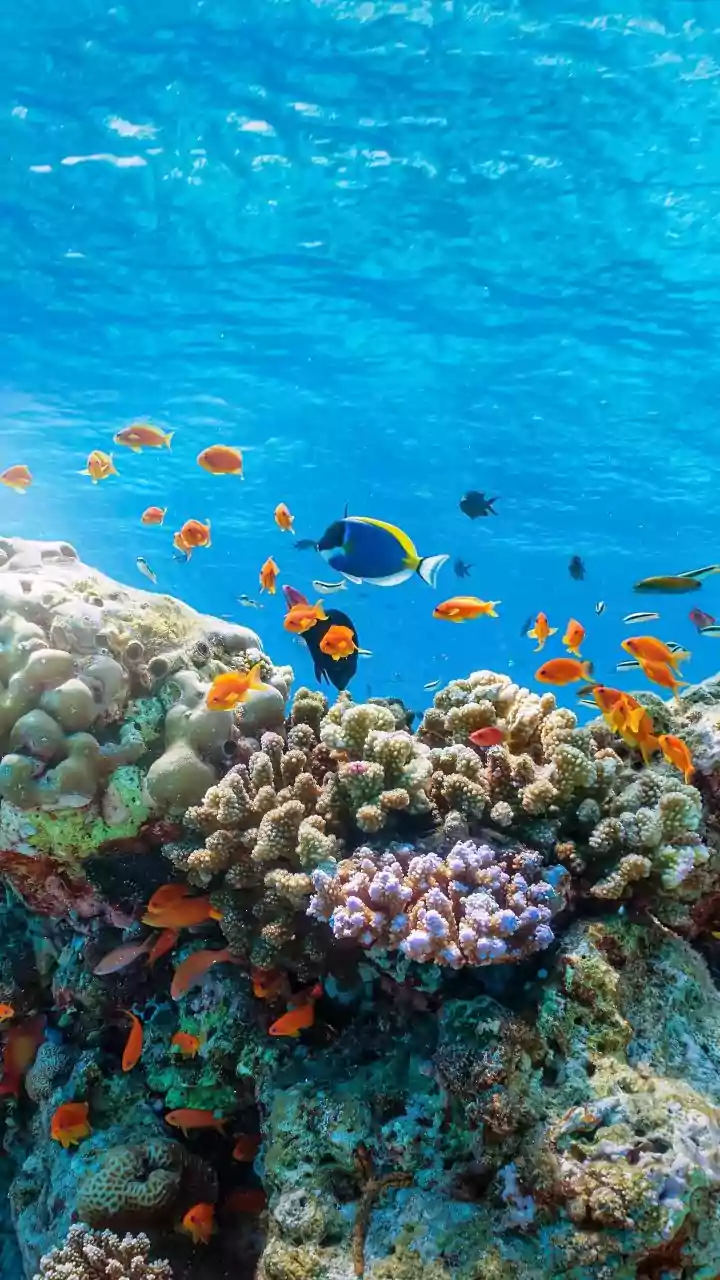
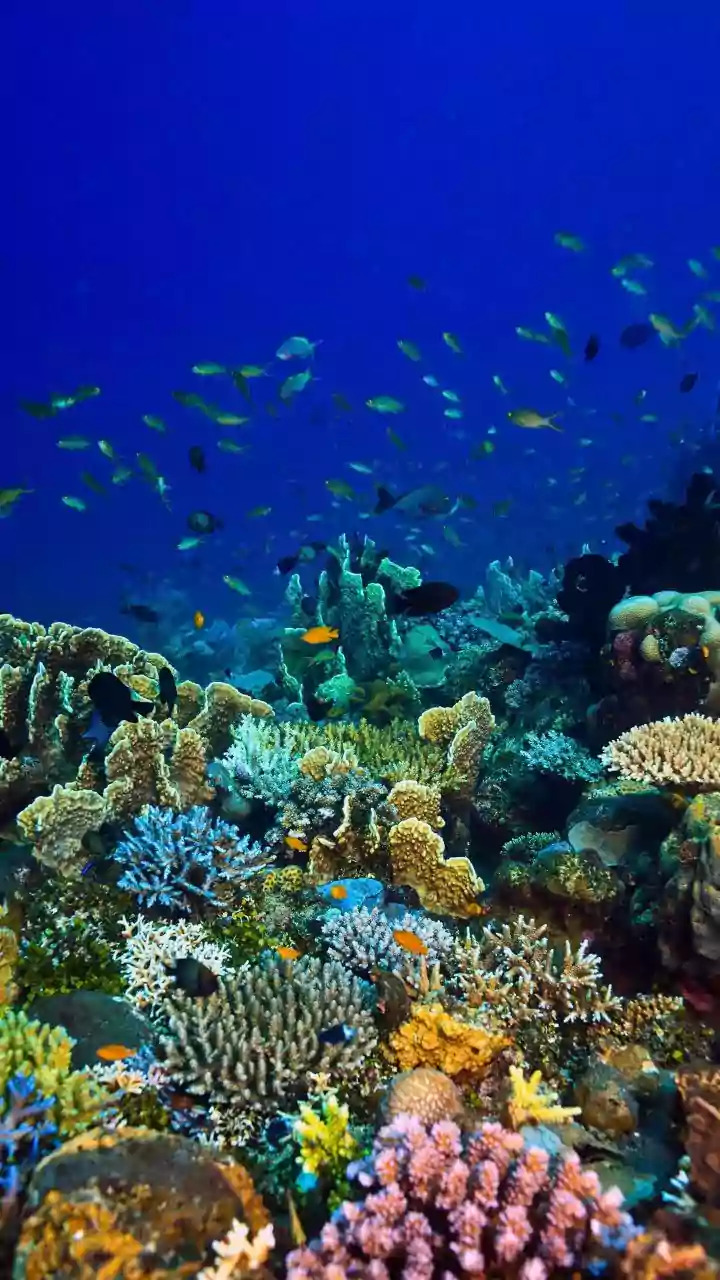
To understand why this is so significant, you have to know about the partnership that powers coral reefs. Corals are animals, and their vibrant colours come from microscopic algae, called zooxanthellae, living inside their tissues. This relationship is mutualistic: the algae use photosynthesis to create food, providing up to 90% of the coral's energy needs. In return, the coral provides the algae with shelter and essential nutrients. When ocean temperatures rise, stressed corals expel their algae. Without their primary food source, the corals turn bone-white—a process called bleaching—and are left vulnerable to disease and starvation.
How the Transfer Works
The research team used powerful microscopes to see how this 'healing touch' happens. They found that when two genetically identical coral fragments make contact, they can fuse their living tissues. This fusion creates a bridge, allowing the algae and nutrients from the healthy coral to flow directly into the bleached one. Remarkably, the process is incredibly fast. Algae were seen moving into the bleached coral within just three days. Even more surprising, the contact doesn't need to be permanent. Just a week of contact was enough to transfer sufficient algae to allow the bleached coral to recover on its own. Once transferred, the algae began to multiply at a rapid rate, doubling every four days—a rate nearly ten times faster than seen in the wild.
Not a Silver Bullet
While this discovery is incredibly exciting, it comes with important limitations. The most critical one is that the tissue fusion and rapid transfer only works between corals that are genetically identical—clones from the same parent colony. When fragments from different individuals of the same species were placed together, they didn't form the same compatible bridge. This poses a major challenge for applying this technique on a large scale across a wild reef, where countless genetically distinct colonies live side-by-side. Matching compatible individuals would be a monumental task. Furthermore, the experiments were conducted in a controlled lab setting, and it remains to be seen how effective this process would be in natural ocean conditions with other environmental stressors.
Implications for Reef Restoration
Despite the limitations, this new understanding opens up promising avenues for coral conservation. Scientists are hopeful that by deciphering the biological mechanisms behind this transfer, they might develop new, more efficient restoration methods. Instead of having to physically touch coral fragments together on a reef, it might one day be possible to cultivate beneficial algae and introduce them to damaged corals in a targeted way. The discovery fundamentally changes how scientists view bleached corals—not as a lost cause, but as organisms with a remarkable capacity for rapid recovery if given the right help.