







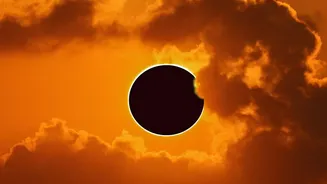
A Tale of Two Eclipses
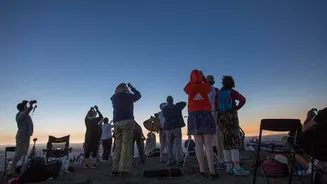
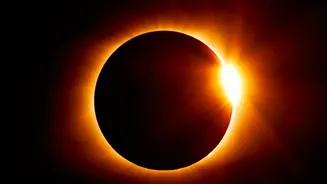
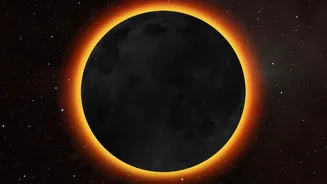
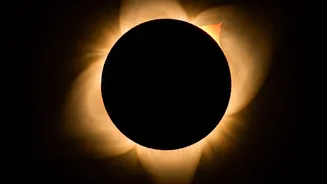
For much of the modern world, an eclipse is a shared spectacle, a moment of collective wonder. Social media feeds flood with images of the sun’s corona or the moon’s crimson glow. People travel thousands of kilometres to be in the path of totality, armed
with special glasses and a sense of participating in a grand astronomical event. It is a celebration of science, a chance to witness the clockwork of our solar system in real-time. This global enthusiasm, however, stands in stark contrast to the deeply ingrained traditions observed across India, where an eclipse is often viewed not with wonder, but with caution.
The Voice of Ancient Belief
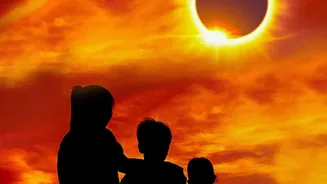
In many Indian households, the onset of a 'grahan' (eclipse) triggers a set of long-standing rituals. The most common advice is to stay indoors and avoid looking at the sky. Pregnant women are especially cautioned to remain inside to protect their unborn children from supposed ill effects. It is also a widespread practice to fast during the eclipse, with the belief that food cooked or consumed during this period becomes impure or contaminated. Temples close their doors, as the period is considered inauspicious for worship, and many families undertake a thorough cleaning of the house and take a ritual bath once the eclipse has passed to cleanse any lingering negative energies. These practices are not random; they are rooted in a powerful mythological narrative that has shaped cultural attitudes for centuries.
The Cosmic Revenge of Rahu and Ketu
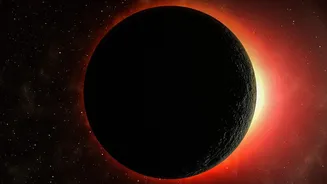
At the heart of these traditions is the story of Svarbhanu, an asura (demon) from Hindu mythology. According to the Puranas, during the 'Samudra Manthan' (the churning of the cosmic ocean), Svarbhanu disguised himself to steal a sip of 'amrita', the nectar of immortality. The sun god, Surya, and the moon god, Chandra, spotted the deception and alerted Lord Vishnu. Vishnu swiftly decapitated the asura with his Sudarshana Chakra, but not before a drop of nectar had passed his throat. His head, now immortal, became Rahu, and his body became Ketu. Filled with vengeance against the sun and moon for exposing him, Rahu is said to periodically chase and swallow them, causing an eclipse. Since Rahu has no body, the sun or moon eventually re-emerges. This mythological event frames the eclipse as a moment of cosmic struggle, when the forces of darkness temporarily overpower the sources of light and life, rendering the period inauspicious.
Science, Safety, and Superstition
From a scientific perspective, there is a clear distinction between a solar and lunar eclipse. Looking directly at a solar eclipse without specialised eye protection can cause severe and permanent eye damage. This singular, verifiable danger may be the practical origin of the overarching advice to simply 'not look.' However, a lunar eclipse is perfectly safe to view with the naked eye. Science offers no evidence to support the idea that eclipses emit harmful rays that can affect food, health, or pregnancy. The drop in temperature is negligible, and there is no documented increase in airborne germs. These traditional beliefs are generally considered superstitions by the scientific community. Yet, for many who observe the rituals, it's less about literal belief and more about a cultural worldview that sees the universe as an interconnected web of energies, where such cosmic events can have subtle influences.
Navigating Belief in Modern India
Today’s India is a blend of the ancient and the modern, and attitudes toward eclipses reflect this diversity. In urban centres, many people, particularly the youth, treat eclipses as the astronomical wonders they are, joining the global community of sky-gazers. Yet, even among those who understand the science, many will still adhere to certain traditions out of respect for their elders or as a link to their cultural heritage. It's not uncommon to find a person who photographs the eclipse with their telescope but refrains from eating until it's over. This blend of scientific curiosity and cultural observance highlights a complex reality where myth and physics coexist. For many, observing eclipse rituals is a way to pause, reflect, and honour a tradition that connects them to generations past.