





The Sales Figures Speak Volumes
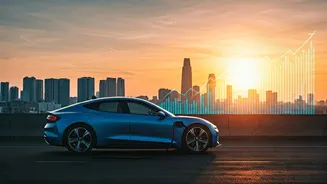
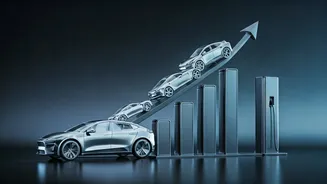
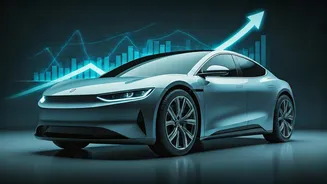
India's electric passenger vehicle market is experiencing an unprecedented boom. The first half of 2026 has seen registrations approach 1.5 lakh units, with projections expecting annual sales to cross the 3 lakh mark for the first time ever this year.
This represents a significant leap from just under two lakh units sold in all of 2025. Leading the charge are domestic and international automakers who are aggressively pushing into the segment. In June 2026, the market saw over 31,000 EVs sold, a first-time milestone, representing a 106% year-on-year growth. Tata Motors continues to dominate, with its sales doubling year-on-year to over 12,000 units in June alone. The company's diverse portfolio, including popular models like the Nexon EV and Punch EV, has been a key driver. However, competition is heating up, with Mahindra & Mahindra emerging as a strong second, crossing 7,000 units in May. The market is no longer a one-horse race, with players like MG Motor, Maruti Suzuki, and even new entrants like Vietnam's VinFast making their presence felt.
Government in the Driver's Seat
The government's role in this transition cannot be overstated. A multi-pronged policy approach has created a fertile ground for the EV ecosystem to flourish. The FAME (Faster Adoption and Manufacturing of Electric Vehicles) scheme has been central, providing subsidies that make EVs more affordable, particularly for two and three-wheelers which form the bulk of EV sales. While direct consumer subsidies for electric cars are being phased out, the focus has shifted to strengthening the manufacturing base. The Production Linked Incentive (PLI) schemes for both automobiles and Advanced Chemistry Cell (ACC) batteries are proving to be game-changers. With an outlay of nearly ₹26,000 crore for the auto sector, the PLI scheme incentivises domestic manufacturing of advanced automotive technology, attracting significant investment and encouraging companies to build a robust local supply chain. This focus on localisation aims to reduce India's heavy reliance on imported components, particularly battery cells from China.
More Choices, Better Cars
For years, the Indian consumer had limited options when it came to electric cars. That has changed dramatically. The number of available electric car models has more than doubled in the past two years and is projected to exceed 35 by the next financial year. Automakers are launching a flurry of new models across all price points. Tata Motors recently launched its much-awaited Sierra EV and has the Safari EV and a facelifted Tigor EV in the pipeline for 2026. Mahindra is also on a product offensive, with plans for multiple new EVs based on its flexible INGLO and NU_IQ platforms by 2031. This expanding choice is crucial. New launches are not just concentrated in the premium segment; a significant number are targeting the sub-₹15 lakh category, making electric mobility accessible to a wider audience. Furthermore, advancements in battery technology mean that range anxiety is becoming less of a concern, with newer models offering certified ranges of 300-450 km on a single charge.
Charging Forward on Infrastructure
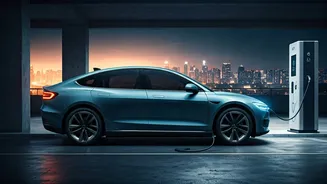
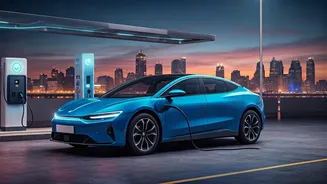
A common roadblock for EV adoption has been the lack of charging infrastructure. However, significant progress is being made. As of early 2026, India has over 27,000 public charging stations, a number that has grown rapidly. Government schemes are targeting the installation of a charger every few kilometers in cities and every 25 km on major highways. This has made inter-city travel in an EV a far more viable proposition than it was just a couple of years ago, especially on popular routes like Delhi-Chandigarh or Mumbai-Pune. Private players, including energy companies and startups, are also investing heavily, setting up charging hubs in malls, offices, and residential complexes. While gaps remain, particularly in Tier-2 and Tier-3 cities and on less-traveled highways, the pace of expansion is reassuring for potential buyers.
The Road Ahead
Despite the impressive momentum, the journey to full electrification has its challenges. The initial purchase price of an EV remains a significant barrier for many, even with lower running costs. The charging network, while growing, is still uneven, and charger reliability can be an issue. Furthermore, India's dependence on imports for critical minerals like lithium and cobalt for batteries remains a key vulnerability. However, the direction of travel is clear. The combination of government support, industry investment, a wider range of products, and growing consumer awareness has pushed India's EV market past a tipping point. The era of the electric vehicle is no longer on the distant horizon; it is here, and it is accelerating.