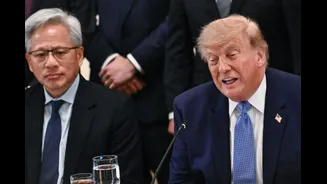






In a dramatic turn of events that has captivated Silicon Valley, Nvidia announced the immediate reinstatement of its co-founder, Jensen Huang, as President and CEO. The decision marks a stunning reversal, coming just 11 days after his resignation.
An Unprecedented Reversal
The
saga began on November 12, when Jensen Huang, the iconic leather-jacket-clad leader who had helmed Nvidia for over 33 years since its inception, abruptly stepped down. His departure followed intense media scrutiny over his personal life, including allegations of extramarital affairs which raised governance and security concerns. The company quickly named Chief Financial Officer Colette Kress as interim CEO. The board initially seemed firm, with reports as recent as November 19 suggesting there was 'zero' chance of his return. However, in a unanimous vote on November 23, the board reinstated Huang, stating they were satisfied with his 'candor and ability to lead Nvidia'. Board Chair Harvey C. Jones cited that the decision was in the best interest of all stakeholders.
Pressure from All Sides
Huang's brief exit sent shockwaves through the tech industry and the stock market, with Nvidia's shares falling sharply. His departure created a leadership vacuum at the world's most critical AI chipmaker, a company that controls roughly 90% of the market for AI-training GPUs. This sparked a significant public and private pressure campaign for his return, supported by prominent tech figures, employees, and investors. Adding to the complexity, the U.S. government reportedly became involved. Nvidia's official statement noted it had 'received input from senior levels of the United States government' and was confident that Huang's return posed 'no national security risk'.
The Indispensable Visionary?
The board's whiplash-inducing decision underscores a central belief in Silicon Valley: that some founders are simply irreplaceable. Huang is not just a CEO; he is widely regarded as the visionary who foresaw the AI revolution and positioned Nvidia at its epicentre. He co-founded the company at a Denny's restaurant in 1993 and steered it from near-bankruptcy to a multi-trillion dollar valuation. Analysts suggest that while an interim CEO could manage operations, only Huang possesses the unique vision and relentless drive that has kept Nvidia years ahead of competitors like AMD and Broadcom. As one market analyst put it, 'Jensen Huang's return underlines how much of the AI trade still rests on one man'.
Market Roars in Approval
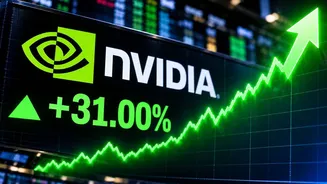
Wall Street's reaction to the news was immediate and overwhelmingly positive. Nvidia's stock surged more than 31% on the day of the announcement, a clear vote of confidence from investors in Huang's leadership. The rally wasn't confined to just Nvidia; the news helped lift the entire U.S. stock market, with both the Nasdaq and S&P 500 seeing significant gains. The market's fear had been that without Huang's aggressive push, the rapid, yearly upgrade cycle for AI technology might slow, giving competitors an opening. His return instantly calmed those fears, restoring faith in the company's aggressive product roadmap and its continued dominance in the AI space.
What Comes Next
While Huang is back at the helm, questions remain. The board's reversal has put its own independence and decision-making process under scrutiny. Furthermore, an independent investigation into the national security allegations that preceded his resignation is still ongoing. In his statement, Huang said he takes on the responsibility with 'the greatest humility and renewed commitment'. The industry will be watching closely to see how he navigates the lingering fallout from the scandal while simultaneously steering the company through the next phase of the AI revolution he was so instrumental in creating. His first challenge may be reassuring stakeholders that both he and the board have learned from this tumultuous chapter.