

An Insurance Crop for Hard Times
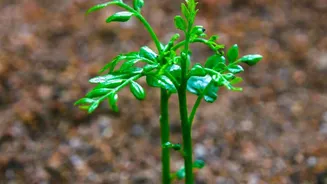
Known locally as khesari dal, the grass pea (Lathyrus sativus) is an ancient legume with a reputation for being exceptionally tough. For centuries, farmers in parts of Asia and Africa have valued it as an 'insurance crop' because it reliably produces
a harvest even when drought or waterlogging destroys other plants. This remarkable hardiness allows it to grow in marginal soils with minimal inputs, making it an ideal candidate for cultivation in challenging agricultural environments. As climate change brings more extreme weather, the intrinsic ability of grass pea to withstand environmental stress is attracting significant attention from scientists and agricultural planners.
A Nutritional Powerhouse
Beyond its rugged nature, the grass pea boasts an impressive nutritional profile. Its seeds contain a high protein content, ranging from 20% to over 30%, which is comparable or even superior to other common pulses like chickpeas and lentils. This makes it a valuable source of plant-based protein, especially in regions where access to animal protein is limited. The seeds are also a good source of essential micronutrients, dietary fibre, and amino acids like lysine. This combination of high protein and other essential nutrients makes it a powerful tool in the fight against malnutrition.
The Shadow of Lathyrism
Despite its benefits, the grass pea has a dark chapter in its history. Traditional varieties contain a neurotoxin called ODAP (β-N-oxalyl-L-α,β-diaminopropionic acid). When consumed in large quantities as a primary food source over a prolonged period—typically during famines when no other food is available—it can cause a crippling neurological disorder called neurolathyrism. This condition leads to irreversible paralysis of the lower limbs. Due to this risk, the sale and storage of khesari dal for human consumption were banned in India in 1961, tarnishing the crop's reputation.
Redemption Through Science
For decades, the ban sidelined what was otherwise a promising crop. However, agricultural scientists never gave up on the grass pea's potential. Through persistent breeding efforts, researchers at institutions like the Indian Council of Agricultural Research (ICAR) have successfully developed new varieties with significantly lower levels of the ODAP neurotoxin. Varieties like 'Ratan' and 'Prateek' contain toxin levels well below the safety limit of 0.1%, making them safe for human consumption as part of a balanced diet. These modern breeding programmes have focused on retaining the crop's hardiness while effectively engineering out the danger.
A Second Chance in the Field
With the development of these safe, low-toxin varieties, the conversation around grass pea is changing. Some state governments have already lifted local restrictions, and there's a growing movement to re-evaluate its role in national food security. The new varieties not only are safer but also offer higher yields, making them an attractive option for farmers. In places like Bihar, projects are underway to popularise these improved strains, particularly for use in rice fallow lands, which often remain unutilised after the paddy harvest. This allows farmers to gain an additional income source while also improving soil health, as grass pea is an excellent nitrogen-fixing crop.