








A Major Leap for 'Made in India' Space Tech
In a significant boost to India's private space sector, Chennai-based Agnikul Cosmos has unveiled two cutting-edge facilities designed to master rocket reusability. The Stage Testing & Inspection Facility (STIF) and the Pressurant Tank Realisation, Over-wrapping
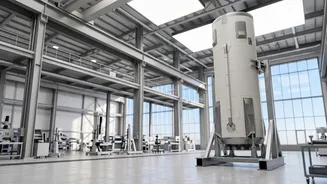
and Outfitting Facility (PROOF) were inaugurated in early September 2026. These centers are not just another factory floor; they represent a critical piece of infrastructure that allows Agnikul to build, test, fly, recover, inspect, and then re-fly its rocket stages. The STIF, designed entirely in-house, can simulate the harsh conditions of a rocket launch, testing complete stages with integrated propulsion and avionics systems. This move makes Agnikul the only private Indian company with its own in-house infrastructure for post-flight requalification, a crucial step in making reusable rockets a reality.
Why Reusability Is the Holy Grail
For decades, rockets have been single-use machines. Like throwing away an entire airplane after just one flight, the cost has been astronomical. Each launch required building a brand-new vehicle from scratch. Reusability changes that equation entirely. By designing rocket stages that can be recovered, refurbished, and flown again, companies can drastically cut the cost of sending satellites and other payloads into orbit. This isn't just about saving money; it's about increasing the frequency of launches. When launch costs plummet, space becomes more accessible for a wider range of applications, from satellite internet constellations to scientific research. The goal is to create a repeatable cycle: build, test, fly, recover, inspect, requalify, and fly again. This cycle is the key to unlocking a more dynamic and commercially viable space industry.
Explaining 'Requalification'
The term 'requalification' is central to Agnikul's new capability. After a rocket stage is recovered from a mission, it can't simply be refueled and sent back to the launchpad. It needs to be rigorously inspected and tested to ensure it is as safe and reliable as a brand-new stage. This is requalification. Agnikul's new STIF facility is designed specifically for this purpose. It can conduct full-duration engine burns of up to 150 seconds and handle the intense pressures and cryogenic temperatures involved. By validating that a used stage still meets all performance and safety standards, the company can certify it for another flight. This process is the bridge between simply recovering a rocket and actually reusing it, turning a spectacular engineering feat into a sustainable business practice.
Building on a Foundation of Innovation
This focus on reusability is the next logical step for a company known for its innovative approach. Agnikul gained prominence for developing the Agnibaan, a highly configurable small-lift launch vehicle. A key feature is its Agnilet engine, the world's first single-piece, 3D-printed rocket engine. This technology already streamlines manufacturing. The new PROOF facility further enhances this vertical integration by allowing Agnikul to build its own high-pressure vessels in-house, reducing reliance on external suppliers. The company successfully launched its first sub-orbital test mission, 'Mission-01', on May 30, 2024, proving its 3D-printed engine and control systems. The new facilities are now crucial as the company works towards its next objective, Mission-02, which will build on these successes.
India's Ambitions in the Global Space Race
Agnikul's expansion is not just a corporate milestone; it's a statement of intent for India's role in the global space economy. As astronaut and Group Captain Shubhanshu Shukla noted at the inauguration, capabilities like these help build a more self-reliant Indian space ecosystem. With companies like SpaceX demonstrating the massive commercial advantages of reusability, developing a sovereign capability is a strategic priority. Agnikul's new facilities position it among a select group of companies worldwide that are seriously pursuing full-stack reusable launch vehicles. By controlling everything from 3D-printed engine manufacturing to post-flight stage requalification, the Chennai-based startup is laying the groundwork to become a globally competitive player in the small satellite launch market, a rapidly growing segment of the industry.