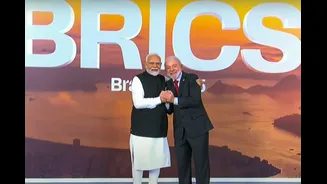




When Indian Prime Minister Narendra Modi sent 'dear friend' Lula da Silva his congratulations, it was more than just diplomatic protocol. The message underscores a vital partnership between two giants of the Global South. But what does this relationship
truly entail?
A Partnership of Giants
On the surface, it was a standard exchange between world leaders: a congratulatory note on an election victory. However, the warmth and substance of Prime Minister Narendra Modi's message to Brazilian President Luiz Inácio Lula da Silva point to a much deeper connection. This is not just a relationship between two countries; it's a strategic alignment between two of the world's largest democracies and economies, both navigating a complex global landscape and advocating for a new, multipolar world order. The India-Brazil Strategic Partnership, established in 2006, is built on a foundation of shared democratic values and a commitment to inclusive growth. Modi's emphasis on working together to advance the 'shared priorities of the Global South' was a clear signal that this partnership is a cornerstone of both nations' foreign policies.
The BRICS and IBSA Connection
The most visible manifestation of this partnership is their joint membership in key international forums. Both India and Brazil are pillars of BRICS (Brazil, Russia, India, China, South Africa), a grouping of major emerging economies that seeks to counterbalance the influence of Western-led institutions like the G7 and the World Bank. The personal rapport between leaders is crucial for the bloc's effectiveness, and the Modi-Lula dynamic is central to this. Beyond BRICS, there is the IBSA Dialogue Forum (India, Brazil, South Africa), a unique trilateral initiative that brings together three large, multicultural democracies from three different continents. IBSA was formed in 2003 to promote South-South cooperation and align positions on global issues, from UN Security Council reform to sustainable development. These forums provide a crucial platform for both nations to amplify their voices and coordinate on a global stage.
Beyond Diplomacy: Booming Trade
The relationship is also powered by growing economic ties. Brazil is India's largest trading partner in Latin America, with bilateral trade reaching over $15 billion in 2025. In recent years, leaders from both sides have expressed ambitions to double this figure to $30 billion by 2030. Key exports from India include diesel, agrochemicals, and pharmaceuticals, while Brazil supplies India with crude oil, gold, and vegetable oil. During a visit to India, President Lula highlighted the nature of the trade relationship, stating that India does not have the 'mindset of a coloniser', which allows for a partnership of equals. This mutual respect is fostering collaboration in new sectors, including energy, defence, space exploration, and critical minerals, areas vital for the future growth of both economies.
A Shared Worldview
At its core, the India–Brazil relationship thrives on a shared worldview. Both are large, diverse democracies grappling with similar challenges of development and social inclusion. Both advocate for a more equitable global governance structure that reflects the rise of emerging economies. They have consistently called for the reform of the UN Security Council, where both are contenders for permanent seats, arguing the current structure is outdated and does not represent 21st–century realities. President Lula has described India as a 'democratic brother of the Global South', a sentiment that captures the essence of their bond. This ideological alignment allows them to work together on issues from climate change and food security to digital transformation, presenting a united front for the developing world.