




What is a Launch Rehearsal?
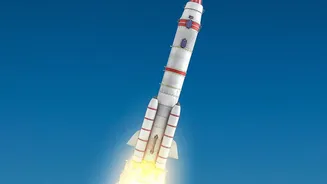
A launch rehearsal is exactly what it sounds like: a full-scale practice for launch day. In the aerospace industry, the most comprehensive version is called a 'wet dress rehearsal'. The 'wet' part refers to the fact that the rocket is fully loaded with
its cryogenic propellants, like liquid oxygen and liquid hydrogen, which are chilled to incredibly low temperatures. This test simulates the entire launch countdown, from powering up the vehicle to the final seconds before engine ignition. The goal is to run through every procedure, check every system, and coordinate every team just as they would during the real event, but without actually lighting the engines and taking flight. It’s the ultimate systems check before committing to launch.
Simulating the Entire Countdown
A wet dress rehearsal is a meticulous process that can take a couple of days. Teams at the launch control center begin the countdown many hours, sometimes over 40 hours, before the simulated liftoff time. They power up the rocket and its payload, verify communication links, and then begin the hazardous process of loading hundreds of thousands of gallons of super-chilled fuel. Throughout the countdown, there are planned 'holds' where the clock is intentionally paused. These moments allow teams to verify that specific milestones have been met or to simulate how they would handle a real-world problem, before resuming the count. The test proceeds right into the 'terminal count'—the final minutes and seconds—before being intentionally stopped, or 'scrubbed', just before the automated launch sequence would ignite the engines.
Finding Problems on the Ground
The primary purpose of a rehearsal is to find problems on Earth, not in the air. A rocket has thousands of components, and a launch costs billions of dollars; finding a faulty valve or a software glitch on the launchpad is infinitely better than discovering it after liftoff. NASA’s Artemis I mission, for example, encountered several issues during its wet dress rehearsals, including a helium check valve that wasn't working correctly and a hydrogen leak. These problems forced a delay, but they also allowed engineers to fix the hardware, preventing a potential mission failure. Exposing the fully assembled rocket to the extreme cold of its propellants can reveal leaks or sensor issues that wouldn't appear otherwise. Catching these issues is precisely why the test is done.
The Human Element and Team Practice
Beyond the hardware, a launch is a massive human undertaking. Dozens, if not hundreds, of engineers and technicians must work in perfect sync. A launch rehearsal is a crucial training exercise for the entire launch team. It ensures everyone knows their role, understands the communication protocols, and can respond effectively to unexpected issues. During a recent rehearsal for the Crew-13 mission, astronauts even suited up and boarded the spacecraft to practice the sequence of events they would experience on launch day. This level of practice builds the muscle memory and coordination needed to handle the immense pressure of a real countdown, where every second and every decision matters.
Going One Step Further: The Static Fire
Some companies, like SpaceX, often take the rehearsal a step further with a 'static fire' test. This test includes all the steps of a wet dress rehearsal, but with one key addition: the rocket's engines are briefly ignited at full thrust while the vehicle is securely clamped to the launchpad. This provides invaluable data on engine and system performance under the stress of ignition, verifying that pressures, temperatures, and fuel flow are all exactly as expected. While some experienced rockets like the Falcon 9 now occasionally skip this step for routine missions, it remains a critical validation for new vehicles or those with replaced components. It’s the closest you can get to a launch without actually leaving the ground.