





The Spectacle of Onam on Water
As the harvest festival of Onam dawns across Kerala, it signals a magnificent return to the water. The tranquil canals and lakes, particularly in the Alappuzha region, transform into arenas of immense energy and passion. This is the season of Vallam Kali,
the traditional boat races that have become synonymous with Keralan culture. For weeks, villages have been preparing, not just for a sporting event, but for a ritual that embodies their pride, unity, and history. The star attractions are the majestic Chundan Vallams, or snake boats, which after a year of rest, are once again ready to cleave through the waters, each representing the collective hope and strength of its community.
Anatomy of a Racing Giant
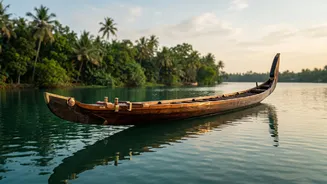
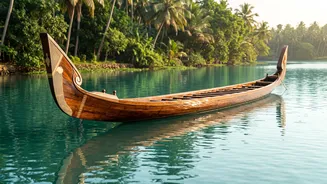
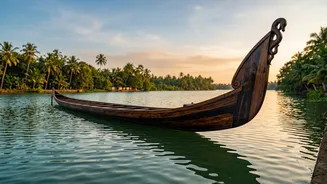
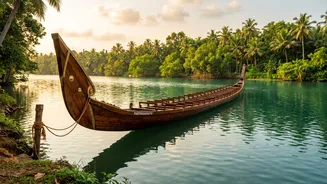
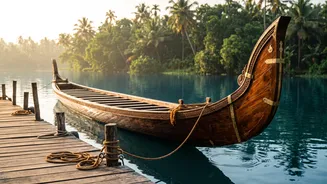
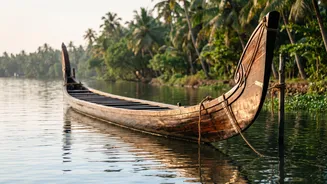
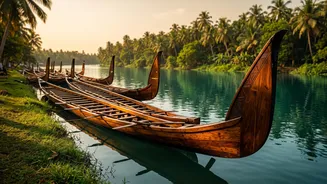
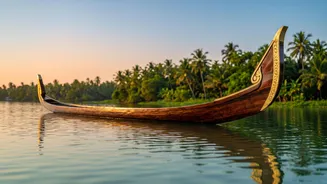
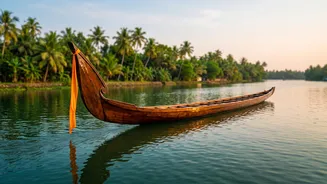
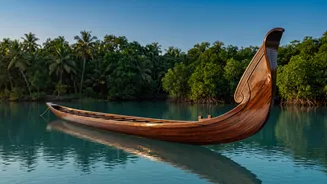
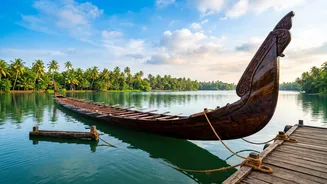
A Chundan Vallam is a marvel of traditional engineering and craftsmanship. These behemoths, often stretching over 100 feet long, are built from woods like Anjili, following ancient principles laid out in the Sthapathya Veda, a classic treatise on wooden construction. Its high, serpentine stern resembles the raised hood of a cobra, giving the boat its English name. A single boat is powered by around 100 oarsmen, sitting two abreast along its length. At the center, several men stand on a platform, beating a rhythmic tattoo to guide the rowers, while at the stern, six helmsmen use long oars to steer the vessel with incredible precision. Each boat is a living piece of heritage, a testament to craftsmanship passed down through generations.
The Engine of the Oars: Vanjipattu
The secret to the snake boat's blistering speed lies not just in muscle, but in music. Vanjipattu, the traditional boat song, is the soul of the race. A lead singer chants verses of myth, history, or village glory, and the entire crew roars back in response, their oars dipping and pulling in perfect, powerful synchrony with the beat. This call-and-response is more than a song; it's a metronome that fuses over a hundred individuals into a single, coordinated force, driving the boat forward with a power that feels almost supernatural. The songs energize the rowers, help them push through exhaustion, and connect them to centuries of tradition.
Fierce Competition, Sacred Rituals
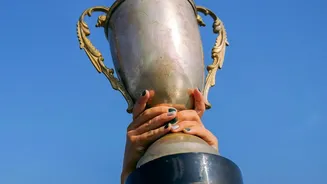
While many races occur during this season, two stand out for their different yet equally compelling characters. The Nehru Trophy Boat Race, held on the Punnamada Lake in Alappuzha, is the most famous competitive event. It began in 1952 after an impromptu race was held for India's first Prime Minister, Jawaharlal Nehru, who was so captivated he donated a silver trophy. Today, it's a globally recognised spectacle drawing huge crowds. In contrast, the Aranmula Uthrittathi Vallamkali is a more ancient and ritualistic affair, connected to the Parthasarathy Temple. Here, the boats, called Palliyodams, are considered sacred vessels of the deity. The event is less of a race and more of a majestic water procession, a spiritual offering where participation is valued over victory.
The Heartbeat of Community
Beyond the thrill of competition and the sanctity of ritual, the boat races are a profound expression of community. Each boat belongs to a village, and victory or even participation is a matter of immense local pride. The rowers, selected for their strength and stamina, train for weeks, living and eating together in camps supported by the entire village. These gatherings foster a spirit of unity that transcends social and religious divides, reinforcing the bonds that tie the community together. The grand Vallasadya, a massive feast served to the oarsmen at Aranmula, is a powerful symbol of this collective spirit, where thousands are fed in an act of communal devotion and hospitality.