


A Sky-High Solution for a Crowded City
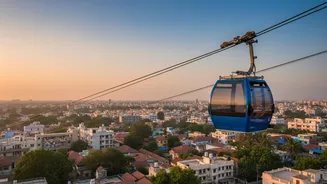
In the heart of Varanasi, a city of winding lanes and relentless congestion, a modern solution is taking shape in the sky. The Kashi Ropeway, India’s first-ever urban public transport ropeway, is nearing completion. This 3.75-kilometre aerial corridor
will connect the busy Varanasi Cantonment railway station to Godowlia Chowk, a key access point for the Kashi Vishwanath Temple and the Ghats. With the capacity to carry thousands of passengers per hour in modern gondolas, the project promises to slash the commute time between these two points from over an hour to just 16 minutes. Developed under the Parvatmala Pariyojana scheme, it was chosen over a metro system, which was deemed unfeasible due to the city's soil conditions and the risk of large-scale demolition in the historic city. The goal is to provide a clean, efficient, and eco-friendly alternative for the thousands of pilgrims, tourists, and, crucially, local residents who navigate the city daily.
The Difference Between Tourist Ride and Daily Transit
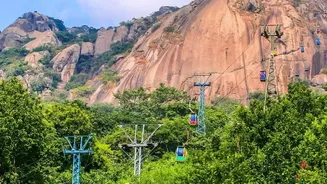
While ropeways are common in tourist destinations and hill stations, the Varanasi project is designed specifically as an integrated part of the urban mass transit system. This distinction is vital. A tourist attraction can afford to be a standalone experience, but a public transit system lives or dies by its utility. For a daily commuter—be it an office worker, a student, or a shopkeeper—the journey doesn't end at the ropeway station. Its success will be measured by how easily a passenger can get from their home to the ropeway, and from the ropeway to their final destination. This is often referred to as 'last-mile connectivity,' and it’s a challenge that urban planners across India grapple with. Without it, the ropeway risks becoming a novelty rather than a cornerstone of Varanasi's mobility.
The Critical Need for Seamless Transfers
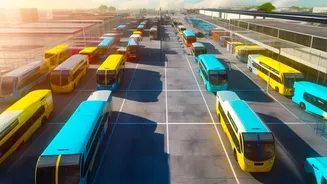
The headline's focus on 'simple transfers' points to the project's biggest hurdle. For the ropeway to be truly effective for daily use, its five stations must be seamlessly integrated with other modes of transport. Imagine a passenger arriving at Cantt Railway Station. They should be able to move from their train to the ropeway station with clear signage, minimal walking, and perhaps even a common payment card. Planners have stated that the system is designed to connect with trains, buses, and auto-rickshaws. At the Godowlia end, the terminal station is expected to bring thousands of people to an already busy junction, making efficient dispersal critical to avoid creating new bottlenecks. The challenge lies in the execution: are there dedicated feeder buses, safe pedestrian pathways, and well-managed auto-rickshaw stands waiting at each station? These seemingly small details are what transform a piece of infrastructure into a functional public service.
A Blueprint for India's Future Cities
Varanasi is a test case. As the third city in the world, after locations in Bolivia and Mexico, to implement such a system for urban transport, all eyes are on its performance. Many Indian cities face similar challenges: dense populations, narrow historic streets where road widening is impossible, and rising pollution. If the Varanasi ropeway succeeds as a commuter tool, it could offer a scalable blueprint for other Tier-1 and Tier-2 cities struggling with congestion. The Parvatmala Pariyojana scheme already has a pipeline of over 250 potential ropeway projects across the country. Success in Varanasi would validate the concept of aerial transit as a viable, cheaper, and less disruptive alternative to metros or flyovers in specific urban contexts. It would prove that thinking 'above the ground' can be a practical way to solve problems on it.