





The Unyielding March of Agriculture
The single largest driver of deforestation across the globe remains the expansion of agriculture. An astonishing 80% of global forest loss is linked to clearing land for crops and livestock. This isn't just a matter of small-scale farming; it’s a systemic
issue driven by global demand for commodities like beef, soy, and palm oil. Cattle ranching is the foremost cause, responsible for about 41% of all deforestation, particularly in the Amazon. Much of the world's soy production doesn't even go to direct human consumption; a remarkable 80% is used as animal feed for the very livestock that requires more land. The result is a relentless conversion of irreplaceable, biodiverse forests into pastures and monoculture plantations. Since 1990, the world has lost nearly 490 million hectares of forest, an area larger than the European Union, with much of it being sacrificed for agricultural output.
A World on Fire
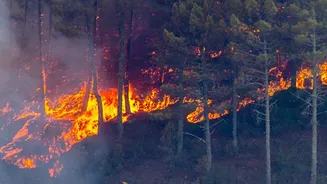
Once-seasonal wildfires have morphed into a year-round, global threat, consuming forests at an unprecedented pace. The year 2026 is on track to be one of the worst wildfire years in recorded history, with fires incinerating ecosystems previously considered fire-resistant. By August 2026, landscape fires, including both wildfires and agricultural burning, had already scorched over 112 million hectares worldwide—an area roughly the size of South Africa. While Africa has seen the largest area burned, severe and uncontrolled wildfires have devastated regions across the globe. Canada, still recovering from a record 2023, has seen millions more hectares burn, while the United States and countries like Spain have battled exceptionally intense fire seasons driven by extreme heat and drought. India has also been significantly impacted, ranking seventh globally for land area burned in 2026 as of August 1st. These fires don’t just destroy trees; they can permanently alter ecosystems and release massive amounts of stored carbon, turning forests from carbon sinks into carbon sources.
The Climate Change Feedback Loop
Deforestation and climate change are locked in a dangerous feedback loop: one fuels the other in a self-perpetuating cycle. When forests are cleared, the vast quantities of carbon they store are released into the atmosphere, accelerating global warming. This warming then creates hotter and drier conditions, making forests more susceptible to the very fires and droughts that drive further loss. Scientists refer to this as an amplifying feedback loop. For example, deforestation in the Amazon reduces the rainforest's ability to generate its own rainfall, leading to more frequent and severe droughts. This, in turn, makes the remaining forest more flammable and hinders regrowth. Some parts of the Amazon have already switched from being a net absorber of CO2 to a net emitter, a tipping point that scientists have long feared. This cycle makes it increasingly difficult to halt forest loss and stabilize the global climate.
What's at Stake for India and the World
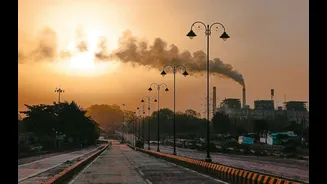
The consequences of rampant forest loss are not confined to distant rainforests; they have profound global and local implications. Forests are home to most of the world's terrestrial biodiversity and their destruction is accelerating a species extinction crisis. They are also fundamental to human survival, providing livelihoods for billions of people and supplying about 75% of the world's accessible freshwater. For India, the stakes are particularly high. The health of global forests, especially in regions like the Himalayas and Southeast Asia, directly influences monsoon patterns, water security, and air quality. The loss of critical habitat in the Himalayan foothills threatens iconic species like the red panda and musk deer. Furthermore, the emissions from global deforestation contribute to the climate volatility that is already bringing more extreme weather events to the subcontinent. As forests shrink, so does the planet's ability to regulate water cycles, store carbon, and maintain the stable climate upon which our societies and economies depend.