






A Worsening Global Picture
The latest findings paint a concerning picture for the world's migratory species. An interim update to the landmark 'State of the World's Migratory Species' report reveals that the populations of nearly half (49%) of migratory species protected under
the UN convention are in decline. This is a significant increase from 44% just two years prior. Furthermore, the number of species facing the threat of extinction has risen to 24%. The primary drivers of this decline are human activities. Overexploitation, which includes unsustainable hunting and fishing, along with the relentless loss and fragmentation of habitats due to agriculture and infrastructure development, are the two greatest threats identified.
The Critical Role of 'Stopover Sites'
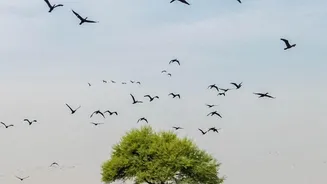
For migratory birds, the journey is as important as the destination. These birds do not fly thousands of kilometres in one go. They rely on a network of 'stopover sites'—wetlands, lakes, mudflats, and coastal areas—that act like service stations on a highway. Here, they rest, refuel, and gather strength before continuing their arduous journey. The report underscores that these locations are just as vital as the breeding and wintering grounds. However, more than half of the key areas identified as important for these species lack any formal protection, leaving them dangerously vulnerable to degradation. Pollution, urban encroachment, and the draining of wetlands for development are turning these crucial havens into hostile environments.
India: The Heart of a Crucial Flyway
India holds a place of immense importance in this global drama. The country is located at the heart of the Central Asian Flyway (CAF), a major migratory route that spans 30 countries from the Arctic to the Indian Ocean. This makes India a critical wintering ground and stopover region for hundreds of species, including the iconic bar-headed goose and the demoiselle crane. Key sites like Chilika Lake in Odisha, Keoladeo National Park in Rajasthan, and the Harike Wetland in Punjab serve as indispensable sanctuaries for these birds. In fact, India provides crucial stopover sites for over 90% of the bird species known to use the CAF, making the health of its wetlands a matter of international ecological significance.
Threats on the Ground in India
Despite their importance, India's wetlands face serious threats. Rapid urbanisation, agricultural expansion, and industrial pollution are leading to the degradation and loss of these vital habitats. Wetlands in and around cities are often treated as wastelands, suffering from sewage inflow and plastic waste. Even in protected areas, excessive tourism and improper management can disturb the birds. The journey itself is fraught with peril, including the risk of colliding with infrastructure and illegal hunting in some areas. The decline in these habitats doesn't just affect birds; it impacts entire ecosystems that provide essential services like groundwater recharge and flood control.
A Path Forward Through Cooperation
The global report is not just a warning; it is also a call to action. It stresses the need for coordinated, transboundary conservation efforts, as protecting birds in one country is futile if their stopover sites in another are destroyed. India has recognised this and has developed a National Action Plan for the conservation of migratory birds along the Central Asian Flyway. This plan focuses on protecting habitats, monitoring species, and reducing threats. The report also highlights that conservation can work. Coordinated efforts have led to the recovery of several species, proving that when nations and communities work together, it is possible to reverse these alarming trends.