





The cancellation of Taylor Swift's sold-out Vienna concerts in August 2024 sent shockwaves through her global fanbase. But behind the disappointment lay a chilling reality: a foiled terrorist plot and a remarkable story of international cooperation.
A Plot to Cause Mass Casualties
In
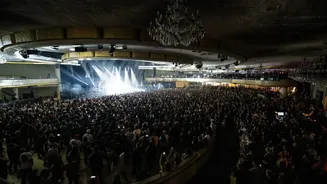
early August 2024, Austrian authorities, acting on intelligence tips, arrested several young men who were allegedly planning a large-scale attack. The target was not just any event, but the massive crowds expected for Taylor Swift’s 'Eras Tour' at Vienna’s Ernst Happel Stadium, where over 170,000 fans were set to attend three shows. The main suspect, a 19-year-old, confessed to planning an attack using explosives and knives with the goal of killing himself and a large number of people. The plot was specifically aimed at the thousands of fans who would gather outside the venue, in a chilling echo of the 2017 Manchester Arena bombing at an Ariana Grande concert. Investigators found bomb-making materials, including chemicals for the explosive TATP, machetes, and propaganda from the Islamic State (IS) group at the suspect's residence. The gravity and specifics of the threat left authorities and the concert promoter with no choice but to cancel all three performances for safety reasons.
The Suspects and Their Convictions
The key figures in the plot were young men who had been radicalized online. The primary suspect, identified in court as Beran A., was a 19-year-old Austrian with North Macedonian roots. He had reportedly sworn an oath of allegiance to the Islamic State and quit his job to prepare for the attack. Critically, another suspect, a 17-year-old, had secured a job with a company providing services at the concert venue, raising the terrifying prospect of an insider threat. In May 2026, an Austrian court sentenced Beran A. to 15 years in prison after he pleaded guilty to terrorism offenses. Another accomplice, Arda K., received a 12-year sentence for his role. A third teenager was also arrested in connection with the investigation, highlighting a disturbing trend of youth radicalization.
A Web of International Intelligence
The prevention of the attack was a textbook example of successful intelligence sharing between multiple countries. While early reports credited U.S. intelligence with providing the initial tip to Austrian authorities, new details have emerged. In a recent revelation on November 23, 2026, former Mossad chief David Barnea confirmed that Israel’s intelligence agency played a pivotal role. According to Barnea, Austrian intelligence first identified a potential threat and reached out to Mossad for assistance. The Israeli agency then used its 'unique capabilities' to analyze the data, identify the full jihadist network, and provide the crucial intelligence that led directly to the arrests. Barnea stated the joint effort prevented the 'mass murder of up to hundreds of young men and women'. This collaboration between Austria, the U.S., and Israel underscores the global nature of modern counter-terrorism.
The New Reality for Major Events
The Vienna plot served as a stark reminder of the vulnerability of large-scale public gatherings like concerts and sporting events. High-profile events featuring global icons like Taylor Swift are seen as attractive targets for terrorist groups seeking to maximize media attention. The incident prompted an immediate review of security protocols across Europe. Authorities in London, where Swift was scheduled to play next, confirmed they were assessing the threat, though they found no direct link to the UK. The case highlighted the challenge security services face: balancing public access and enjoyment with the need for stringent security measures. Experts note that the strategy for securing such events now involves pushing security perimeters farther out, thoroughly vetting all staff, and relying heavily on shared intelligence between allied nations to disrupt plots before they can materialize.