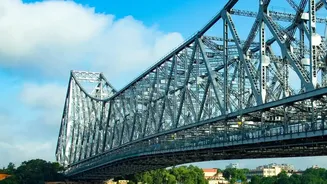



Kolkata carries many names, but none are as evocative as the 'London of India'. This title isn't just a casual comparison; it's a direct link to a past that shaped the city's very foundations, architecture, and cultural soul.
The Capital of the Raj
To understand why Kolkata
earned this moniker, you have to go back in time. For nearly 140 years, from 1772 until 1911, the city then known as Calcutta was the capital of British India. This long period of colonial rule saw the British establish it as the empire's second city after London itself. They constructed a city that reflected their power, with grand buildings, administrative headquarters, and public institutions designed in prominent European architectural styles. The area around Dalhousie Square (now B.B.D. Bagh) became the administrative heart, not just of India, but a financial nerve centre for the entire British Empire. The city's location on the Hooghly River, much like London on the Thames, made it a vital port for trade in goods like jute, tea, and textiles, further cementing its importance.
A Tour of Architectural Grandeur
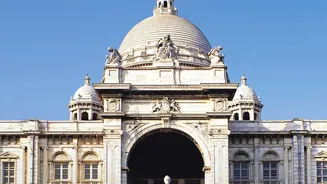
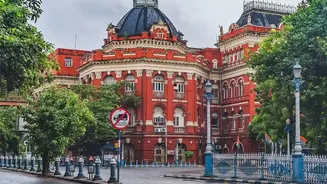
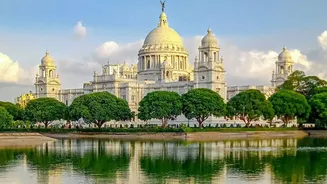
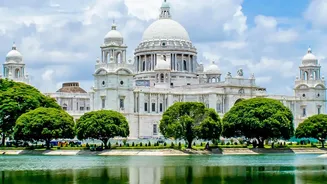
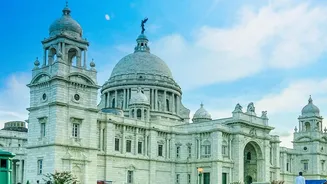
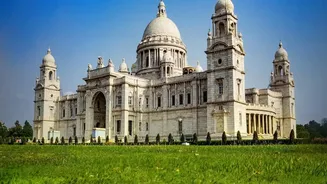
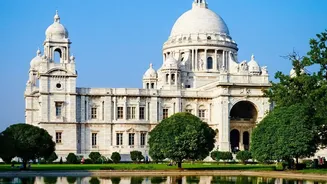
The most visible evidence of this London connection is the architecture. A walk through central Kolkata is like stepping into an open-air museum of the British Raj. The most iconic landmark is the Victoria Memorial, a breathtaking monument of white Makrana marble built to honour Queen Victoria. Its design is a stunning fusion of British and Mughal styles, making it a symbol of the city. Another must-see is St. Paul's Cathedral, a masterpiece of Gothic Revival architecture and the first of its kind in Asia. Then there's the Writers' Building, a massive neo-classical structure that originally housed the clerks of the East India Company and later served as the main administrative building. Other significant structures like the General Post Office, the Calcutta High Court, and the Raj Bhavan all contribute to the city's distinctly European feel.
Culture, Intellect, and Modern Echoes
The British influence extended beyond stone and marble. They established key cultural and educational institutions that remain pillars of the city today. The Indian Museum, founded in 1814, is the oldest and largest in the country, while the National Library is a vast repository of knowledge. This period also sparked the Bengal Renaissance, a powerful intellectual movement that debated nationalism, social reform, and education, with many discussions happening in the famed coffee houses on College Street. For a modern traveller, the colonial past can still be felt. A ride on India's last surviving tram network is a journey back in time. A visit to the South Park Street Cemetery, with its hauntingly beautiful Gothic and Indo-Saracenic tombs from the 18th century, offers a quiet glimpse into the lives of the early European residents. Even a simple breakfast at Flurys, an iconic tearoom on Park Street, evokes a sense of old-world charm.
A Complex and Enduring Legacy
Of course, the nickname 'London of India' is complex. It represents a history of colonial occupation and the division of the city into a 'White Town' for the British and a 'Black Town' for the local inhabitants. The grand buildings were symbols of imperial power, and the economic growth often came at a great cost to the local population. Yet, this era also left behind an undeniable architectural and cultural inheritance that has fused with Bengali culture to create the unique identity Kolkata has today. The city isn't a carbon copy of London or a relic of the past; it's a vibrant metropolis where history is alive in its streets, buildings, and institutions.