




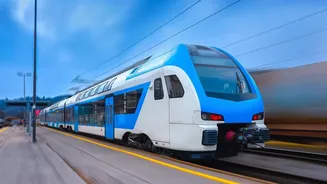
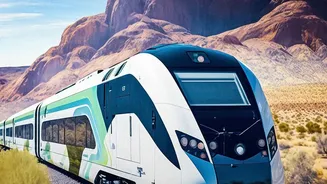
What Makes Amrit Bharat Special?
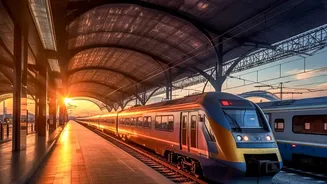
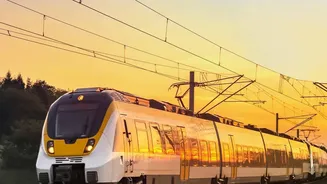
The Amrit Bharat Express is designed as the common person’s premium train. Unlike the fully air-conditioned, chair-car Vande Bharat Express, Amrit Bharat trains are non-AC and feature sleeper and unreserved general coaches. The goal is to provide an affordable
yet significantly upgraded travel experience for long-distance journeys. Manufactured indigenously, these trains use a clever “push-pull” technology, with a locomotive at each end. This configuration allows for faster acceleration and deceleration, reducing travel time and eliminating the jerks often felt during starts and stops. It's a strategic move to modernise mass transit without a hefty price tag for the passenger.
Upgraded Comforts for the Long Haul
Passenger experience is at the core of the Amrit Bharat design. The coaches come equipped with a host of modern amenities aimed at making long journeys more pleasant. These include cushioned berths and seats, mobile charging sockets for every passenger, and foldable snack tables. The train features fully sealed gangways, which not only reduce noise but also allow for safe movement between coaches. Toilets have seen a major upgrade, with bio-vacuum systems and sensor-based taps. Safety is also a priority, with CCTV cameras installed in all coaches and an aerosol-based fire suppression system in toilets and electrical cubicles.
1. Gorakhpur to Delhi
A new weekly service, the Gorakhpur–Delhi Amrit Bharat Express (15095/15096) will significantly improve connectivity between eastern Uttar Pradesh and the national capital. The route is expected to serve high-density passenger traffic, passing through key towns like Basti, Gonda, Sitapur, and Moradabad before reaching Delhi.
2. Gorakhpur to Mumbai (Bandra Terminus)
Connecting one of UP's major cities to the financial capital, the Gorakhpur–Bandra Terminus Amrit Bharat Express (15085/15086) is another crucial addition. This weekly train will provide a direct link for a large number of migrants and travellers. Its major stops include Kanpur Central, Agra Fort, Kota, Ratlam, Vadodara, and Surat, linking several industrial and commercial hubs along the way.
3. Dhanbad to Coimbatore
This impressive route, the Dhanbad–Coimbatore Amrit Bharat Express (22363/22364), will bridge eastern and southern India. It connects the coal capital of Dhanbad in Jharkhand with the industrial city of Coimbatore in Tamil Nadu. The train will traverse five states, with key stops at Gaya, Jabalpur, Nagpur, Vijayawada, and Salem, creating a vital corridor for trade and travel.
4. Charlapalli (Hyderabad) to Gorakhpur
Boosting south-north connectivity, the Charlapalli–Gorakhpur Amrit Bharat Express (22075/22076) links Telangana with Uttar Pradesh. The route passes through major central Indian cities including Nagpur, Bhopal, and Jhansi before continuing through Lucknow to Gorakhpur. This service will be beneficial for students, pilgrims, and workers travelling between these regions. Two stations in Telangana, Mancherial and Peddapalli, have also secured stoppages on this route.
5, 6 & 7. Triple Boost for Prayagraj
The Prayagraj region in Uttar Pradesh receives a major connectivity boost with three new services. The first is the Prayagraj–Lokmanya Tilak Terminus (Mumbai) Amrit Bharat Express (20436/20435), providing a new weekly connection to Mumbai via Itarsi and Bhusaval. The second is the Prayagraj–Udhna (Surat) Amrit Bharat Express (20437/20438), linking the city to the commercial hub of Surat in Gujarat via Kota and Vadodara. Finally, the Subedarganj (Prayagraj)–Lokmanya Tilak Terminus Express (14121/14122) adds another weekly option to Mumbai, running on a different route that includes Satna, Jabalpur, and Nashik Road.