



A Historic Collaboration for a New Era
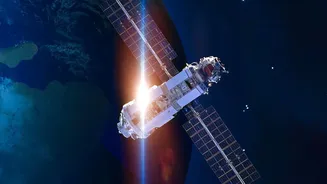
NASA and the U.S. Department of Energy (DOE) have renewed and strengthened a long-standing partnership to build the power systems needed for a sustained human presence on the Moon and, eventually, Mars. This collaboration pairs NASA's expertise in space
exploration and mission architecture with the DOE's decades of experience in nuclear fission. The goal is to develop, test, and deploy a Fission Surface Power (FSP) system on the Moon, with a target of having a launch-ready reactor by 2030. This initiative is a cornerstone of the Artemis program, which aims to return humans to the lunar surface and establish the infrastructure for long-duration missions.
The Challenge of the Long Lunar Night
While the Moon receives plenty of sunlight, it's not a simple solution for a permanent base. A lunar night lasts for approximately 14 Earth days, plunging temperatures to extremes and cutting off any solar power generation. This 350-hour period of darkness makes reliance on solar arrays and battery storage incredibly challenging. Batteries capable of storing enough energy for two weeks would be extremely heavy, and the extreme cold could damage conventional systems. Nuclear fission offers a constant, reliable source of energy, regardless of sunlight, making it an essential technology for surviving and operating through the harsh lunar night.
What is Fission Surface Power?
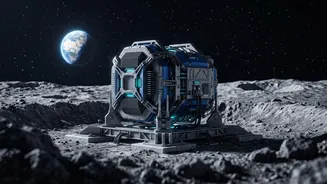
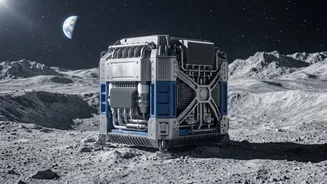
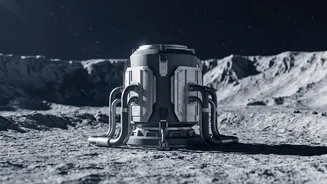
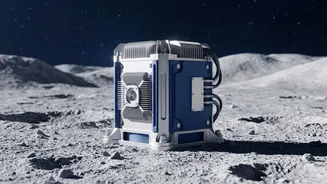
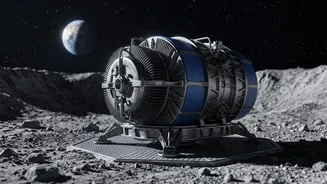
The Fission Surface Power system is essentially a small, portable nuclear reactor designed for the lunar environment. It works on the same basic principle as terrestrial nuclear plants: splitting uranium atoms to generate heat, which is then converted into electricity. However, unlike the massive reactors on Earth, the lunar version is designed to be compact, lightweight, and robust enough to survive the intense vibrations of a rocket launch and landing. The target is to produce around 40 kilowatts of electrical power—enough to run about 30 households for ten years without refueling. This power is critical for running life support systems, habitats, rovers, and scientific experiments.
From Blueprint to the Lunar Surface
The development process is happening in phases. NASA and the DOE have already awarded contracts to several U.S. companies to create initial design concepts. These designs are focused on creating a system that is not only powerful but also highly autonomous and safe. The reactor will be built and fully tested on Earth before being integrated with a lunar lander. Once on the Moon, it can be activated and connected to the lunar base. Some concepts even suggest burying the reactor under the lunar soil, or regolith, to provide natural protection from radiation and micrometeoroid impacts. The lessons learned from this lunar reactor, dubbed Lunar Reactor-1, will also inform the development of systems for future human missions to Mars.
Powering the Future of Exploration
This partnership is driven by more than just scientific curiosity; it's also about strategic leadership in space. Officials have noted that other nations are also pursuing lunar reactors, making this a key area in a new era of space competition. By developing a reliable nuclear power source, NASA aims to ensure that its Artemis crews can establish a meaningful and sustainable foothold on the Moon. This power source will enable astronauts to conduct long-term science, test new technologies, and potentially even utilize lunar resources, such as mining for water ice in permanently shadowed craters. Ultimately, powering a lunar base is a critical dress rehearsal for the even greater challenge that lies ahead: sending humans to Mars.