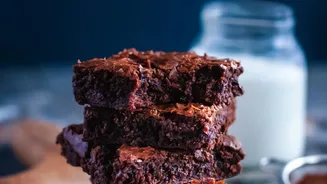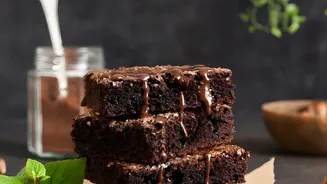

The Science of a Perfect Brownie
To understand why eggless brownies are different, it helps to know what eggs do in a traditional recipe. Eggs are multitasking wonders in baking; they provide structure, moisture, and richness. The proteins in eggs coagulate as they heat, giving the brownie its
structure and preventing it from being a puddle of chocolate goo. The fat in the egg yolks adds richness and contributes to a tender, fudgy texture. Meanwhile, the high water content in eggs (about 76%) turns to steam, providing lift and moisture. Essentially, eggs are the glue that holds everything together while ensuring a moist and chewy final product.
The Eggless Dilemma
When you remove eggs, you have to replace the functions they perform. Common substitutes like yogurt, applesauce, mashed bananas, or a mix of milk and vinegar are excellent for adding moisture. Yogurt and other dairy products also contribute fat, which helps create a soft texture. However, these substitutes don't contain the same kind of proteins that provide structure when heated. This means the batter relies more heavily on the other ingredients, like flour and fat, to set properly. This fundamental difference makes the baking window for eggless brownies much smaller and less forgiving. Without the protein structure from eggs, the line between perfectly fudgy and disappointingly dry is incredibly fine.
The Overbaking Trap
Overbaking is the number one reason for dry brownies, but the effect is amplified in eggless recipes. Because eggless batters lack the rich fat and protein network of eggs, they lose moisture to the oven's heat much more rapidly. That extra minute or two in the oven, which might not ruin a traditional brownie, can be enough to evaporate the moisture provided by your egg substitute, resulting in a texture that is more cake-like or crumbly. Residual heat also plays a significant role; brownies continue to cook in the hot pan even after you take them out of the oven. Pulling them out when they look perfectly done on the surface almost guarantees they will be overdone by the time they cool.
How to Tell When They’re Actually Done
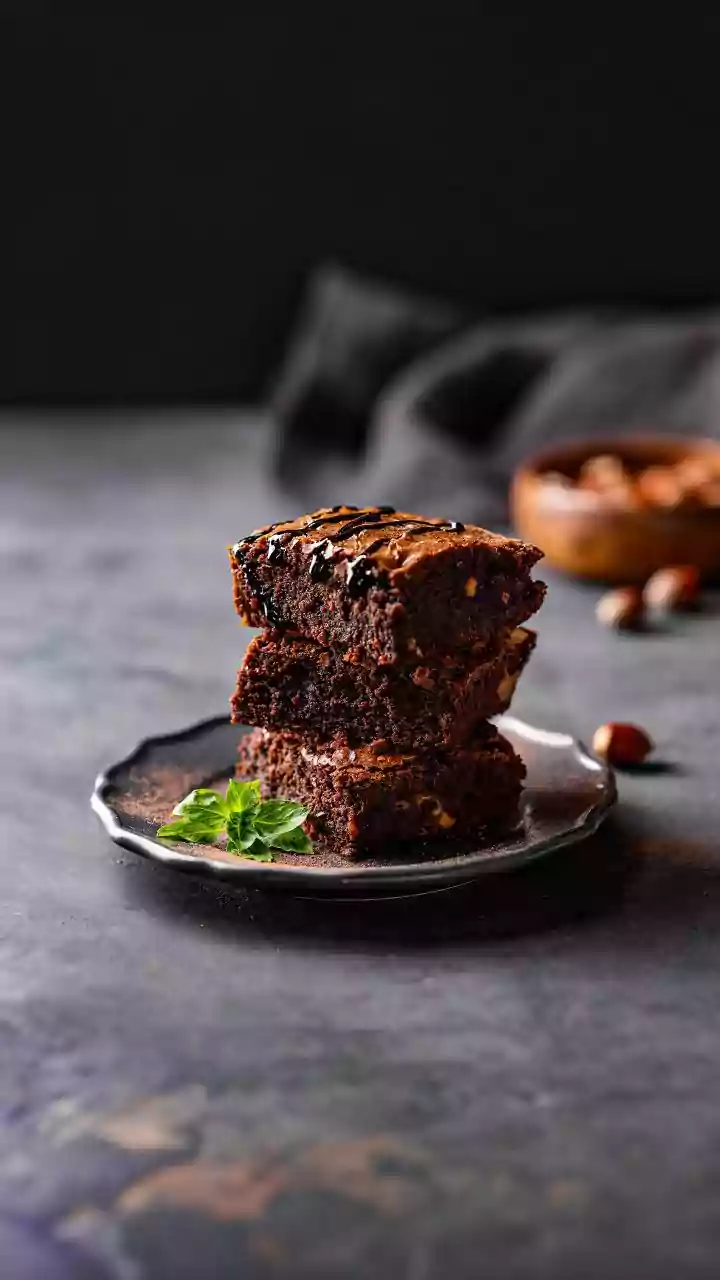
Forget what you know about testing cakes. For fudgy brownies, a completely clean toothpick is a sign you’ve gone too far. The goal is to remove the brownies when a toothpick inserted into the centre comes out with a few moist, sticky crumbs attached, but not wet batter. Another key indicator is the appearance of the pan. The edges should look set and be just starting to pull away from the sides of the pan. The top should have a shiny, crinkly crust, but the centre should still have a slight wobble to it. Trust your senses; if it looks slightly underdone in the very middle, it's likely perfect.
Pro Tips for Ultimate Moisture
Beyond perfecting your timing, a few simple tricks can help ensure your eggless brownies stay moist. First, avoid overmixing your batter, which can lead to a tough texture. Second, ensure you have enough fat. Using good quality butter or oil is crucial for richness and a fudgy crumb. Brown sugar is another great addition, as it contains more moisture than white sugar and contributes to a chewier texture. Finally, be patient. Letting the brownies cool completely in the pan is essential. This allows them to finish setting up without drying out, locking in that desirable gooey centre. Cutting into them while hot can ruin the texture.