







The Foundation: Mastering Your Grip
Your primary connection to the silk hammock is your hands, making grip strength absolutely fundamental. For beginners, it's common to experience hand fatigue or cramping, often because of a 'death grip' born from nervousness. Instructors often cue students
to relax their hands, as gripping too tightly can be counterproductive. The goal is to cultivate a firm, confident hold without unnecessary tension. Consistent practice helps build the necessary strength in the hands, fingers, and forearms. This not only prevents slips but also allows you to progress to more dynamic poses and transitions that require pulling your body weight. Strengthening your grip can be done outside of class with simple exercises, but simply showing up to practice consistently is one of the best ways to adapt and build this essential strength.
Finding Your Centre: The Art of Balance
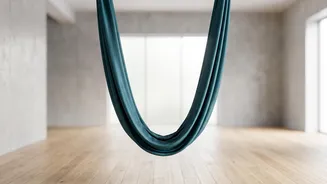
The very nature of being suspended in a fabric hammock introduces an element of instability, which is precisely what makes aerial yoga so effective for improving balance. Unlike a solid floor, the silk moves with you, forcing your body to engage small stabilizer muscles, particularly in your core, to maintain equilibrium. A strong core is the secret to graceful movement in the air. Learning to trust the hammock is a significant part of the journey. The fabric is designed to support you, and relaxing into that support, rather than fighting it, allows you to find your centre of gravity more easily. Proper breathing is also essential for balance and relaxation; it calms the nervous system and helps you stay focused and controlled within each pose. With time, the challenges to your balance in the hammock translate to improved stability and body awareness in your daily life.
The Blueprint: Perfecting Your Alignment
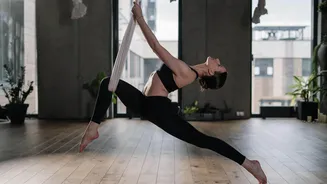
Proper alignment is crucial in any yoga practice, but it takes on special importance when you're suspended in the air. Correct alignment ensures that you are using the intended muscles for each pose, maximising benefits like spinal decompression and improved flexibility while minimising the risk of strain or injury. The hammock can be a valuable tool for achieving better alignment, as it can support the body in positions that might be difficult on the mat, offering feedback on where your body is in space. For example, in many poses, the basic alignment principles of stacking your joints—shoulders over hips, hips over knees—still apply to maintain a stable structure. A qualified instructor plays a vital role here, offering adjustments and cues to help you find your optimal form. Paying close attention to their guidance on how to position your body in, on, and around the fabric is key to a safe and effective practice.
Putting It All Together for a Rewarding Practice
Grip, balance, and alignment are not separate skills but three interconnected pillars of aerial yoga. A weak grip can throw off your balance, and poor alignment can make both grip and balance more difficult to maintain. When you focus on all three, you create a positive feedback loop. A confident grip allows you to relax and find your balance, and good alignment distributes your weight correctly, making the poses feel more effortless and secure. It’s also important to wear appropriate clothing—fitted garments that cover the armpits and backs of the knees can prevent skin irritation and won't get tangled in the fabric. By approaching your practice with an awareness of these fundamentals, you move beyond simply following along and begin to embody the grace and strength that aerial yoga cultivates.