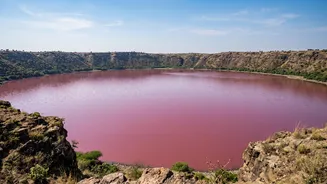








A Crater Unlike Any Other
Nestled in Maharashtra's Buldhana district, Lonar Lake is a site of immense scientific and historical importance. It was formed around 50,000 years ago when a meteorite struck the earth, creating one of the world's only hypervelocity impact craters in basaltic
rock. The lake is a closed basin, meaning no rivers flow out of it. This has led to its water becoming both highly saline and alkaline over millennia, with a pH level that can reach 10.5, creating a unique ecosystem that is studied by scientists from around the globe. Recognized as a National Geo-heritage Monument and a Ramsar wetland site, it's a natural laboratory with geological features that have been compared to those on Mars.
The Science Behind the Pink Hue
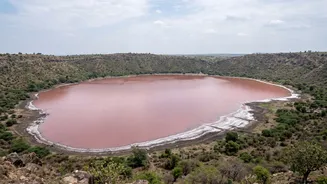
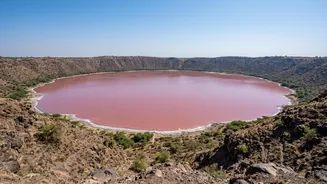
The change in colour is not a sign of pollution but a fascinating natural process. The primary culprits are tiny, salt-loving microbes known as 'Haloarchaea'. As summer heat intensifies and rainfall is low, water levels in the lake drop. This evaporation increases the concentration of salt in the water. These hyper-saline conditions are perfect for Haloarchaea to thrive. These microorganisms produce a pink pigment, a type of carotenoid, as a form of protection from the sun. When their population explodes in what is called a 'bloom', they form a vast, pigmented mat on the surface, giving the entire lake a striking pink or reddish appearance.
A Recurring Natural Cycle
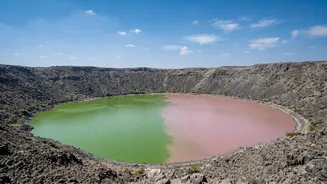
While visually dramatic, this is not the first time Lonar Lake has turned pink. The phenomenon was widely reported in June 2020 and has been observed in other years as well. It is a cyclical event tied directly to the region's climate patterns. The pink phase typically occurs during the driest, hottest months when water evaporation is at its peak. Once the monsoon season arrives, the influx of fresh rainwater dilutes the salinity and lowers the pH. This changes the conditions, causing the Haloarchaea population to decrease and the lake to gradually return to its more familiar greenish colour.
A Barometer of Ecological Health
While the colour change itself is natural, it underscores the lake's sensitivity to environmental shifts. The intensity and frequency of these blooms can serve as an indicator of changing weather patterns, such as prolonged dry spells and higher temperatures. However, the lake faces other, more pressing threats. In recent years, an unprecedented influx of freshwater from surrounding agricultural borewells has begun to dilute the lake's unique chemistry. Reports from early 2026 noted that this has caused the pH to drop significantly and water levels to rise, submerging several of the ancient temples that line the crater's shore. This fundamental shift threatens the very microbes that have evolved in this extreme environment over centuries.
Conserving a National Treasure
The delicate balance of Lonar Lake's ecosystem highlights the urgent need for its conservation. Efforts are underway to have it recognized as a UNESCO World Heritage Site, which would bring global attention and resources for its protection. Authorities are grappling with how to manage the freshwater influx while also preserving the heritage structures now threatened by rising water levels. The challenge is to protect its unique geological, ecological, and cultural value from threats like encroachment, pollution, and now, drastic changes to its fundamental water chemistry. Protecting this cosmic treasure requires a coordinated effort to ensure it remains a vibrant hub for science and a source of wonder for generations to come.