


A New Window on the Cosmos
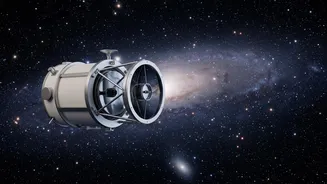
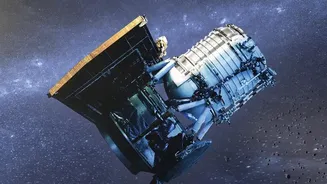
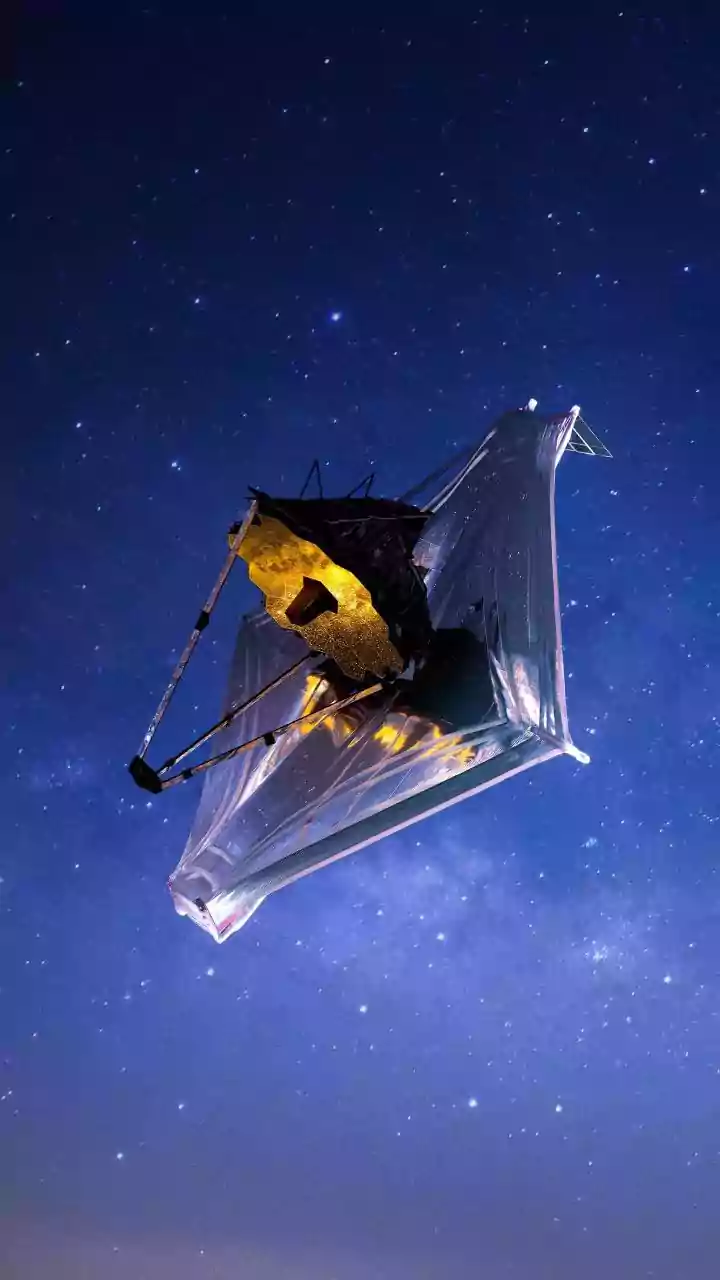
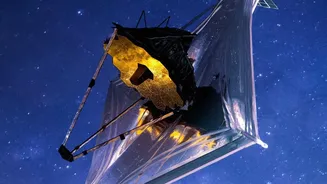
The Nancy Grace Roman Space Telescope is NASA's latest flagship observatory, designed not to replace telescopes like Hubble or Webb, but to complement them. Named after Dr. Nancy Grace Roman, NASA’s first chief of astronomy and a key figure behind the Hubble Space Telescope,
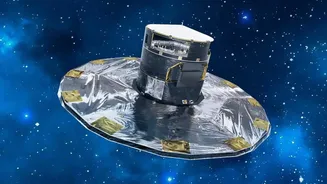
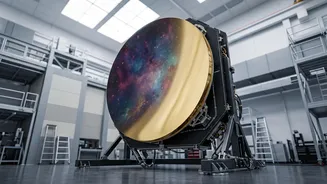
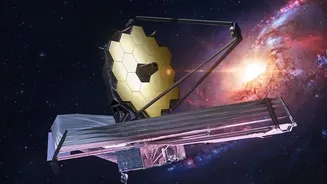
this mission continues her legacy of pushing the boundaries of space-based observation. The telescope, which shares a 2.4-meter primary mirror size with Hubble, recently launched on August 30, 2026, aboard a SpaceX Falcon Heavy rocket. It is now on its way to the second Sun-Earth Lagrange point (L2), a stable location about 1.5 million kilometers from Earth where it will join the James Webb Space Telescope. Its primary mission is to tackle some of the biggest mysteries in astrophysics, including dark energy and the census of planets outside our solar system.
The Power of a Wide View
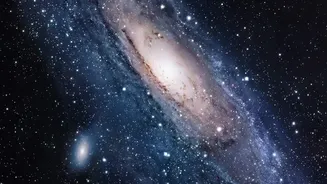
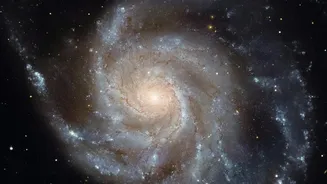
What makes Roman a game-changer is its incredible field of view. Its Wide Field Instrument (WFI) is a 300-megapixel camera that can capture an area of the sky 100 times larger than Hubble can in a single snapshot, all while maintaining a similar image sharpness. Think of it as the difference between a zoom lens and a panoramic camera. While Hubble and Webb excel at taking deep, detailed photos of individual objects, Roman is built to survey huge stretches of the cosmos quickly. In its initial five-year mission, Roman is expected to observe 50 times more sky than Hubble has in over 30 years of operation. This survey power will create vast cosmic maps and identify countless new targets for other telescopes to study in more detail.
What's the Latest News?
Since its successful launch on August 30, 2026, the Roman Space Telescope has been busy commissioning its systems. Mission teams have confirmed the successful deployment of its solar panels and high-gain antenna. The telescope has also completed a critical engine burn to fine-tune its trajectory toward its final orbit at L2. As of early September 2026, engineers have begun powering up and calibrating the telescope's sophisticated instruments, including the Coronagraph Instrument, in preparation for the start of its science operations. While the first official science images are not expected until early 2027, these initial steps confirm that the observatory is healthy and on course for its ambitious mission.
Hunting for Dark Energy and Exoplanets
Roman has two primary scientific goals. The first is to investigate the mysterious force known as dark energy, which is causing the expansion of the universe to accelerate. By mapping the distribution of billions of galaxies and observing distant supernovae, Roman will provide unprecedented data to test theories about this cosmic puzzle. Its second major goal is to conduct a massive census of exoplanets, or planets orbiting other stars. Using a technique called gravitational microlensing, Roman is expected to discover thousands of new worlds, from gas giants to smaller, rocky planets, providing a clearer picture of how common planetary systems like our own are in the galaxy.
A New Era of Cosmic Data
Beyond its specific goals, Roman will be a discovery machine for all of astronomy. It will capture data on billions of galaxies and stars. One of its most groundbreaking features is the Coronagraph Instrument, a technology demonstrator designed to block the overwhelming light from a star to directly image the much fainter planets orbiting it. This is a crucial step toward being able to characterize the atmospheres of distant worlds. The sheer volume of data Roman will generate—estimated to be around 20 petabytes over five years—presents both a challenge and an opportunity, creating a treasure trove for astronomers to mine for decades to come.