

An Overdue and Critical Upgrade
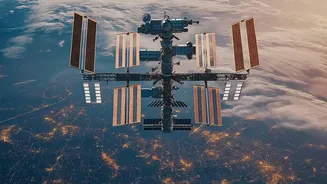
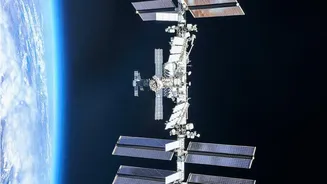
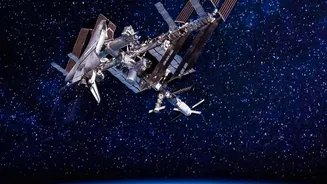
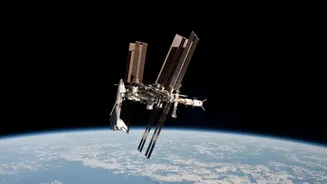
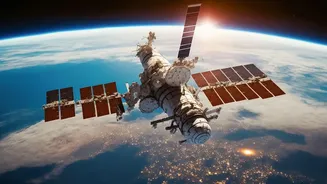
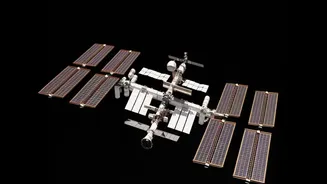
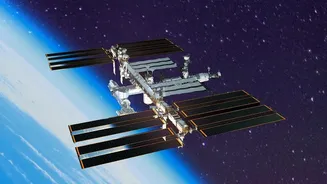
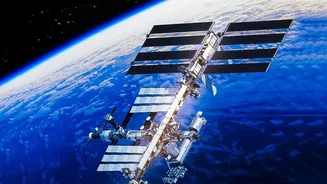
For over two decades, the International Space Station (ISS) has been powered by eight massive solar array wings. These original arrays, with a wingspan longer than a Boeing 777, were designed for a 15-year service life. Over time, constant exposure to
the harsh environment of space—including radiation and impacts from micrometeoroids—caused their performance to degrade. While still functional, the aging arrays were generating less power, a significant concern for an orbiting outpost that relies entirely on solar energy for life support, communications, and its thousands of scientific experiments. To ensure the station could continue its mission through its planned retirement in 2030, a major power augmentation was needed.
Introducing the iROSA Solution
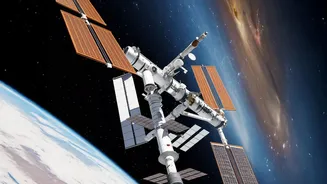
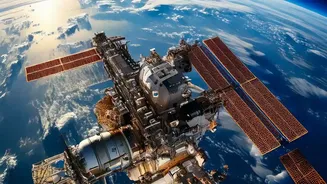
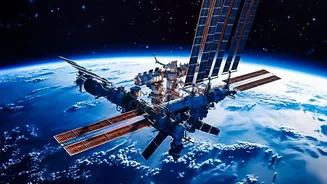
Instead of replacing the old arrays, a costly and complex task, NASA chose to augment them with new, more efficient technology. The solution was the ISS Roll-Out Solar Array, or iROSA. These new arrays are smaller, lighter, and more powerful than their predecessors. Developed with technology partners, the iROSAs are designed to be compact for launch, rolled up like a carpet, and then unfurled in space. Eight iROSAs were strategically installed in front of the original arrays. This placement allows them to use the existing sun-tracking hardware while partially shading the older, less efficient sections and generating a significant net power increase. The combined system brings the station's total available power from about 160 kilowatts to 215 kilowatts.
An 18-Spacewalk Installation Campaign
Installing the eight iROSA units was a monumental feat of engineering and human coordination that spanned five years and required 18 separate spacewalks. The campaign began in June 2021, with multiple teams of astronauts undertaking the challenging extravehicular activities (EVAs). The arrays were delivered two at a time by SpaceX Cargo Dragon capsules. During each installation, spacewalkers, often assisted by the station's Canadarm2 robotic arm, would retrieve the 340-kilogram rolled-up array, transport it to the worksite on the station's main truss, bolt it into a mounting bracket, and connect it to the station’s power channels. The final two arrays were installed in late 2026 by NASA astronaut Anil Menon and Canadian Space Agency astronaut Joshua Kutryk, successfully concluding the ambitious project.
Powering the Future of Space Science
The roughly 30% power increase is more than just a simple upgrade; it's a critical enabler for the station's final, and perhaps most scientifically ambitious, chapter. More electricity means the station can support more cutting-edge research and technology demonstrations, many of which are vital for future exploration missions to the Moon and Mars under the Artemis program. The additional power also supports the growing commercialization of low-Earth orbit, providing the energy needed for new private astronaut missions and commercial modules planned for attachment to the station. As astronaut Anil Menon noted after the final installation, the new arrays are 'empowering all this research that we do and everything that we do to transform space and open the doors to the future'. This ensures the ISS remains a world-class laboratory in the sky until its final days.