


Kraków: A Royal Beginning
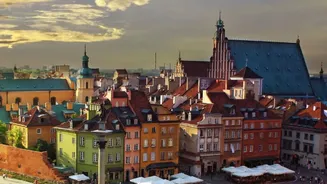
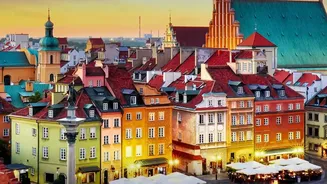
Our journey begins in Kraków, the cultural heart of Poland. Its Historic Centre, one of the very first sites inscribed on the UNESCO list in 1978, feels like stepping into a fairytale. Miraculously spared from the widespread destruction of World War II,
the city showcases a thousand years of remarkably preserved architectural history. The centerpiece is Rynek Główny, Europe’s largest medieval market square, a vast and vibrant space dominated by the twin spires of St. Mary's Basilica and the Renaissance-era Cloth Hall (Sukiennice). This former capital was the seat of Polish kings for centuries, and their presence is felt most strongly atop Wawel Hill, where the Royal Castle and Wawel Cathedral stand as powerful symbols of the nation's identity. The site also includes the former Jewish district of Kazimierz, a testament to centuries of coexistence and a poignant reminder of a community that flourished here before the horrors of the 20th century.
Auschwitz-Birkenau: A Necessary Reflection
Just a short drive from Kraków lies a site of a completely different nature, one that stands as a stark and necessary testament to humanity’s darkest chapter. Auschwitz-Birkenau, the German Nazi Concentration and Extermination Camp, was inscribed as a UNESCO site in 1979. It serves not as a celebration of heritage, but as a solemn memorial and a symbol of the Holocaust. Visiting the grounds of both Auschwitz I, the main camp, and the vast, desolate expanse of Auschwitz II-Birkenau is a profoundly moving experience. The preserved barracks, the ruins of gas chambers, and the personal belongings of the victims tell the story of the more than 1.1 million people, the majority of them Jews, who were systematically murdered here. UNESCO’s recognition ensures that this place of immense suffering is preserved, so that future generations can learn from the past and confront the consequences of hatred.
Carpathian Tserkvas: A Shared Faith in Wood
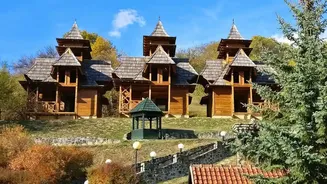
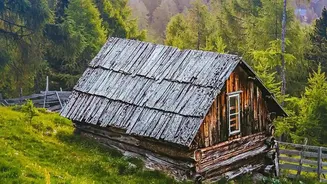
Moving eastward, our journey crosses the modern border into a region where national lines blur into a shared cultural landscape. Here, nestled in the Carpathian Mountains of both Poland and Ukraine, is a remarkable transnational UNESCO site: the Wooden Tserkvas. Inscribed in 2013, this collection of sixteen exquisite wooden churches stands as a testament to a unique building tradition shared by Orthodox and Greek Catholic communities between the 16th and 19th centuries. Built with horizontal logs and topped with distinctive multi-layered onion domes, these structures reflect a fusion of Orthodox ecclesiastical design with local folk traditions. Eight of the churches are in Poland and eight are in Ukraine, representing the shared heritage of ethnic groups like the Lemko, Boyko, and Hutsul people who have inhabited these mountains for centuries. These tserkvas are not just architectural marvels; they are enduring symbols of faith and community in a remote and rugged land.
Lviv: The Crossroads of Empires
The final stop on our journey is Lviv in western Ukraine, a city whose history is a rich tapestry of cultural fusion. The Ensemble of the Historic Centre, a UNESCO site since 1998, is an outstanding example of the blending of Eastern European traditions with those of Italy and Germany. Founded in the late Middle Ages, Lviv flourished for centuries as a major administrative and commercial hub under Polish, Austro-Hungarian, and other rulers. This history is visible in its cityscape, where Gothic, Renaissance, and Baroque buildings stand side-by-side. The city’s historic layout still shows evidence of the distinct ethnic communities—Poles, Germans, Armenians, Jews, and Ukrainians—that lived and traded here, creating a vibrant, cosmopolitan atmosphere. From the elegant Rynok Square to the cluster of cathedrals representing different faiths, Lviv is a living museum of Central Europe's multicultural past, a city that has long been a meeting point for different peoples and ideas.