


A Star's Final Crossroads
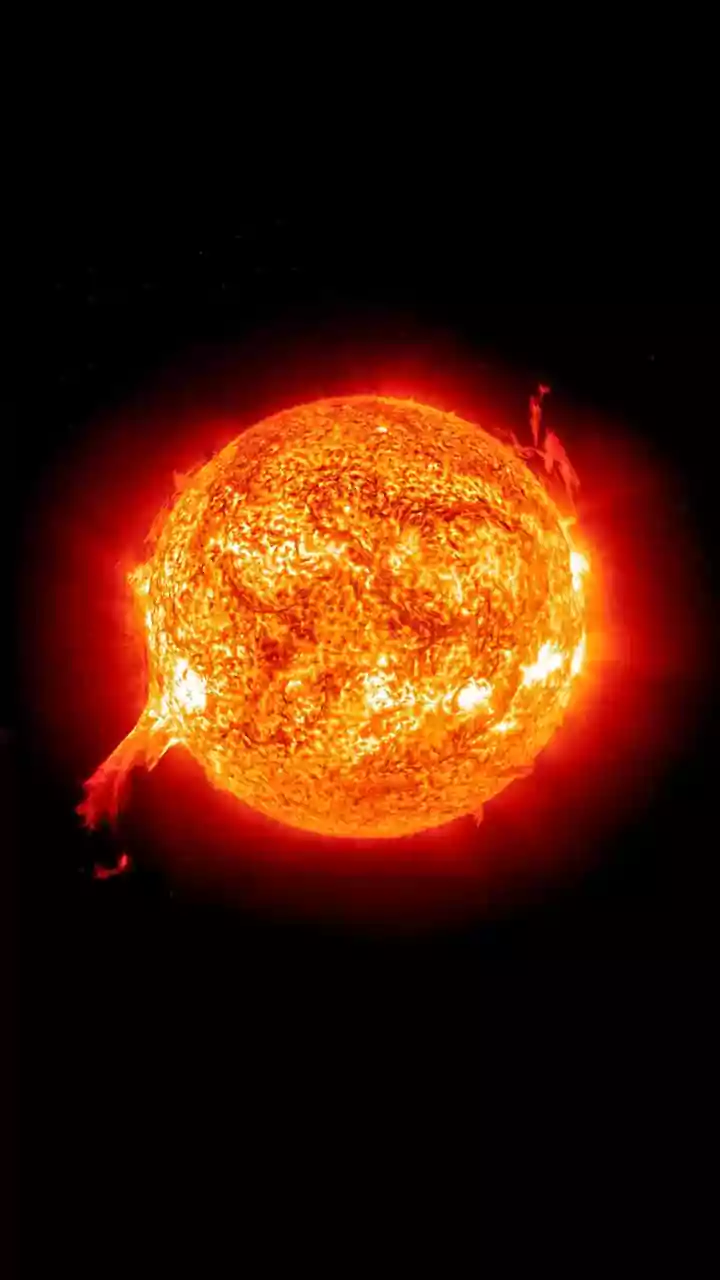
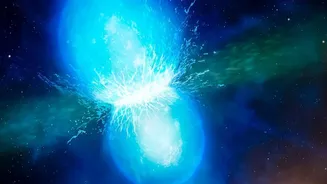
For stars much more massive than our sun, the end of life is a violent affair. After millions of years of fusing lighter elements into heavier ones, the star's core runs out of fuel. Without the outward push of nuclear fusion, gravity wins. The core implodes
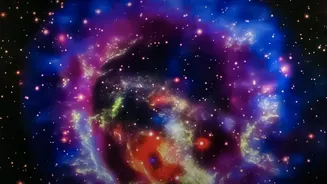
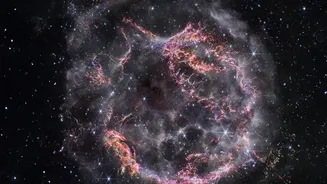
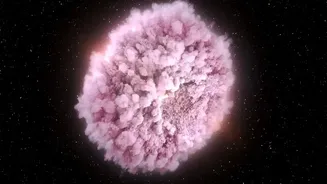
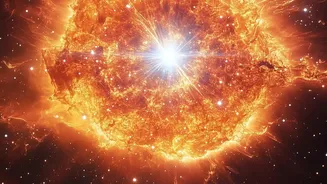
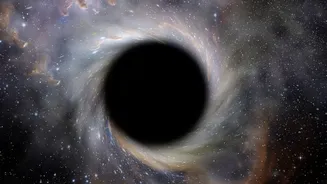
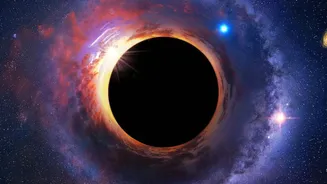
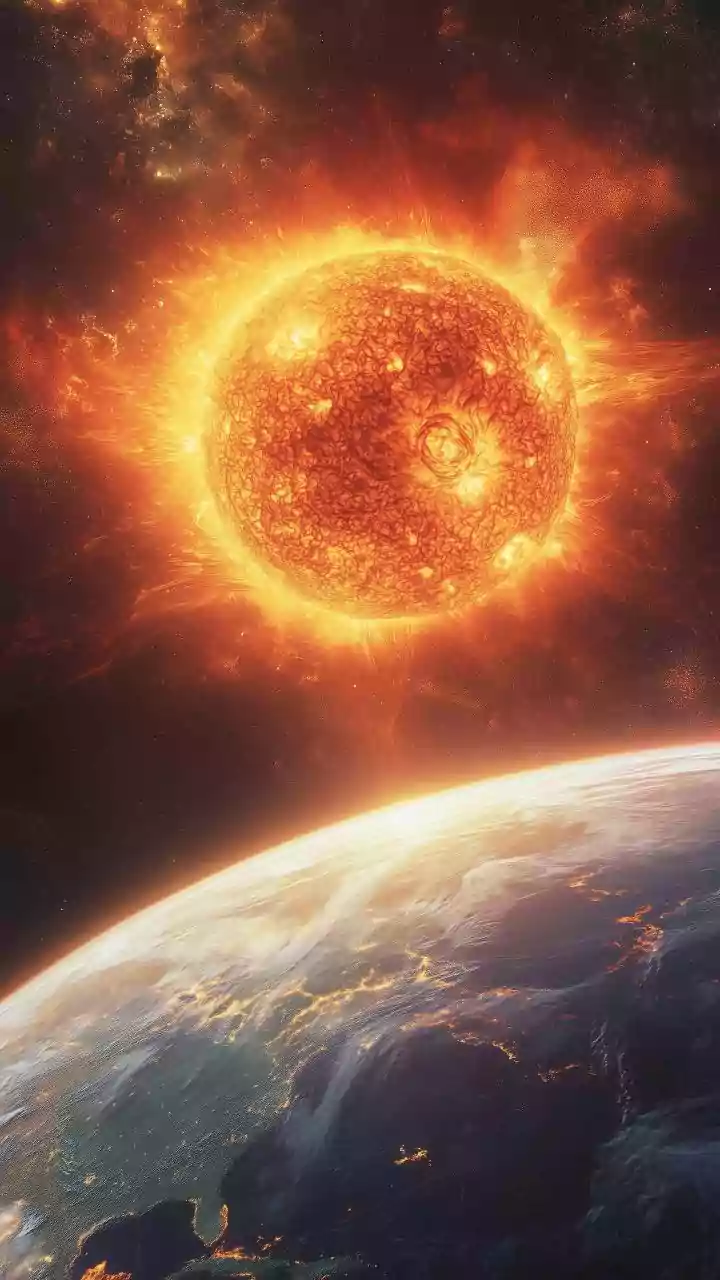
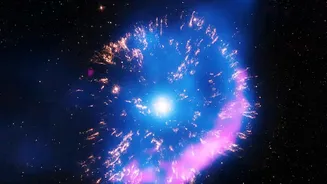
in a fraction of a second, creating unimaginable temperatures and pressures. This catastrophic event, known as a core-collapse, triggers one of two fates. In some cases, the collapse rebounds into a spectacular supernova, an explosion so bright it can outshine an entire galaxy. This explosion scatters heavy elements across space, seeding the next generation of stars and planets. The blast leaves behind an incredibly dense object called a neutron star. In other cases, the explosion fails. The star just keeps collapsing, its gravity becoming so intense that it crushes itself out of existence and forms a black hole. For decades, astrophysicists have debated what tips the scales between these two outcomes. Now, a study published in Physical Review D points to a surprising culprit: the neutrino.
The Ghost Particle's Decisive Role
Neutrinos are fundamental particles, often called 'ghost particles' because they barely interact with other matter. Trillions pass through you every second unnoticed. Despite their phantom-like nature, they are central to a star's death. During a core collapse, an astonishing 99% of the star's immense energy is carried away by a massive flood of neutrinos. The leading theory, known as the delayed neutrino-driven mechanism, posits that a tiny fraction of these neutrinos get absorbed by the material just behind the initial shockwave. If this 'neutrino heating' is strong enough, it can re-energize the stalled shockwave and power the supernova explosion. If it's too weak, the star is doomed to become a black hole. The new research, led by scientists at the University of Copenhagen, reveals that a previously overlooked detail of neutrino physics could be the deciding factor.
A Change of Flavour
A key discovery in physics was that neutrinos come in three different types, or 'flavours'—electron, muon, and tau—and that they can spontaneously change from one to another in a process called oscillation. Scientists generally assumed this flavour-changing trick had little effect on the supernova outcome itself. However, the new study simulated the collapse of 195 stars, ranging from 9 to 120 times the mass of our sun, and found that this behaviour is critical. The researchers discovered that when neutrino flavour changes are included in the models, it can significantly alter the heating process in the star's core. For a specific range of stars—those between 16 and 30 times the mass of the sun—the effect was dramatic. Many stars that were expected to explode comfortably as supernovae in standard simulations instead failed and collapsed into black holes when flavour conversion was accounted for.
Solving Cosmic Mysteries
This finding has profound implications. According to the researchers, it could help explain several long-standing puzzles in astronomy. One is the 'supernova rate problem', where scientists observe far fewer supernovae in the universe than theoretical models predict. If more stars are quietly collapsing into black holes than previously thought, it would help close this gap. It could also explain why some very massive red supergiant stars have been observed to simply vanish without a visible explosion—they may have been the ones whose neutrino heating failed. Furthermore, the study suggests that the inclusion of neutrino physics might lead to the formation of less massive neutron stars, which aligns better with recent astronomical observations. As study co-author Irene Tamborra from the Niels Bohr Institute noted, this research provides better tools to predict a dying star's fate and may help explain why observations don't always match theory.