








What is NavIC, India’s GPS?
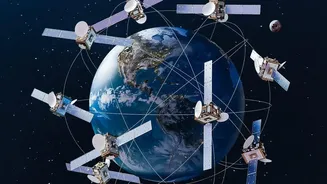
NavIC, which stands for Navigation with Indian Constellation, is India’s autonomous regional satellite navigation system, developed by ISRO. Much like the American GPS, Russia’s GLONASS, or China’s BeiDou, it's designed to provide accurate real-time positioning,
timing, and velocity information. Its primary goal is strategic autonomy—ensuring India has a reliable, sovereign navigation system that cannot be denied or degraded by foreign powers, a lesson learned during the 1999 Kargil conflict. The system is designed to provide services over the Indian mainland and a region extending 1,500 kilometres beyond its borders. It offers a Standard Positioning Service (SPS) for all civilian users and an encrypted Restricted Service (RS) for strategic and military applications.
The Problem: An Ailing Constellation
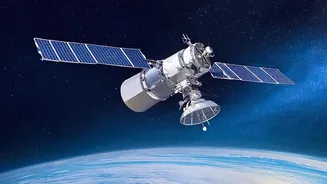
For a navigation system to accurately pinpoint a 3D location, a minimum of four satellites are required. Currently, India’s NavIC constellation has fallen below this critical threshold, with only three satellites capable of providing positioning services. This has rendered the system unable to provide standalone navigation, although its timing and messaging broadcast services remain functional. The root cause has been a series of setbacks, most notably the failure of atomic clocks on several of the first-generation IRNSS-series satellites. These high-precision clocks are the heart of any navigation satellite, and their failure makes the satellite unable to provide accurate ranging data. The problem was compounded by the unsuccessful launch of the NVS-02 satellite in January 2025, which failed to reach its intended orbit due to a propulsion system issue.
The October Mission: Enter NVS-03
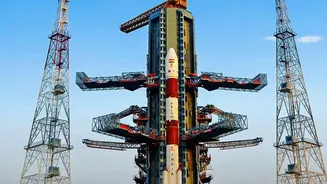
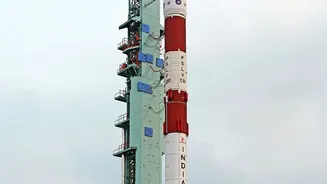
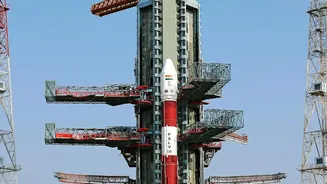
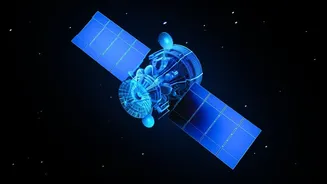
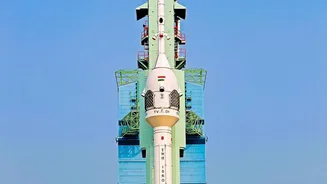
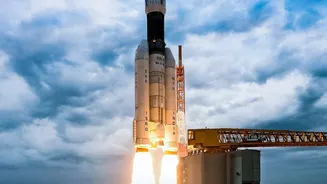
To address the shortfall, ISRO is targeting a launch window between October 15 and 20, 2026, for the NVS-03 satellite. The 2.2-tonne satellite is set to launch aboard a GSLV-Mk II rocket from the Satish Dhawan Space Centre in Sriharikota. This mission is critical because a successful launch would restore the NavIC constellation to the minimum requirement of four operational satellites, reactivating its standalone positioning capabilities. The NVS-03 is a second-generation satellite featuring enhanced technology. Notably, it will be equipped with an indigenously developed rubidium atomic clock from the Space Applications Centre in Ahmedabad, moving away from the imported clocks that caused issues in earlier satellites. Preparations are already in full swing, with the rocket's first stage stacked and the satellite itself ready at the spaceport, signaling the mission's high priority.
Why Restoration Matters for India
Restoring NavIC is about more than just convenience; it's a matter of national security and strategic independence. For the armed forces, a fully functional NavIC ensures secure and uncompromised navigation for troop movements, missile guidance, and coordinating warships and aircraft, free from reliance on foreign-controlled networks like GPS. While military hardware can currently use a combination of signals from different global systems, this creates a dependency that could be a vulnerability in a conflict scenario. For civilians, a robust NavIC means more reliable location data for transportation, logistics, and disaster management. It’s also a key enabler for emerging technologies in precision agriculture, surveying, and mapping. The government has made NavIC-based trackers mandatory for commercial vehicles, and support for the system is growing in consumer smartphones.
The Road Ahead for NavIC
The launch of NVS-03 is a vital step, but it is part of a broader plan to strengthen and modernise the entire constellation. ISRO has two more satellites, NVS-04 and NVS-05, in advanced stages of development. These launches will not only replace the ageing first-generation satellites but also build redundancy and resilience into the system, ensuring it remains robust for years to come. The failures, including that of NVS-02, have provided crucial lessons. ISRO has stated that corrective measures identified from the NVS-02 anomaly have been implemented for the NVS-03 mission to enhance reliability. Completing the full seven-satellite second-generation constellation will be a long-term project, but the upcoming October launch marks a pivotal moment in securing India’s sovereign navigation capabilities for the future.