






A Groundbreaking Mission to the Lunar Farside
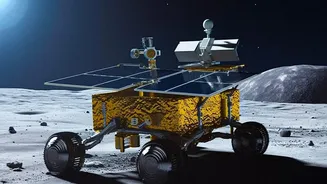
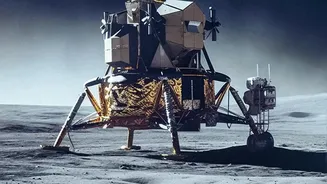
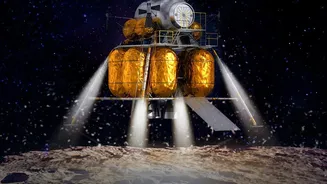
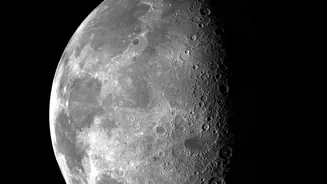
In a landmark achievement for space exploration, China's Chang'e-6 probe successfully landed in the South Pole-Aitken (SPA) Basin on the Moon's far side in June 2024. This region, permanently hidden from Earth's view, is home to the largest, deepest,
and oldest impact crater known in our solar system. For decades, scientists have been eager to study this area directly, as it holds clues to the fundamental differences between the Moon's two hemispheres. The mission's primary goal was to collect and return precious rock and soil samples, which it did successfully, bringing back nearly two kilograms of lunar material. This accomplishment marked the first time any nation has retrieved samples from this unexplored territory, offering an unprecedented look into the Moon's formation and turbulent history.
What Are These Impact Fragments?
Upon meticulous examination of the returned soil, research teams identified numerous tiny pieces of rock, including what are described as diverse lithic fragments. These are not just ordinary moon rocks. Many are believed to be impact-melted rocks—minerals that were superheated and fused together by the immense energy of an asteroid or comet collision. The landing site within the Apollo Basin is covered in material ejected from various impacts over billions of years. These fragments essentially act as 'rock clocks,' preserving a physical record of the cataclysmic events that shaped the Moon. By studying them, scientists can directly analyze the aftermath of ancient cosmic bombardments, rather than relying on remote sensing from orbit.
Rewriting the Solar System's Timeline
The analysis of these fragments has yielded a monumental discovery. A team led by Professor Chen Yi at the Chinese Academy of Sciences dated the formation of the massive South Pole-Aitken Basin to approximately 4.25 billion years ago. This is a crucial finding because it provides a solid anchor point for the entire timeline of lunar cratering. Previous estimates varied widely, but this direct evidence confirms the basin was formed during the early, chaotic period of the solar system's development. The samples revealed evidence of at least two distinct major impact events, one at 4.25 billion years and another at 3.87 billion years ago, painting a picture of a Moon under constant barrage. This helps scientists better understand the 'Late Heavy Bombardment,' a period of intense asteroid strikes that affected all inner solar system planets, including Earth.
Clues to the Moon's Deep Interior
The significance of the fragments goes deeper than just dating craters. The colossal impact that formed the SPA Basin was powerful enough to excavate material from the Moon's deep crust and possibly even its upper mantle. The composition of the returned samples reflects this. Scientists found that the soil is a mixture of local basalt (volcanic rock) and non-basaltic ejecta from elsewhere. Specifically, analysis revealed an unusual potassium signature in the samples. Potassium is an element that can vaporize under extreme heat. The unique isotopic makeup suggests that the SPA impact was so intense it fundamentally altered the chemistry of the rocks deep below the surface, stripping away more volatile elements. This provides a rare glimpse into the Moon's interior and shows how giant impacts can reshape the internal geology of a planetary body.
Implications for Future Exploration
The findings from the Chang'e-6 samples have practical implications for the future of lunar exploration. The SPA Basin is a prime target for future lunar bases, partly because its permanently shadowed regions are believed to hold vast quantities of water ice. Understanding the composition of the soil and rock, including the distribution of materials from ancient impacts, is crucial for planning in-situ resource utilization. The data also helps explain why volcanic activity on the far side appears to have ceased much earlier than on the near side. As nations like India, the US, and China advance their plans for a sustained human presence on the Moon, the ground-truth data from these 28 fragments provides invaluable knowledge about the environment, available resources, and the very ground on which future astronauts will walk.