




The Meaning of 'Qualification'
Before a spacecraft can be trusted with human lives, it must be 'qualified'. This is a rigorous engineering process where components are tested far beyond the stresses they are expected to face during an actual mission. Think of it as a brutal entrance
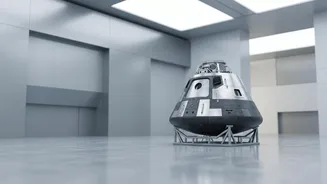
exam. If the hardware survives the punishing conditions on the ground, it earns the right to fly. The Indian Space Research Organisation (ISRO) is currently putting the Gaganyaan crew module—the capsule where Indian astronauts will be housed—through this very process. The goal is to prove, without a doubt, that the module's structure can withstand every violent moment of a space journey, from the thunderous launch to the fiery re-entry and final splashdown.
Test 1: Surviving Splashdown
The first major hurdle is ensuring the capsule is safe after it parachutes into the sea. Ocean waves can easily tip the conical module over, leaving it upside down and making it difficult for astronauts to exit or for recovery crews to secure it. To solve this, ISRO has developed the Crew Module Up-righting System (CMUS). This system uses inflatable flotation bags, powered by stored cold gas, to automatically flip the module back to an upright position. Recent qualification tests successfully demonstrated that this inflation system works reliably, a critical step in ensuring astronaut safety post-landing.
Test 2: A Clean Separation
During its time in orbit, the crew module is attached to a service module, which provides power and propulsion. For a safe return, these two must separate cleanly before the crew module begins its re-entry into Earth's atmosphere. This is managed by the Crew Module Service Module Connect Disconnect System (CSCDS), an umbilical link for electrical and fluid lines. A failure here could be catastrophic. ISRO engineers conducted tests to validate this separation process, ensuring that the umbilical cord detaches without damaging the crew module's structure or interfering with its descent. The successful test proved the system's reliability for this critical, high-stakes moment of the mission.
Test 3: The Apex Cover Jettison
The crew module's all-important parachutes are protected during ascent and re-entry by a component called the apex cover. To deploy the parachutes for landing, this cover must be jettisoned, or blasted away, at a precise altitude using small explosive charges. This event creates a significant shock and structural load on the crew module. The third qualification test validated the structural integrity of the module during this event. Engineers applied forces approximately 1.75 times greater than those expected during an actual flight to prove that the design has an adequate safety margin. The module passed, confirming it can withstand the pyrotechnic separation of the apex cover without any issues.
Why These Tests Matter for India's Dream
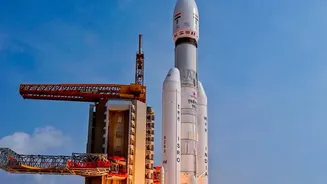
These three tests, along with a series of successful parachute airdrop tests, form the backbone of the Gaganyaan mission's safety promise. While the launch of the powerful LVM3 rocket will capture public attention, it's this unglamorous, methodical, and exhaustive ground testing that truly makes human spaceflight possible. Every successful qualification brings India closer to joining the elite club of nations—the US, Russia, and China—capable of sending their own citizens into space. These milestones demonstrate ISRO's commitment to a safety-first culture, ensuring that when Indian astronauts finally travel to space, their journey is built on a foundation of proven, reliable, and rigorously tested engineering.