



More Than Just a Drill
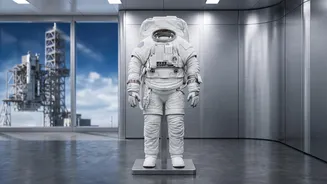
On Tuesday, September 29, the four astronauts of Crew-13 undertook a critical pre-launch milestone: a full dress rehearsal at NASA's Kennedy Space Center in Florida. This was not a simple walkthrough. The crew suited up in their sleek, custom-fit SpaceX
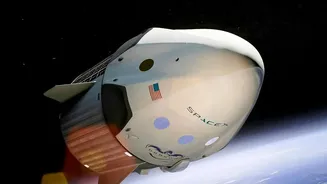
pressure suits, performed crucial leak checks, and traveled to Space Launch Complex 40, just as they will on launch day. There, they boarded the very Dragon spacecraft, named 'Grace', that will carry them to orbit. This 'dry' rehearsal, conducted without fueling the Falcon 9 rocket, allows both the crew and the extensive ground teams to synchronize every action of the complex countdown, from strapping into their seats to final systems checks, ensuring every step is second nature when the real countdown begins.
The International Faces of Crew-13
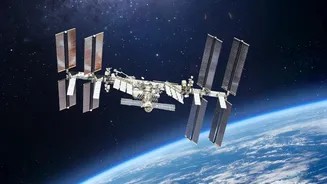
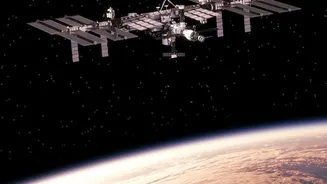
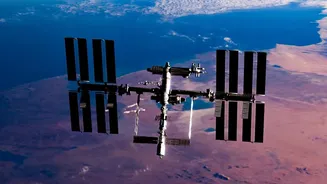
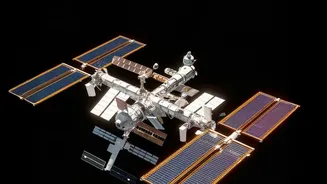
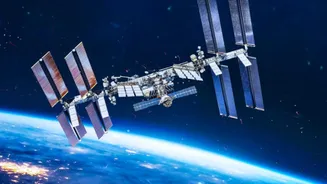
This mission brings together a diverse and highly skilled international crew for a planned six-month stay aboard the International Space Station. The team is led by NASA astronaut Jessica Watkins, serving as commander, who is a geologist and a veteran of a previous spaceflight. She is joined by NASA pilot Luke Delaney, a former naval aviator on his first mission. Rounding out the crew are two mission specialists, also making their first journey to space: Joshua Kutryk of the Canadian Space Agency (CSA), a former CF-18 fighter pilot, and Roscosmos cosmonaut Sergey Teteryatnikov, a former submariner. Their varied backgrounds in science, aviation, and engineering are essential for the wide array of tasks they will perform.
A Modern Ride to Orbit
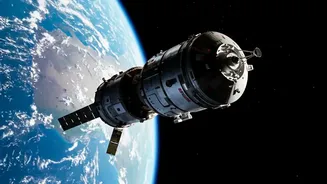
The crew's vehicle is the SpaceX Crew Dragon, a cornerstone of NASA's Commercial Crew Program. This program partners with private industry to provide safe, reliable, and cost-effective transportation to the ISS from American soil. The Dragon spacecraft is a marvel of modern engineering, capable of carrying up to seven passengers. It is fully autonomous, with touchscreen controls, and designed for reusability to lower the cost of access to space. A powerful launch escape system, consisting of eight SuperDraco engines, can propel the capsule and its crew safely away from the rocket in an emergency.
Science Among the Stars
Once aboard the ISS, Crew-13 will become part of the Expedition 75 crew, tasked with conducting a host of scientific experiments and technology demonstrations. Their research has profound implications for both future deep-space missions and life on Earth. The crew will study human stem-cell tissues to advance treatments for diseases like Parkinson's and heart disease. They will also investigate how microgravity affects blood flow, explore more efficient methods for in-space crop production, and test new medical diagnostic equipment. This work is vital for understanding the long-term effects of spaceflight and developing technologies for future missions to the Moon and Mars.
Countdown to Liftoff
With the dress rehearsal complete, all eyes are on the launch, scheduled for no earlier than 11:10 a.m. EDT on Thursday, October 1. The mission is targeting a remarkably fast journey to the station, with docking anticipated in just under eight hours—potentially setting a new record for a U.S. crewed spacecraft. Weather is the final major variable, with forecasters from the U.S. Space Force's 45th Weather Squadron keeping a close watch on conditions. This final rehearsal marks the transition from training to the reality of the mission, a pivotal moment where years of preparation are about to culminate in a fiery ascent to the stars.