






Inside the New Facilities
Agnikul has inaugurated two key additions to its campus: the Stage Testing & Inspection Facility (STIF) and the Pressurant Tank Realisation, Over-wrapping and Outfitting Facility (PROOF). These were unveiled in the presence of Gaganyaan astronaut-designate
Group Captain Shubhanshu Shukla, signalling their national importance. STIF is the star of the show, designed entirely in-house to test complete, reusable rocket stages under the same intense conditions they would experience during a flight. It can handle full-duration engine burns of up to 150 seconds and will be crucial for inspecting and requalifying stages that are recovered after a mission. Meanwhile, PROOF brings the manufacturing of essential high-pressure vessels in-house, reducing dependency on external suppliers and giving Agnikul tighter control over production timelines and quality. This vertical integration is a strategic move to accelerate development and increase launch frequency.
Why Reusability Is a Game-Changer
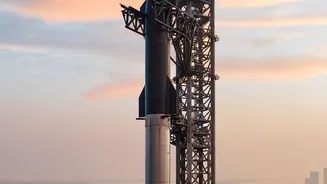
In traditional rocketry, the most expensive parts of the launch vehicle—the engines and booster stages—are discarded after a single use, falling into the ocean. This is like flying a passenger plane from Mumbai to Delhi and throwing the aircraft away upon arrival. Reusability, pioneered globally by companies like SpaceX, fundamentally changes this economic equation. By designing the first stage of a rocket to be recovered, refurbished, and flown again, launch costs can be dramatically reduced. For Agnikul, which is targeting the small satellite market, offering more affordable launches is a key competitive advantage. This new facility provides the physical infrastructure needed to turn the promise of reusability into a repeatable, reliable process, moving it from a theoretical goal to a practical business capability.
The Art of Rocket Requalification
Launching a rocket is a violent event, subjecting every component to extreme forces, temperatures, and vibrations. A recovered rocket stage cannot simply be refuelled and sent back to the launchpad. This is where "requalification" comes in. After a stage is recovered—for instance, from an ocean splashdown as planned for Agnikul's future missions—it must undergo a rigorous inspection and testing process. The new STIF facility is designed for exactly this. Engineers will use it to conduct non-destructive tests to check for structural fatigue, inspect the integrity of the 3D-printed engines, test the avionics, and run the entire stage through a simulated mission profile to ensure it is fit for another flight. Developing this in-house capability makes Agnikul the only private Indian company with the infrastructure to manage the full lifecycle of a reusable rocket stage, from build to launch, recovery, and requalification.
Agnikul's Path to Orbit
This development is a direct stepping stone towards Agnikul's upcoming 'Mission-02'. Following the successful sub-orbital test flight of its Agnibaan SOrTeD vehicle on May 30, 2024, which validated its 3D-printed engine and autopilot systems, the company is gearing up for more ambitious orbital missions. 'Mission-02' is expected to be India's first private attempt at recovering an orbital-class rocket booster. The goal is to establish a repeatable cycle: build, test, fly, recover, inspect, requalify, and fly again. Co-founder and CEO Srinath Ravichandran stated that these facilities provide the capability to test complete stages for their entire mission duration and then requalify them, which is essential for making reusability a reality. By mastering this cycle, Agnikul aims to significantly lower the cost of launching small satellites, a market segment it was founded to serve.
Powering India's Private Space Dream
Agnikul's expansion is part of a larger story unfolding in India. With the government actively promoting private participation in space through bodies like IN-SPACe, the ecosystem for startups is rapidly maturing. The inauguration of these advanced facilities shows that private companies are not just designing rockets on paper but are building the complex, capital-intensive infrastructure required for commercial spaceflight. By developing capabilities like reusable stages and in-house manufacturing of critical components, companies like Agnikul are enhancing India's self-reliance in the space sector. This move positions Agnikul among a select group of global companies actively working on full-stack reusability and reinforces Chennai's status as a hub for deep-tech and space innovation.