



A Glimpse of a Stellar Ghost
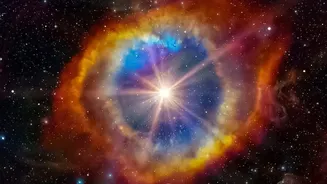
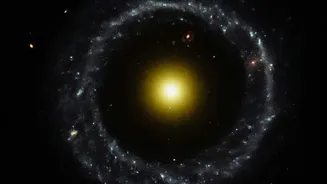
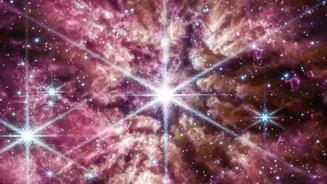
At the heart of the latest cosmic portrait is the Southern Ring Nebula, also known as NGC 3132, located roughly 2,500 light-years away. For centuries, astronomers have studied these celestial objects, called planetary nebulae, which are essentially the glowing,
expanding shells of gas and dust shed by stars like our sun at the end of their lives. While beautiful, previous images lacked the clarity to reveal the full story. The James Webb Space Telescope (JWST) has changed that, capturing the nebula in unprecedented detail and bringing a hidden actor into the spotlight. At the center of the shimmering clouds is not one, but at least two stars locked in a gravitational dance. Webb’s images clearly show the star that was previously hidden, a dim white dwarf cloaked in dust. This is the star that actually created the nebula, periodically ejecting its outer layers over thousands of years.
What Is a White Dwarf?
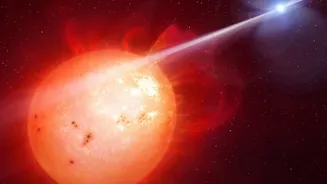
A white dwarf is the super-dense core left behind after a star with a mass similar to our sun runs out of nuclear fuel. Unable to support the fusion reactions that made it shine, the star sheds its outer layers into space, forming the planetary nebula. What remains is an incredibly hot, Earth-sized remnant that slowly cools over billions of years. In the case of the Southern Ring Nebula, the white dwarf is not alone. It has a brighter companion star, and their interaction is key to the nebula's complex shape. As the dying star ejected its material, the companion star’s orbit stirred the clouds of gas and dust, creating the asymmetric and intricate patterns Webb has now revealed. Scientists now believe there may be as many as five stars in a complex system at the nebula's center, all contributing to the final structure.
Unraveling the Rings and Clumps
The headline features of Webb's observation are the distinct shells and clumps within the nebula. The “rings” are actually concentric shells of gas, each representing a wave of material pushed out by the dying star. Thanks to Webb’s infrared capabilities, we can see these shells with stunning clarity. They aren't perfectly spherical, which is evidence of the companion stars’ influence, creating a shape more like two bowls placed together bottom-to-bottom. Within these shells, Webb also spotted dense clumps of dust. These clumps have managed to survive the intense radiation blasting from the hot white dwarf at the center. They appear as small, tail-like features, shielding the gas and dust behind them from being blown away. These structures provide a frozen moment in the long, drawn-out process of a star’s death, showing how materials are distributed and sculpted in its final phases.
Why This Cosmic Drama Matters
Studying planetary nebulae like this one is about more than just appreciating their beauty. It’s like cosmic archaeology. These expanding clouds carry away elements that were forged inside the star, enriching the interstellar medium with the raw materials needed for the next generation of stars and planets. The dust clumps are particularly interesting because dust is a major ingredient for star and planet formation. Seeing how dust survives and aggregates in such a harsh environment provides vital clues about the very first steps of building new planetary systems. Furthermore, by understanding the end-of-life stages of stars like the one in NGC 3132, we get a preview of our own sun’s distant future. In about five billion years, our sun will also exhaust its fuel, swell up, and eventually leave behind a white dwarf surrounded by a planetary nebula, profoundly changing our solar system.